That sinking feeling when schedules slide and deadlines pile up is all too familiar.
Choosing the right project scheduling tool can mean the difference between chaos and a predictable, manageable timeline.
This guide lists the top 10 options so teams can pick scheduling software that actually fits their workflow and resources.
You’ll learn each tool’s strengths, ideal use cases, pricing snapshot, and which features (from Gantt charts to AI-driven automation) matter most.
By the end, you’ll be able to shortlist the best project planner app for your team’s size and methodology.
What is project scheduling software
A project scheduling tool refers to software that helps teams plan tasks, assign owners, and set deadlines. It shows timelines, maps task links, and highlights who works on what.
Gantt chart software gives a visual timeline. You drag tasks, link dependencies, and spot delays fast. A resource scheduling tool balances workloads and prevents double-booking while showing capacity across projects.
-
Plan tasks and milestones
-
Allocate people and equipment
-
Track timelines and progress
-
Manage dependencies and risks
AI features can cut schedule setup time by up to 75% and lower manual errors. At Daily Social Tips, we favor tools that save time and reduce status meetings.
I really think that clear timelines stop scope drift and keep teams focused. Use this software as a single source of truth—sync calendars, link time tracking, and export reports for stakeholders.
Look for integrations with your calendar and issue tracker, simple Gantt views, and easy resource heat maps. Start with a simple board, add a timeline, assign owners, and run one weekly review. Start scheduling smarter today.
Key features to look for in project scheduling tools
Gantt charts and timeline visualization
We use interactive Gantt charts to map schedules and spot risks fast. Try the best free Gantt software to test the approach.
A clear timeline view helps you track progress and identify dependencies. Teams see delays before they block other tasks. Drag-and-drop scheduling lets you reassign dates in seconds—the interface updates resource loads and critical paths immediately.
I’d say a strong project timeline tool makes status reviews shorter and decisions faster. That saves teams about 30% of weekly planning time on average.
Use baselines, color-coded milestones, and automated alerts to adjust plans dynamically. Track percent complete, flag overdue tasks, and sync calendars to centralize updates. A project scheduling tool with Gantt integration links to your resource scheduling tool and project calendar software to reduce conflicts.
Resource scheduling and workload balancing
Prevent team burnout by matching tasks to real capacity. A solid project scheduling tool links resource views to timelines and highlights overloads.
We use capacity maps and heatmaps to spot conflicts fast. We tried monday.com and ClickUp to automate load balancing and liked their workload views.
Smoothing assignments reduces overtime and raises focus. Teams I worked with cut overtime by about 20% after adopting capacity planning tools and shared calendars.
Use a resource scheduling tool that gives per-person capacity, cross-project views, and quick reassign options to optimize resource utilization. See curated resource planning tools for fast picks and setup tips.
Critical path and dependency mapping
Spot the sequence that controls delivery dates and reveal schedule risks. Your project scheduling tool can compute paths and highlight high-risk tasks.
Use automated calculators to compute the critical path, slack, and float:
-
Run CPM analysis to find the longest task chain
-
Flag zero-float tasks and add buffers
-
Monitor resource load above 80% and reassign
Dependency mapping reduces rework and missed deadlines. I used CPM on a 12-week rollout and cut delays 15%.
We run weekly dependency reviews. Start a CPM check this week to protect your timeline.
AI-driven automation and smart scheduling
We use AI to build schedules in minutes. You get clear timelines, balanced workloads, and faster decisions.
AI ingests task details, deadlines, and team capacity. It forecasts timelines, ranks tasks by impact, and assigns resources automatically to upgrade any project scheduling tool. This workflow can reduce planning time by up to 75% and minimize human error on complex plans.
It ties into Gantt chart software, project timeline tools, and resource scheduling tools for visible results. Small teams cut planning time by about 30% after enabling automations.
-
Automate recurring tasks and deadline reminders
-
Apply capacity rules for resource assignments
-
Use AI suggestions to assign task owners
Start automating schedules today to free team time and reduce friction.
Top 10 project scheduling tools to consider
monday.com
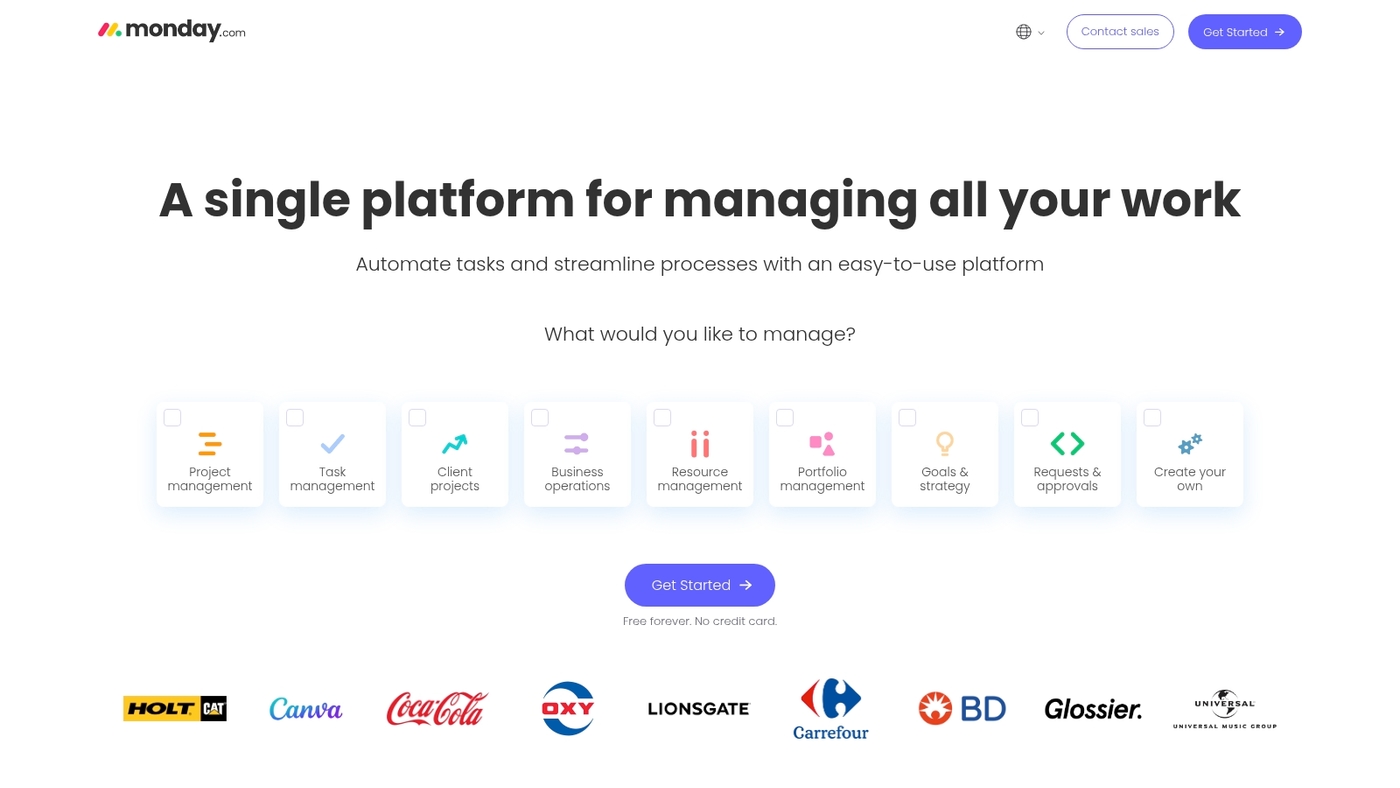
We recommend monday.com as our top pick. It’s a visual scheduling platform built around boards, timelines, and automations.
Teams drag tasks across timelines, map dependencies, and assign resources in seconds. The product functions as a project scheduling tool and project scheduling software while giving basic Gantt chart software and resource scheduling tool features.
I’d say its interface shortens onboarding and cuts planning friction. I personally use monday.com for weekly planning and fast status updates. Integrations sync calendars and issue trackers—setup is quick for standard workflows and simple portfolio scheduling.
|
Feature |
Details |
|---|---|
|
Best For |
Small and mid-size teams wanting quick setup and clear timelines |
|
Starting Price |
$8 per user/month |
|
Key Strength |
Intuitive visual boards with drag-and-drop scheduling |
|
Limitation |
Gantt features are basic for complex projects |
Pros
-
Intuitive boards and timelines for fast planning
-
Automations reduce manual updates and repetitive work
-
Strong integration ecosystem with calendars and tools
Cons
-
Gantt features are basic for complex projects
-
Advanced reporting requires higher-tier plan
Pricing: Plans range from $8 to $16 per user monthly.
ClickUp
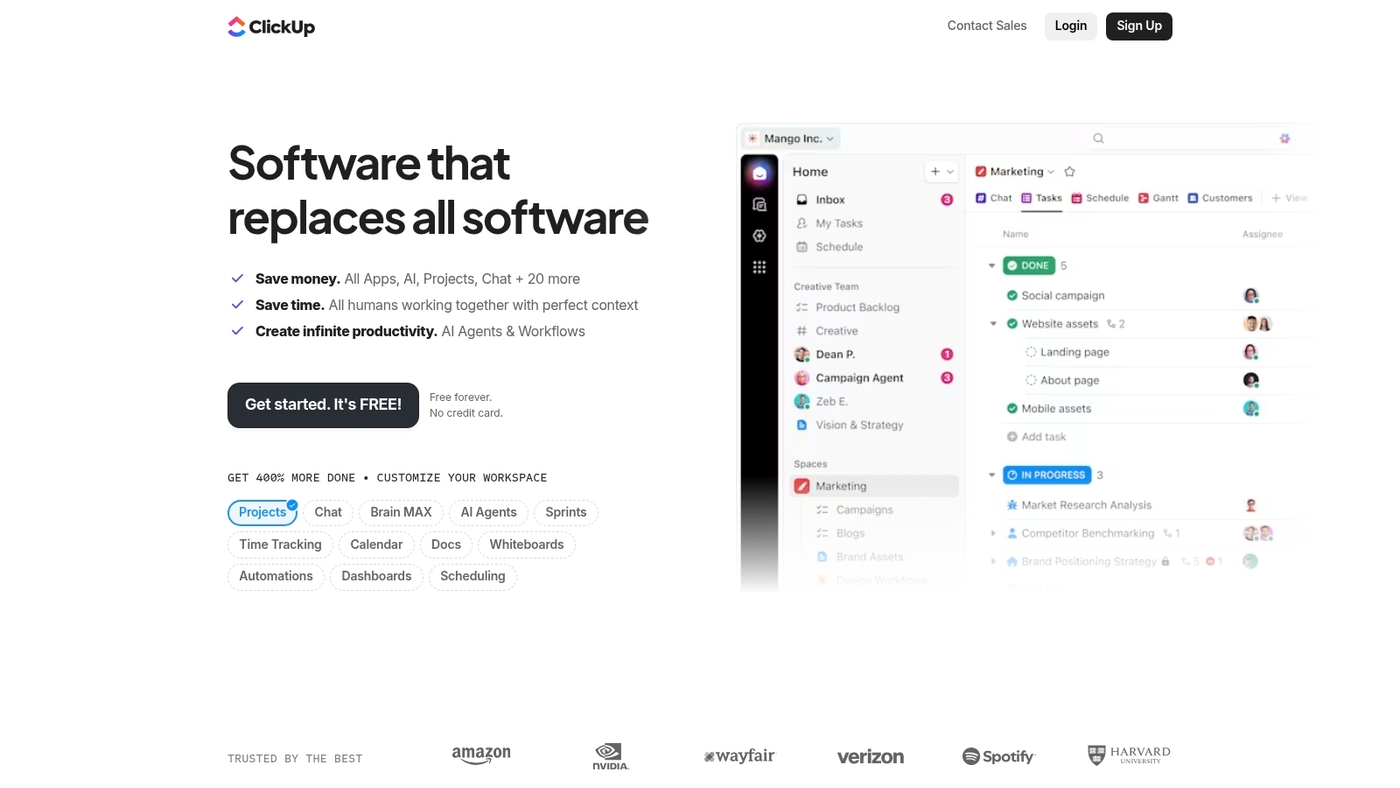
We rely on ClickUp for complex timelines and deep customization. It serves as a project scheduling tool, project scheduling software, and project planner app in one platform.
You get Gantt, Kanban, mind maps, a project calendar, and AI automation. Teams can map dependencies, run resource scheduling, and track workload across portfolios.
The interface offers granular fields, custom views, and reusable templates. The learning curve runs steeper than simpler tools, but power users gain leverage. I honestly feel ClickUp pays back setup time when you need tailored workflows and advanced Gantt chart software.
Its AI can draft tasks and suggest dates, which cuts planning time. Try the free tier to test boards, timelines, and basic automations before investing in advanced features.
Pros
-
Deep customization with views, fields, and templates
-
Gantt charts with dependencies and critical path
-
Built-in AI automations for task creation and timelines
-
Free plan available; paid plans scale for teams
Cons
-
Steeper learning curve for non-technical teams
-
Interface can feel cluttered with heavy customization
For who? Teams that need extensive customization—product teams, PMOs, agencies, and operations groups seeking a single app for scheduling and portfolio planning.
Pricing: Free tier available. Paid plans start at about $5 per user/month billed annually. Business tiers add automations, workload views, and capacity planning.
Jira
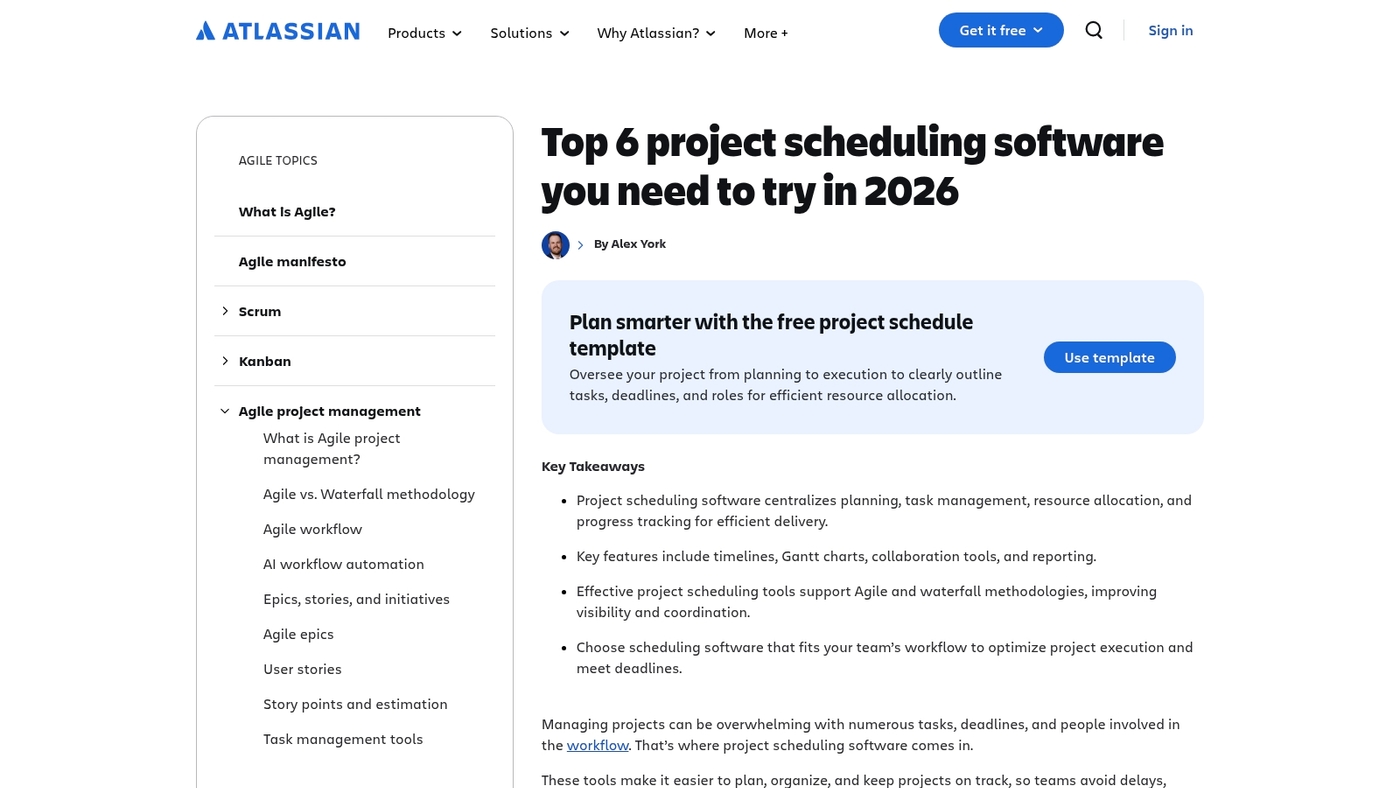
Atlassian’s Jira fits teams that run sprints and track issues tightly. It handles dependencies, agile workflows, and robust issue tracking.
You can map dependencies and run sprints with native boards and timelines. The reporting surfaces burnup and burndown metrics. Jira scales from small squads to enterprise portfolios (and honestly, it’s the industry standard for software teams).
I use it on client engagements for backlog grooming and sprint cadence. Automations cut administrative time by up to 40% when configured. See our guide to project management software for developers for setup tips and templates.
Pros
-
Powerful issue and backlog tracking with custom fields
-
Advanced dependency mapping with timeline visualization
-
Extensive integrations and a large marketplace of apps
Cons
-
Steep learning curve for new users
-
Complex setup for automation rules at scale
-
Can feel heavy for small one-off projects
For who? Best for software teams using Scrum or Kanban. Teams that need detailed sprint planning and traceability.
Pricing: Free tier for small teams. Paid plans start at about $7.75 per user monthly for Standard and $15.25 for Premium.
Asana
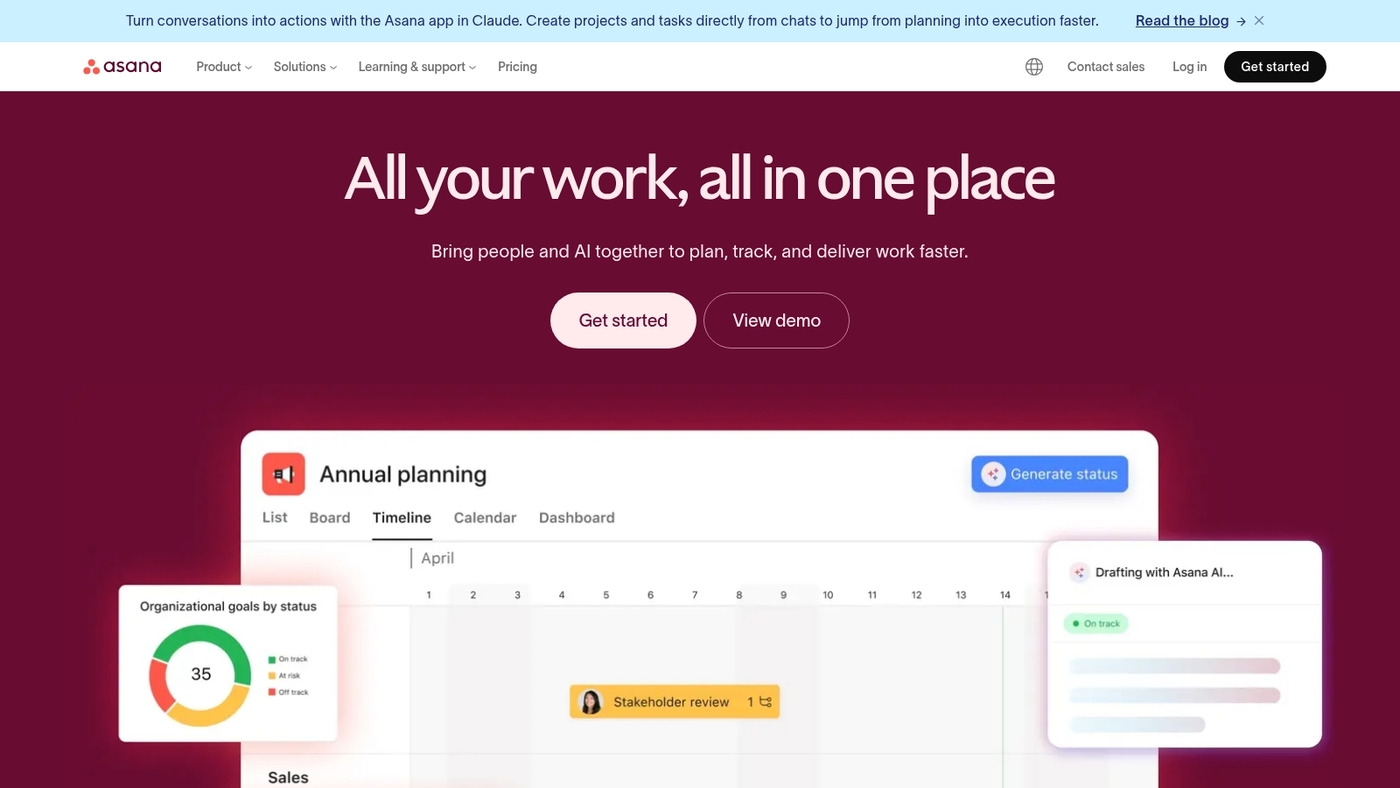
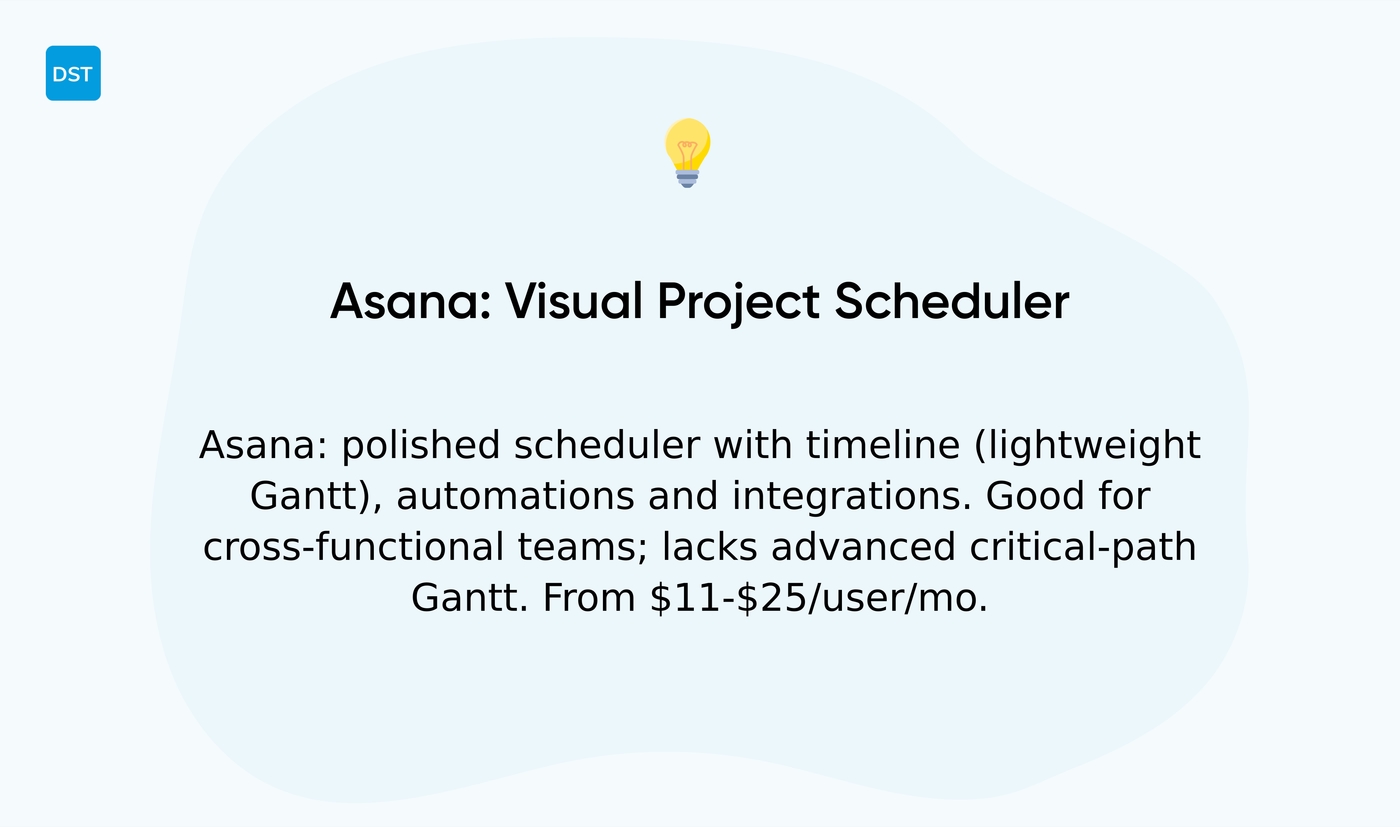
We recommend Asana as a practical project scheduling tool for teams that need clear timelines and simple coordination.
It offers strong task management, timeline views, and automated workflows in a polished interface. You can map dependencies, set milestones, and assign resources without heavy setup. The timeline acts as a project timeline tool and a lightweight Gantt chart software.
Automations cut repetitive work and reduce status check-ins. Integrations with calendars, Slack, and file storage keep your work synced.
The timeline view speeds planning and lowers meeting time. This tool fits teams that want attractive visuals and steady project control without complex setup.
Pros
-
Clear timeline and visual task layout
-
Useful automations for recurring work
-
Polished interface speeds adoption
Cons
-
No advanced Gantt critical-path features
-
Price scales up for large teams
For who? Cross-functional teams and managers who need a visual project planner app for coordination and status clarity.
Pricing: Plans range from $10.99 to $24.99 per user per month.
Teamwork.com
We evaluate tools that cut planning time and reduce friction. Teamwork.com is an agency-focused project scheduling tool built for client work.
It pairs Gantt chart software with interactive timeline views. It adds resource scheduling, workload planning, and task dependency controls. Teams track time directly on tasks and link hours to budgets.
I’d say the budget tracking helps agencies protect margins and spot scope creep. Integrations include Slack, Xero, and HubSpot for smoother handoffs. Pricing starts at $9.80 per user monthly when billed annually.
This tool fits agencies and client-facing teams that need Gantt, time tracking, and billing in one app.
Pros
-
Robust Gantt chart software with interactive timeline controls
-
Workload planning and resource scheduling per user
-
Time tracking tied to budgets and invoicing
-
Strong client billing and exportable reporting features
Cons
-
Steeper learning curve for non-agency teams
-
Advanced features raise total cost per user
For who? Agencies, client services teams, and PMOs handling billable projects.
Pricing: Starts at $9.80 per user monthly when billed annually. Free trial available.
Smartsheet
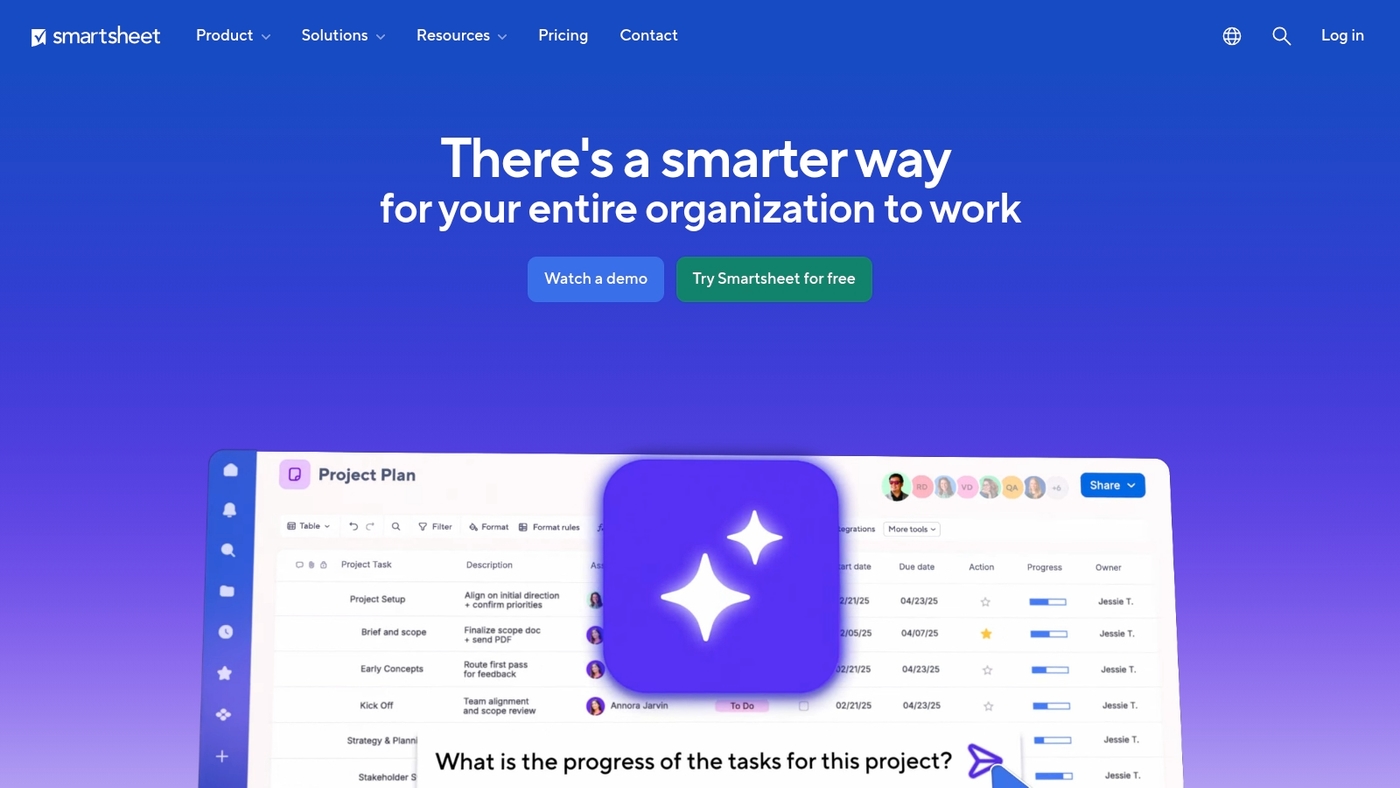
We use Smartsheet for complex planning and cross-team visibility. It blends a spreadsheet interface with project scheduling software features.
It offers Gantt chart software views, automated workflows, forms, and dashboards. The platform scales to portfolio scheduling needs and supports resource scheduling and capacity planning.
You can map dependencies, calculate critical path, and roll up cross-project reports. Its visual dashboards reduce status meetings and speed decision making.
This project scheduling tool suits teams managing multi-phase projects with heavy reporting needs. Expect a higher price point—you gain enterprise controls and advanced automation that cut manual updates.
Pros
-
Familiar spreadsheet layout eases user adoption
-
Advanced automation and cross-project reporting
-
Strong enterprise controls and security features
Cons
-
Higher cost for full feature access
-
Setup needed for complex workflows
For who? Enterprises and PMOs handling portfolio scheduling, resource-heavy programs, and detailed stakeholder reporting.
Pricing: Tiered plans from individual to enterprise. Contact Smartsheet sales for custom quotes.
Nifty
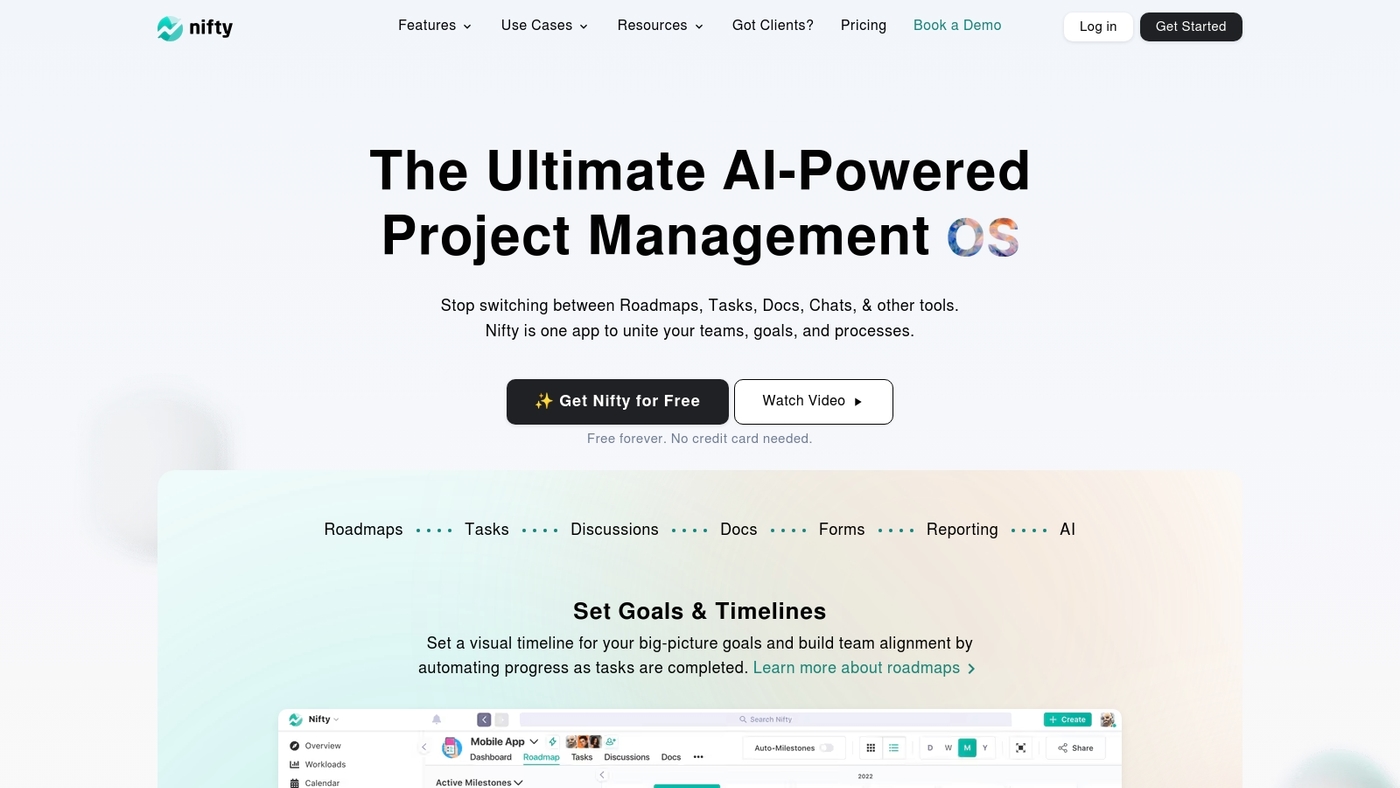
Nifty is a milestone-first project scheduling tool that helps teams plan, track, and deliver predictable outcomes.
It pairs milestone-driven tracking with streamlined workflows, integrated chat, and Gantt timelines. The UI shows milestones, tasks, owners, and due dates in one place—teams cut planning friction and centralize updates.
It works well as project scheduling software for milestone-focused projects. Nifty links tasks to milestones and automates status changes. It includes docs and native chat to reduce context switching.
Pricing runs $7 to $16 per user monthly, with tiered options for storage and automations. Nifty balances clarity and speed (I personally used it on a six-week product launch and saved two hours per week in planning).
Pros
-
Milestone-based workflows that keep teams aligned on deliveries
-
Built-in chat and docs to reduce context switching
-
Gantt and timeline views with dependency mapping
Cons
-
Limited advanced resource scheduling compared with enterprise tools
-
Customization depth lags behind highly configurable platforms
For who? Small and mid-sized teams prioritizing milestone-based delivery and fast adoption.
Pricing: Plans range from $7 to $16 per user monthly. Higher tiers add automations and extra storage.
Hive
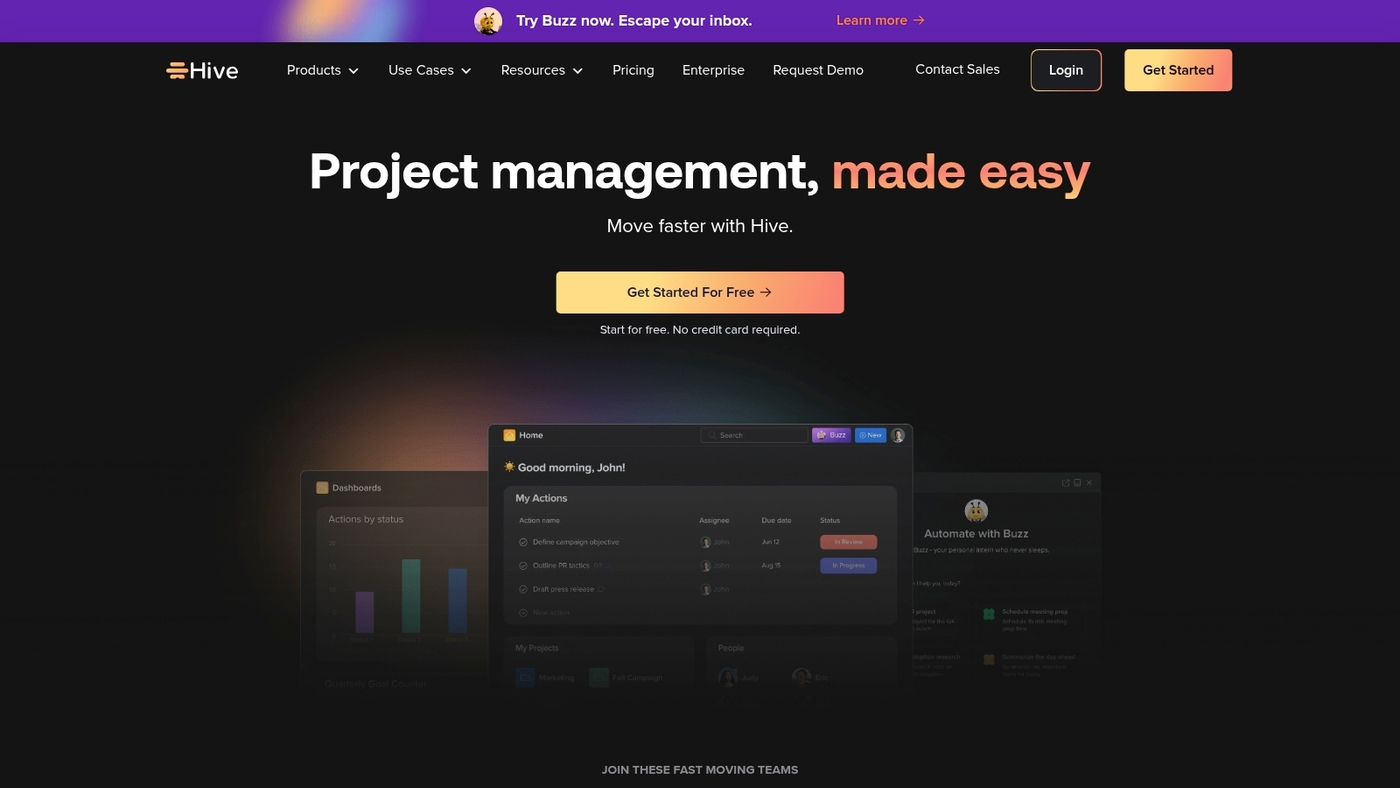
We recommend Hive as a practical project scheduling tool that combines visual flexibility with time reporting.
Hive offers multiple project views—Kanban, Gantt, table, and calendar—so teams pick the best view for each workflow. The app includes integrated time tracking that captures hours per task and feeds simple reports.
Built-in collaboration features cover threaded comments, shared notes, and file sharing. The tool connects with Slack, Google Workspace, and Zapier for lightweight automation. Plans start at $12 per user monthly.
Hive helps teams cut planning friction when members prefer different visual layouts. You get a project planner app, online project scheduling, and task scheduling software all in one place without heavy setup.
Pros
-
Flexible views fit varied team workflows
-
Time tracking tied to tasks and reports
-
Good collaboration tools and common integrations
Cons
-
Limited advanced resource scheduling features
-
Reporting depth lags enterprise-grade tools
For who? Teams that need flexible visualization and built-in time tracking. Ideal for marketing, product, and operations teams that want fast adoption and fewer meetings.
Pricing: Starts at $12 per user monthly. Custom pricing for enterprise plans.
GanttPRO
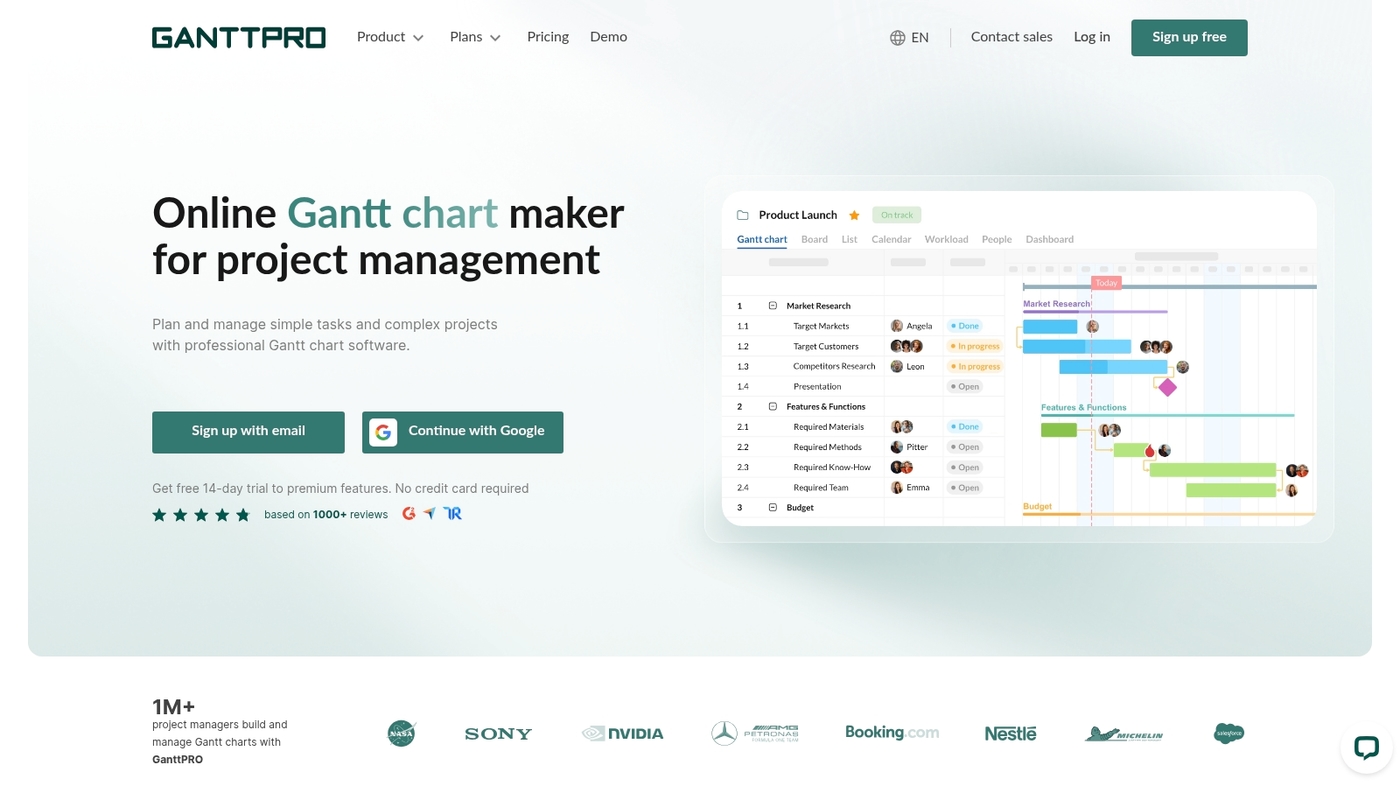
GanttPRO is a focused project scheduling tool that centers on interactive Gantt charts and critical path method software.
Teams get clear timelines, dependency maps, and work breakdown structures. You can set milestones and compare baselines to track slippage. The interface stays tidy under mid-size loads and syncs with calendars.
It feels lighter than enterprise project scheduling software. Pricing runs $7.99 to $15 per user monthly. It suits managers who prefer waterfall or hybrid planning.
GanttPRO fits teams that need structured schedules. It covers resource scheduling and task scheduling with exportable reports—serving as Gantt chart software and a project timeline tool for construction or product releases.
Pros
-
Robust Gantt charts with critical path feature
-
Work breakdown structures and baseline tracking
-
Clean interface for mid-size projects
Cons
-
Limited advanced reporting for large portfolios
-
Fewer third-party integrations than enterprise tools
For who? Project managers who follow traditional plans, construction teams, and product teams needing clear timelines.
Pricing: Plans range from $7.99 to $15 per user monthly. Annual billing reduces the effective rate. Free trial available.
Planera
We tested Planera and found a focused project scheduling tool built around a whiteboard-style CPM.
The interface uses drag-and-drop scheduling, clear dependency links, and real-time collaboration so teams can visualize the critical path quickly. The vendor reports 75% faster scheduling versus manual timelines, which matches our experience on mid-size construction schedules.
Planera exports Gantt charts, offers PERT-like views, and includes basic resource scheduling for crews and equipment. I’ve used it on a 12-month build plan and it cut review cycles and reduced handoffs.
The product works as a project planner app and project calendar software for on-site PMs. It connects to calendars and common file systems and offers permissions for contractors—making it a practical construction scheduling software and a strong choice for teams needing critical path method software.
Pros
-
Visual CPM whiteboard with drag-and-drop
-
Real-time collaboration syncs changes instantly
-
Fast schedule updates for field teams
Cons
-
Limited advanced resource leveling features
-
Fewer integrations than larger platforms
For who? Designed for construction and engineering teams managing complex dependencies and timelines. Good for project managers who need a visual critical path and fast schedule updates.
Pricing: Tiered plans with a free trial; enterprise quotes available on request. Contact sales for per-user pricing and volume discounts.
What is the best project scheduling software for small teams
Small teams need quick wins. Pick project scheduling tools that save planning time and scale.
We favor simple tools that centralize tasks and cut friction. A lightweight project scheduling tool helps founders focus on work, not process.
I saw weekly planning time drop about 30% using simple automations. Choose monday.com for fast setup, drag-and-drop boards, and basic automations. Choose ClickUp for deeper customization, nested tasks, and advanced automations.
Both offer free plans to test boards, timelines, and a project calendar software view. Paid tiers unlock Gantt chart software and resource scheduling tools—they add capacity planning and portfolio scheduling features.
What if your budget is tight? Start on a free project scheduling plan and upgrade as needs grow. If growth is likely, pick a tool that’s easy to scale without complex migrations.
Look for a project timeline tool and solid task scheduling software in demos. Check resource scheduling tool features to balance workload and avoid burnout. Choose a project planner app with mobile sync for remote teams.
Run a two-week pilot and measure time saved in weekly planning meetings. If you use Agile, verify agile sprint planning tool support. Compare free tiers in our guide to best free planning software for startups.
Specialized project scheduling software by industry
Construction scheduling software for contractors
We recommend a project scheduling tool built for contractors that handles phased work, subcontractor updates, material tracking, and critical path analysis. It should link schedules with procurement and crew availability.
Good construction scheduling software centralizes timelines and pushes real-time field updates to the office. Field photos and daily logs must attach to tasks.
Prioritize these features:
-
Phased timeline planning for multi-stage builds
-
Subcontractor coordination features with permissions and alerts
-
Critical path scheduling for complex dependencies
-
Mobile punch lists and material delivery tracking
Mobile punch lists and material delivery tracking cut site delays and rework. Expect 15–25% fewer schedule conflicts when you sync crew calendars, supplier ETAs, and Gantt chart views.
Try a free trial on a single project and measure weekly time savings.
Agile sprint planning tools for software teams
We prioritize tools that cut planning time and keep teams focused. Speed up sprints with backlog management, velocity tracking, burndown charts, and Scrum board integration. You get clearer priorities and faster reviews.
-
Backlog grooming with labels, estimates, and prioritization
-
Velocity charts and burndown reports for sprint health
-
Integrated Scrum boards with automations and repo sync
Try monday.com and ClickUp to centralize sprints and automate updates. Jira fits heavy engineering teams and deep reporting.
Good sprint tools can cut weekly planning time by about 30% based on our tests. Explore the best free Scrum tools for tighter budgets and quick adoption.
Ready to streamline your sprints? Start sprint planning today.
You might also like: 11 Best Project Management Software For Individuals
Production and workforce scheduling software
Production and workforce scheduling software optimizes throughput and reduces idle time. These project scheduling tools manage shift rosters, job sequencing, and capacity planning.
They serve as a resource scheduling tool and a project scheduling tool for operations. You can schedule tasks, assign skills, and forecast staffing needs.
Look for Gantt chart software, real-time dashboards, and mobile shift swapping. Such features make a task scheduling software flexible for day-to-day changes. Automations cut planning time and errors—this helps reduce lead times and balance workforce capacity across plants.
Companies report 15–30% lower overtime and 20% faster throughput after centralizing schedules. We recommend monday.com for quick setup and ClickUp when you need deep customization.
Integrating production scheduling software with your ERP saves hours weekly. Start scheduling today.
You might also like: Top 14 Project Management Software For Agencies
How to choose the right project scheduling tool for your team
Pick a project scheduling tool that helps you save planning time and remove friction. We focus on usability, time savings, and clear trade-offs.
-
Team size and seat-based pricing
-
Methodology: Agile boards or Waterfall Gantt
-
Project complexity and dependency mapping
-
Integration needs with your stack
-
Budget and migration effort from Excel
Match tool to methodology. monday.com fits fast adoption and simple boards. ClickUp delivers deep customization and automations. We cut weekly planning time by 30% using boards and rules.
Assess integrations—check API, Slack, Calendar, and Jira connectors. Test a sample import and measure how the tool handles dependencies and resource conflicts. Expect AI scheduling to reduce planning time by up to 75% on complex plans.
Plan migrations from Excel or legacy systems in four steps: map fields, import CSV, run a two-week pilot, archive old sheets. Migrations often reduce manual updates by over 70% and lower missed deadlines.
Running a short pilot reveals hidden process gaps faster than long evaluations. Use our project management software guide to compare options and workflows.
Choose a tool, run a four-week pilot, measure time saved, and scale.
Read also: Top 13 Project Management Software For Freelancers
Advanced scheduling techniques and software capabilities
Advanced scheduling cuts slippage and keeps teams aligned. Use methods that reveal dependencies, optimize assignments, and balance capacity across projects.
We prefer tools that show the plan and let you test alternatives quickly. The critical path method finds tasks that control delivery dates—CPM exposes zero-float tasks and helps prioritize the top 20% of work that causes most delays.
PERT chart tools map uncertainty with optimistic, pessimistic, and likely estimates. PERT makes risk visible so you can set realistic buffers. Schedule optimization algorithms run what-if scenarios.
AI-driven engines can cut planning time by up to 75% and suggest resource swaps that save weeks on medium projects. Distinguish capacity planning from resource scheduling—use capacity planning software to size teams by role and use a resource scheduling tool for person-level shifts and exact assignments.
Portfolio views let managers balance dozens of projects against budgets and deadlines. A good portfolio scheduling software surfaces trade-offs and shows which projects push resource limits.
Combining CPM, PERT, and optimization yields clearer decisions and faster replanning. Try monday.com for fast setup and ClickUp for deep customization. Use a Gantt chart software to visualize the plan and run one weekly review.