Reputation management software helps businesses monitor, respond to, and improve online feedback across search, social, and review sites.
It centralizes reviews, surfaces sentiment, and gives teams tools to act fast.
(Let’s be honest — your online reputation can make or break customer trust!)
What is reputation management software
At our team, we favor platforms that pull data from dozens of sources and automate reply workflows for speed and consistency. Automating review requests and responses saves small teams about five hours per week.
Here’s what solid reputation management software delivers:
-
Centralize reviews from 100+ sites into one dashboard
-
Automate reply templates and response workflows
-
Generate review requests via SMS and email
-
Run sentiment analysis and star-rating reports
-
Sync with Google, Facebook, Yelp, and local listings
These platforms pair review management software with analytics to track KPIs like average star rating, response time, and review volume. Teams get real-time alerts so negative feedback receives a fast reply and positive feedback gets promoted.
If you manage multiple locations, pick software with location-level dashboards and white label options for agencies. You can start with a free trial and measure weekly changes in star rating and response time to see ROI quickly.
Try a trial and track three metrics for four weeks: star rating, review count, and average response time.
How does online reputation management software work
ORM platforms centralize customer feedback and automate responses. They pull reviews from Google, Facebook, Yelp and 100+ niche sites, then clean and normalize that data into one dashboard for easy tracking.
The core workflow breaks down like this:
-
Review aggregation: fetches reviews via APIs and scrapers, timestamps entries, and tags source sites
-
Sentiment analysis: runs NLP models to label tone and flag urgent issues
-
Automated notifications: sends alerts to teams by email, SMS, or Slack within minutes
-
Response workflows: route items to owners, load templated replies, and queue follow-ups
-
Integrations: syncs with CRMs, help desks, Google My Business, and social platforms
Sentiment scoring gives the fastest signal for action. Models often reach 80–90% accuracy on clear praise or complaints, so you spot trends quickly.
Teams cut average reply time from days to under 24 hours by using templates and routing rules. You get KPIs like star-rating trends, response time, and review volume per location.
We recommend prioritizing platforms that offer real-time sync, customizable rules, and multi-location support. Try a 14-day trial to measure how much time and visibility you gain.
Key features to look for in review management software
Review monitoring and aggregation
Review monitoring and aggregation must be central to any reputation management software. Use review aggregation platforms to unify sources, alerts, and reporting.
Platforms pull reviews from 100+ sites like Google, Facebook, and Yelp for online reputation management software. They map ratings, timestamps, and metadata for consistent tracking.
Tools normalize text and trigger a real-time notifications system that sends alerts via email, SMS, or Slack within minutes. Good review management software routes issues to the right owner.
A unified feedback dashboard shows average rating, review volume by source, sentiment score, and response time.
Use the dashboard to spot rating drops and prioritize replies by impact. We saw response time fall 40% after centralizing reviews. Faster replies improve retention and local search visibility.
Start with these steps:
-
Connect 100+ review sources and verify data integrity
-
Set alerts for low ratings and high-impact mentions
-
Assign response workflows and measure average reply time
Automated review generation and responses
We recommend automating review requests and responses to drive more feedback and free your team. It reduces manual work and improves reply speed.
AI-powered reputation management software sends SMS and email invites, personalizes messages, and drafts replies using sentiment cues. It plugs into Google, Facebook, Yelp and centralizes feedback in your customer review management platform.
Using review generation software and automated response templates raises response rates. Clients report a 25–40% increase in review volume and a 60–70% cut in reply time.
Try this sequence:
-
Send an SMS invite within 24 hours of service
-
Auto-generate a short, personalized reply for positive reviews
-
Route negative feedback to staff for fast resolution
This method suits local business reputation management and scales into multi location review management or white label reputation management software for agencies.
If you want to start, pick an ORM software that supports SMS, templates, and Google reviews management software integrations.
Sentiment analysis and reporting
Sentiment analysis reveals customer emotion trends from review text. It runs inside online reputation management software to track star ratings and response time.
At Daily Social Tips, we surface negative trends within seven days. Monitoring review sentiment scores prevents escalation.
Here’s how to act on sentiment data:
-
Flag reviews with sentiment below 40%
-
Set reply targets under 24 hours to improve response time KPIs
-
Track weekly star rating trends and review volume
We cut unresolved complaints by 15% after enforcing 24-hour reply targets. Map common negative themes to operations and assign owners.
Link Google reviews management software and social channels for full coverage. Use reputation monitoring tools to combine social mentions and reviews.
Report weekly KPIs and tie negative trends to revenue impact. Start by linking your review management software to sentiment dashboards.
Multi-location and white label capabilities
We recommend platforms with strong multi-location and white label features for franchises and agencies. These features let you manage local listings at scale.
You get centralized reports, location-level access, and reseller pricing. Location specific dashboards show performance per store. Geo-tracking links reviews to places and uncovers patterns fast.
Agencies win with white label reputation management. Agencies keep brand control and boost margins.
-
Set alerts for star ratings and negative reviews
-
Enable centralized templates to speed responses
-
Offer clients branded portals and custom reports
Pick a reputation management platform that supports permissions, geo-tracking, and multi location review management.
Run a 30-day pilot and track response time and average rating change to prove impact.
Top 10 reputation management software platforms to consider
Birdeye
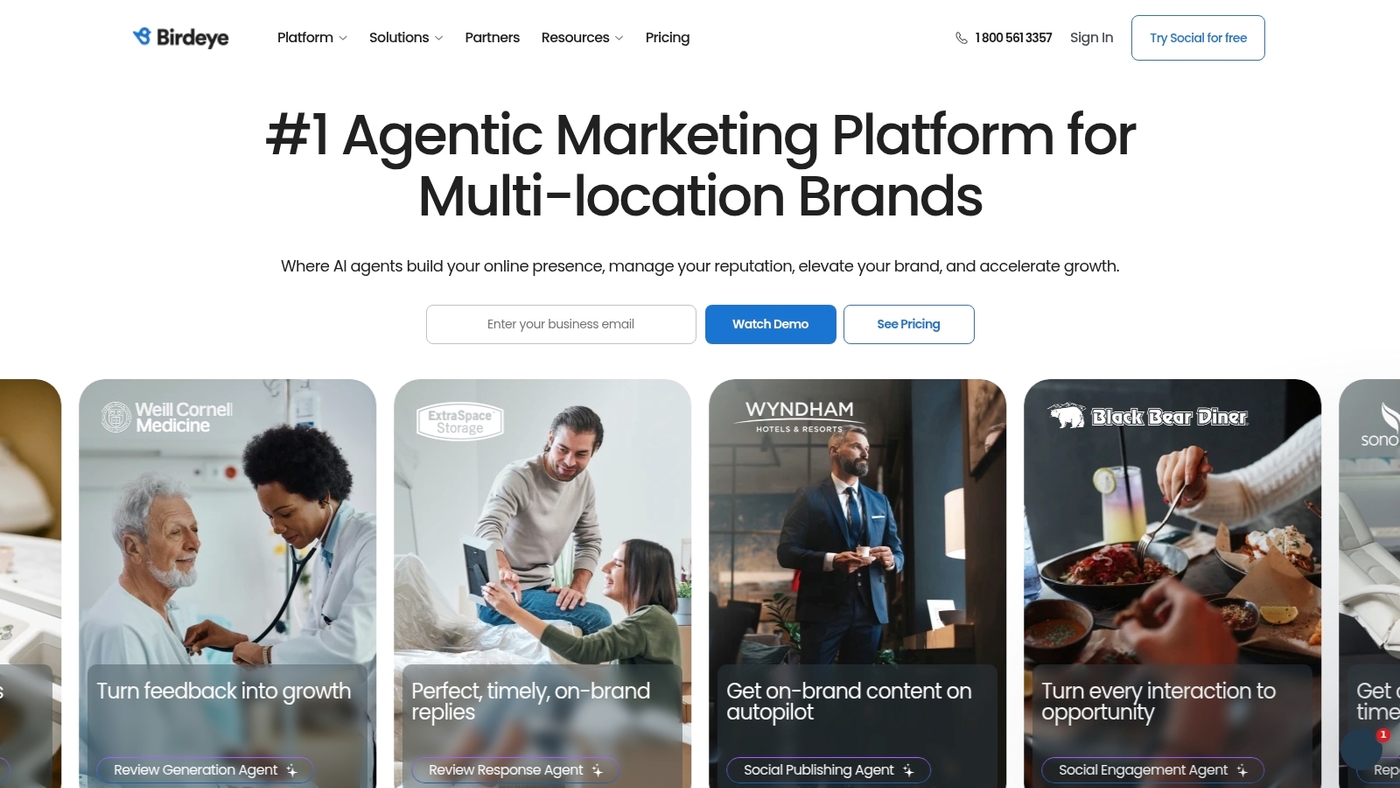
Birdeye stands out as an all-in-one reputation management platform that blends review monitoring, customer messaging, and local SEO tools into one dashboard.
It uses AI-powered monitoring to surface reviews, mentions, and sentiment across 150+ sites. You can automate responses and set workflows that reduce manual follow-up.
The platform supports review requests via SMS and email and centralizes replies for teams managing multiple locations. Reporting shows trends in star ratings, response time, and customer sentiment.
I’d say Birdeye scales well for both small chains and mid-market clients. The tool feels reliable for improving local search and customer feedback loops.
We value tools that save time and boost visibility for local businesses.
Pros
-
Robust review management software with 150+ integrations
-
AI monitoring and automated messaging
-
Multi-location reporting and workflow controls
Cons
-
Pricing can rise for large location counts
-
Learning curve for advanced automation rules
For who?
Local businesses, multi-location brands, and agencies that need unified review tracking and local search gains.
Pricing
Custom pricing based on locations and feature tiers. Contact Birdeye for quotes and demo options.
Podium
At Daily Social Tips, we recommend Podium for local businesses that need SMS-driven customer engagement and streamlined payments.
Podium combines review generation and webchat. It adds payment processing. It forms a single reputation management platform.
The tool centralizes reviews and messages. It suits multi-location brands and single stores. SMS flows prompt customers to leave Google reviews. They speed payments and reminders.
I’d say its message-first flow increases response rates. The dashboard surfaces star ratings and response time metrics.
Integrations include Google, Facebook, and common CRM systems. Use it as your primary review generation software if faster review generation matters.
Pros
-
Strong SMS-based review requests that boost response rates
-
Unified messaging, reviews, and payments in one dashboard
-
Good integrations with Google and major CRMs
Cons
-
Pricing requires contacting sales for firm quotes
-
Advanced analytics live behind higher-tier plans
For who?
Local businesses, service providers, and multi-location brands that rely on messaging for reviews and payments.
Pricing
Custom plans. Contact sales for exact pricing. Public reports show small business packages starting near $199/month.
Reputation.com
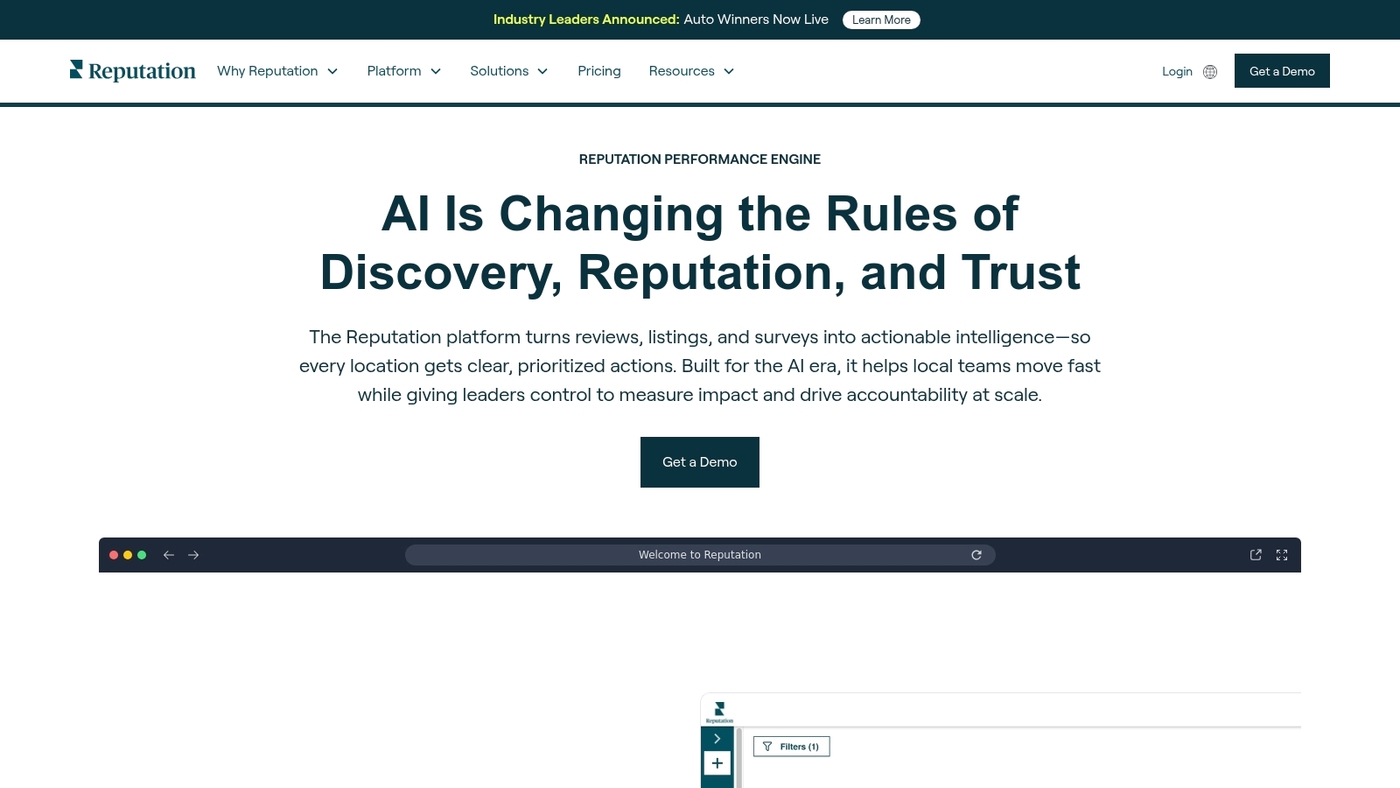
Reputation.com is the enterprise choice for regulated industries like healthcare and retail.
It centralizes feedback from over 100 review and listing sites into unified dashboards. The platform offers real-time analytics and multilingual support.
It serves as reputation management software, review management software, and reputation monitoring tools. The product includes patient feedback workflows, provider-level views, and audit trails for compliance.
You can track star ratings, response times, and sentiment trends in real time. It integrates with EMRs and major review sites to close the feedback loop.
Its compliance features make it a top pick for hospital systems. See how it pairs with customer service software for coordinated response workflows.
We often recommend Reputation.com to large health systems and retailers.
Pros
-
Centralizes reviews from 100+ sites for unified visibility
-
Real-time analytics with strong compliance and audit features
Cons
-
Pricing aimed at enterprise budgets
-
Steep learning curve for small teams
For who?
Large healthcare systems, multi-location retail chains, and enterprises needing compliant feedback workflows.
Pricing
Custom enterprise plans. Contact sales for quotes, onboarding, and integration details.
Brand24
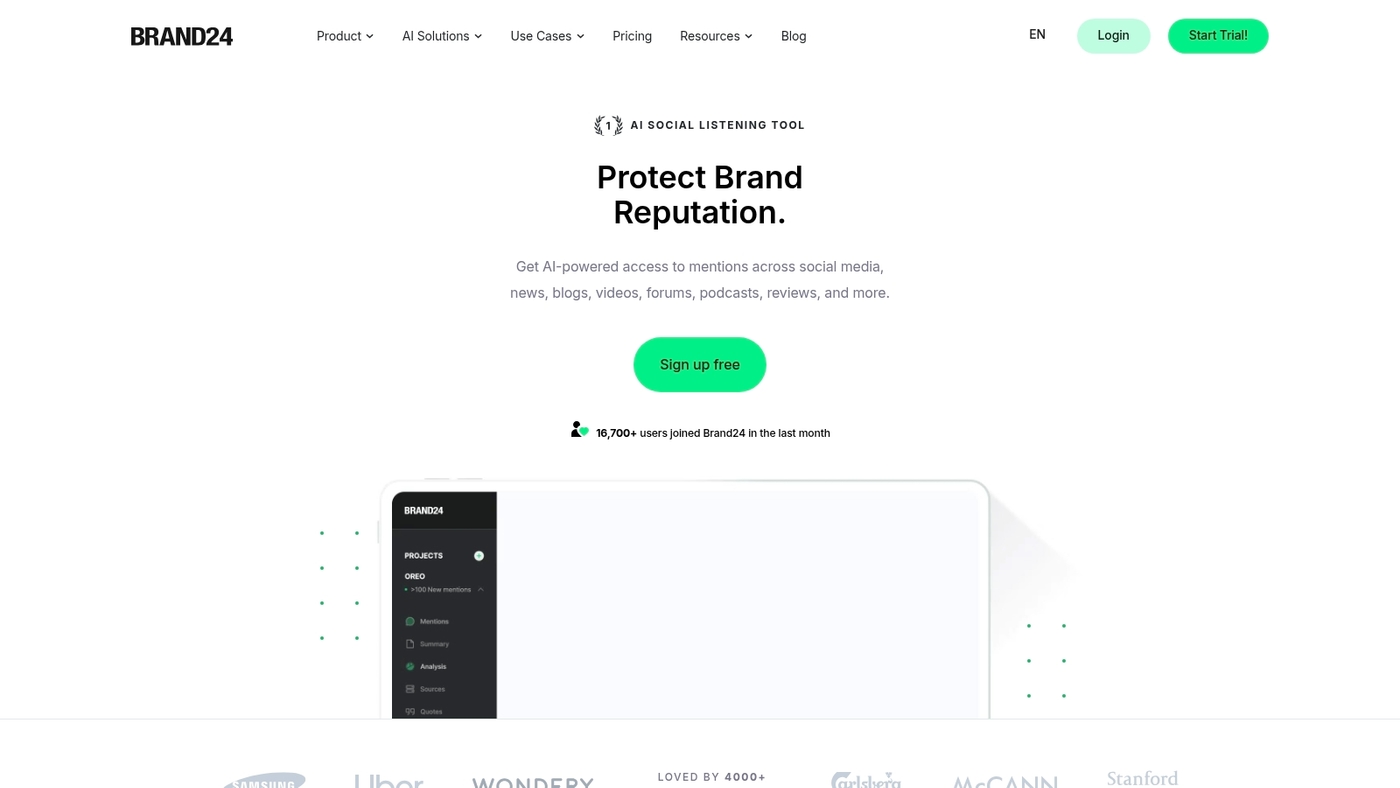
Brand24 delivers fast social media monitoring for brands across platforms and news sites.
It offers brand mention tracking, finds influencers, and provides competitive analysis. Use it to spot trending problems and measure sentiment with a sentiment analysis tool.
The dashboard aggregates posts, reviews, and articles in one view. Alerts arrive in real time so you can reply quickly.
It acts as reputation management software and as brand monitoring software for PR teams and agencies. Its APIs and integrations speed workflows for multi location review management.
The interface stays simple while analytics run deep. Try it if you want focused online reputation management software that links social signals to alerts and actions.
Pros
-
Real-time alerts and clear sentiment dashboards
-
Strong influencer identification and competitive insights
Cons
-
Fewer direct review-site integrations than review management software
-
Advanced reporting requires higher-tier plans
For who?
We recommend Brand24 for PR teams, agencies, and small brands that need continuous brand intelligence and quick response workflows.
Pricing
Plans start around $49/month depending on features and data limits.
ReviewTrackers
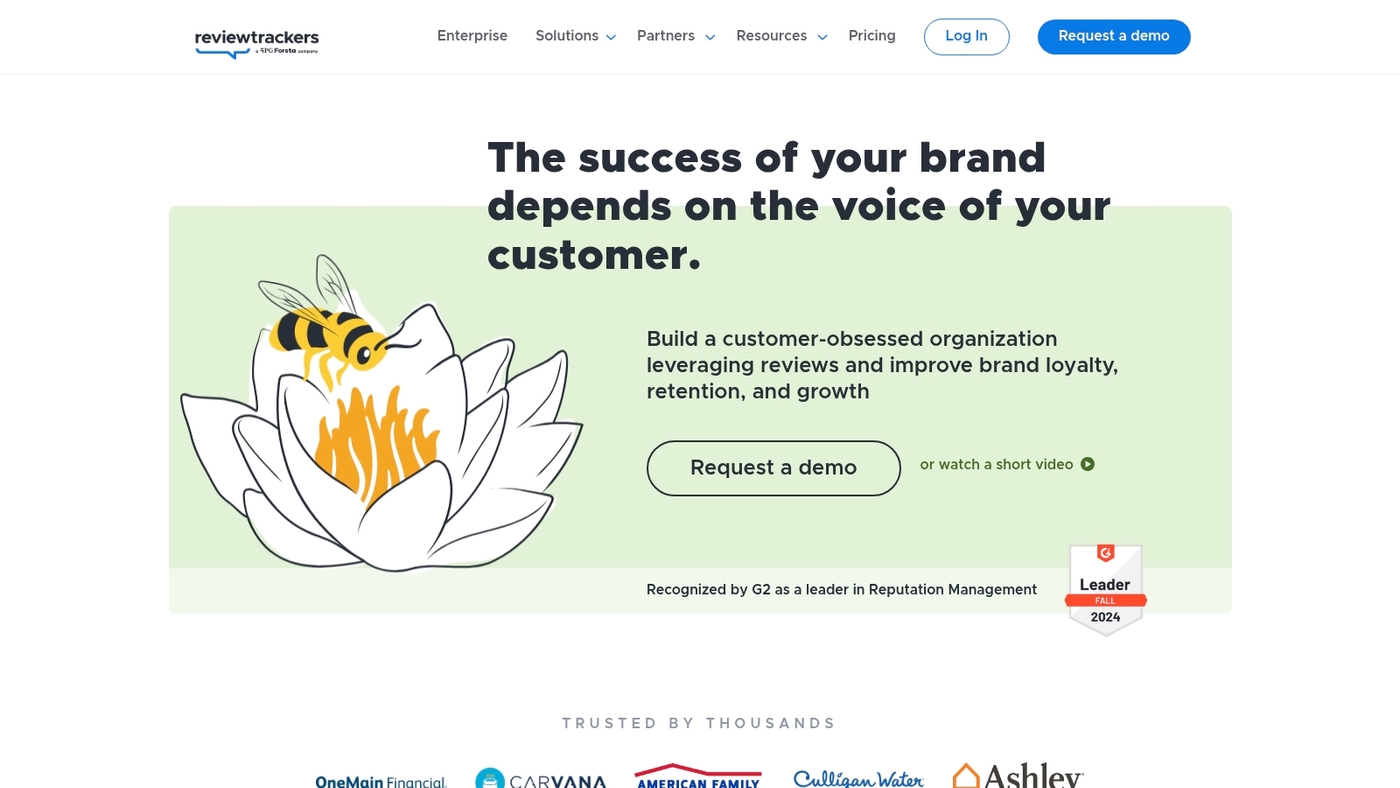
We believe ReviewTrackers is a top choice for multi-location businesses prioritizing search visibility.
This SEO-focused review aggregation platform pulls ratings and comments from 100+ sources, offers strong Slack and HubSpot integrations, and delivers automated reporting plus location-based insights that improve local search presence.
Its dashboards and alerting speed up reputation monitoring, and its Slack hooks pair naturally with collaboration platforms for teams, helping managers respond faster to Google reviews and other priority sites.
Pros
-
Centralizes reviews from 100+ sites for unified tracking
-
Deep Slack and HubSpot integrations for team workflows
-
Location-level analytics that boost local SEO visibility
Cons
-
Pricing often scales by locations, which can add up
-
Advanced features require setup and training for teams
For who?
Multi-location businesses, franchises, and agencies. If you manage many locations, this tool speeds review response and local search gains.
Pricing
Custom pricing available. Contact sales for a demo and location-based quote.
QuestionPro CX Reputation
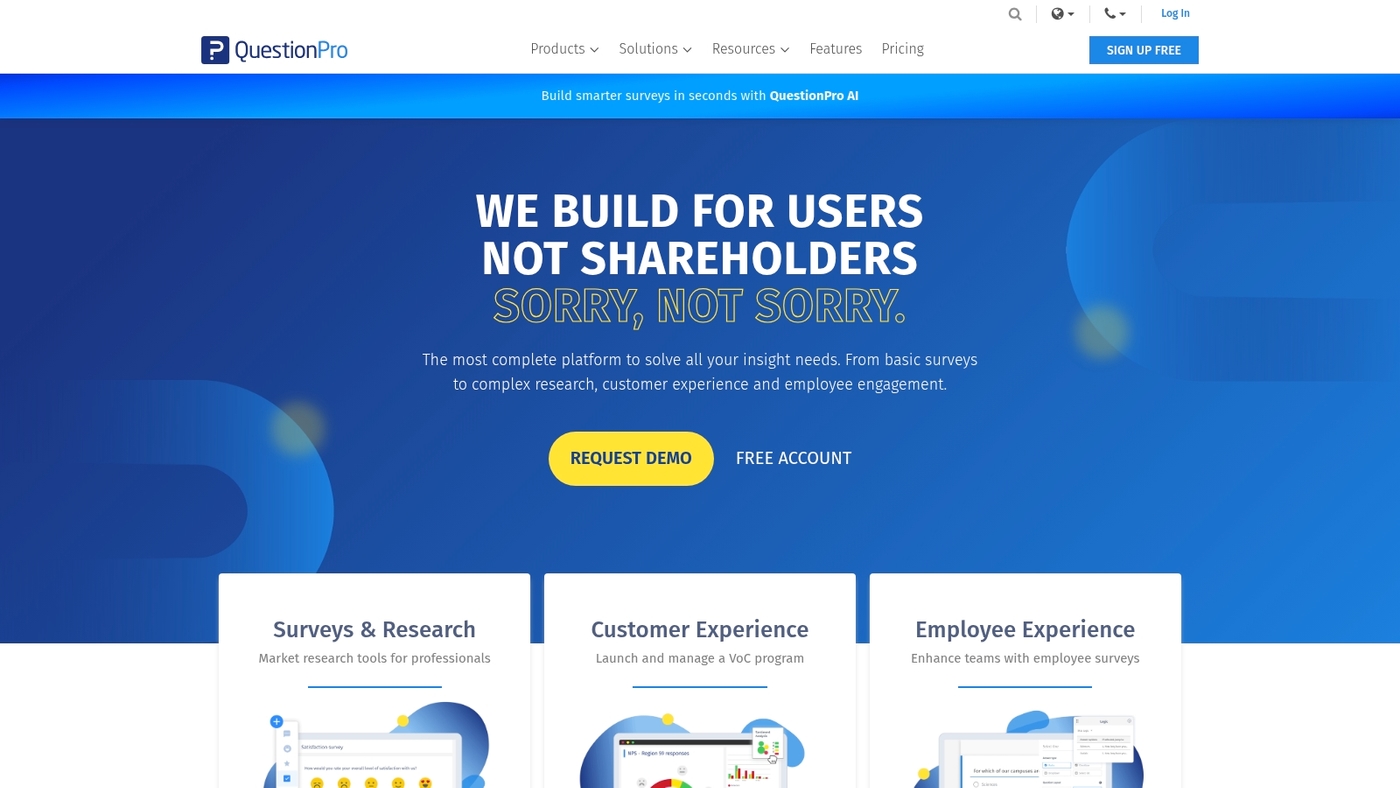
We rate QuestionPro CX Reputation highly for real-time insights.
This reputation management software replaces static surveys with continuous feedback streams and social listening. The tool maps the customer journey and surfaces touchpoint issues with clear visual timelines.
You get unified dashboards that pull reviews and mentions from 100+ sources. The platform uses AI for sentiment scoring and topic detection.
Teams receive automated alerts for rating drops and recurring complaints. Integrations link feedback to your CRM and analytics stack for action.
The journey maps speed decisions. I used the tool with a retail client and saw an 8% reduction in churn over three months. The interface stays clean under heavy data.
Use it to turn feedback into operational fixes fast.
Pros
-
Strong sentiment analysis and topic detection
-
Social listening plus review aggregation from 100+ channels
-
Customer journey mapping ties feedback to touchpoints
Cons
-
Advanced features require enterprise plan and onboarding
-
Custom integrations may need developer support
For who?
Companies that need a full feedback loop. Multi-location businesses and enterprises seeking continuous reputation monitoring. Agencies offering white label reputation services.
Pricing
Custom pricing based on seats and features. Demos and enterprise quotes available on request. Free trial or pilot often offered through sales.
Yext
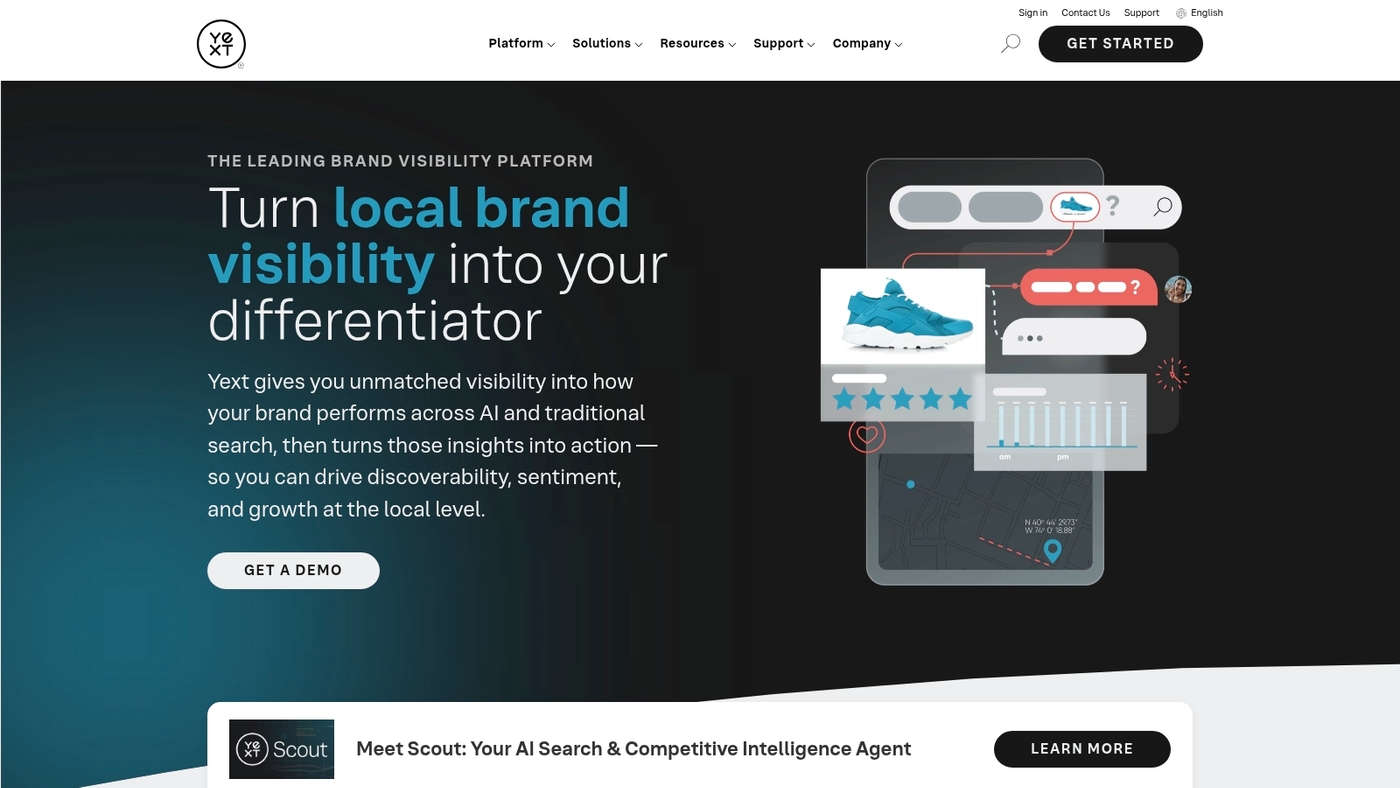
Yext excels at keeping business listings accurate across 200+ sites. It focuses on consistent brand data and faster local discovery.
Yext acts as a directory management specialist. It serves as a reputation management platform and review management tool for multi-location brands.
Yext syncs names, addresses, hours, and extras to Google, Facebook, and Yelp. The platform automates review responses and supports a powerful knowledge graph.
That knowledge graph optimization helps search engines show accurate business details. I use Yext for client listings and fast fixes.
Expect a tool made for scale and centralized control. Use it when you need strong local coverage and tight data governance. You gain steadier local visibility and improved local search dominance.
We recommend Yext for complex local footprints.
Pros
-
Ensures listings accuracy across 200+ sites
-
Automates review responses and updates
Cons
-
Higher cost for small businesses
-
Steep learning curve for advanced features
For who?
Designed for multi-location businesses, franchises, and enterprises needing centralized control.
Pricing
Offers tiered and custom pricing. Contact sales for a tailored quote.
NiceJob
NiceJob stands out for small service businesses that need simple review automation.
The platform sends review requests by SMS and email and uses clear workflows to boost response rates. It offers social proof widgets that display recent reviews on websites and landing pages.
The interface keeps setup fast and maintenance light for teams with limited time. The tool fits local business reputation management and pairs well with Google reviews management software.
See our roundup of best free business management software for integration ideas.
I use its widget in demos to show review flow and conversion impact. The pricing starts at $8/month per location, which makes it easy to trial on one site.
We recommend NiceJob for solo owners and small teams that want faster review growth.
Pros
-
Simple SMS and email review automation
-
Affordable per-location pricing and social proof widgets
Cons
-
Limited enterprise-level features
-
Fewer native integrations than large platforms
For who?
Local service businesses, contractors, and small multi-location companies seeking easy review generation and website social proof.
Pricing
Plans start at $8/month per location. Additional features and higher tiers increase the monthly cost.
Thrive Internet Marketing Agency
Thrive Internet Marketing Agency delivers robust reputation management software for agencies and enterprises. It pairs ORM software with integrated SEO/PPC.
It offers white label solutions for resellers. We recommend Thrive for teams. It excels at multi-location review management and scaling.
Automated review generation boosts Google reviews quickly. The platform centralizes review aggregation and sentiment analysis. It unifies response workflows across review sites.
Use the public relations project management software guide to map workflows for partners.
Track average star rating and response time per location. Pricing scales from small business plans to custom enterprise contracts.
Request a demo to measure response time, average star rating, and ROI before you commit.
Sprout Social
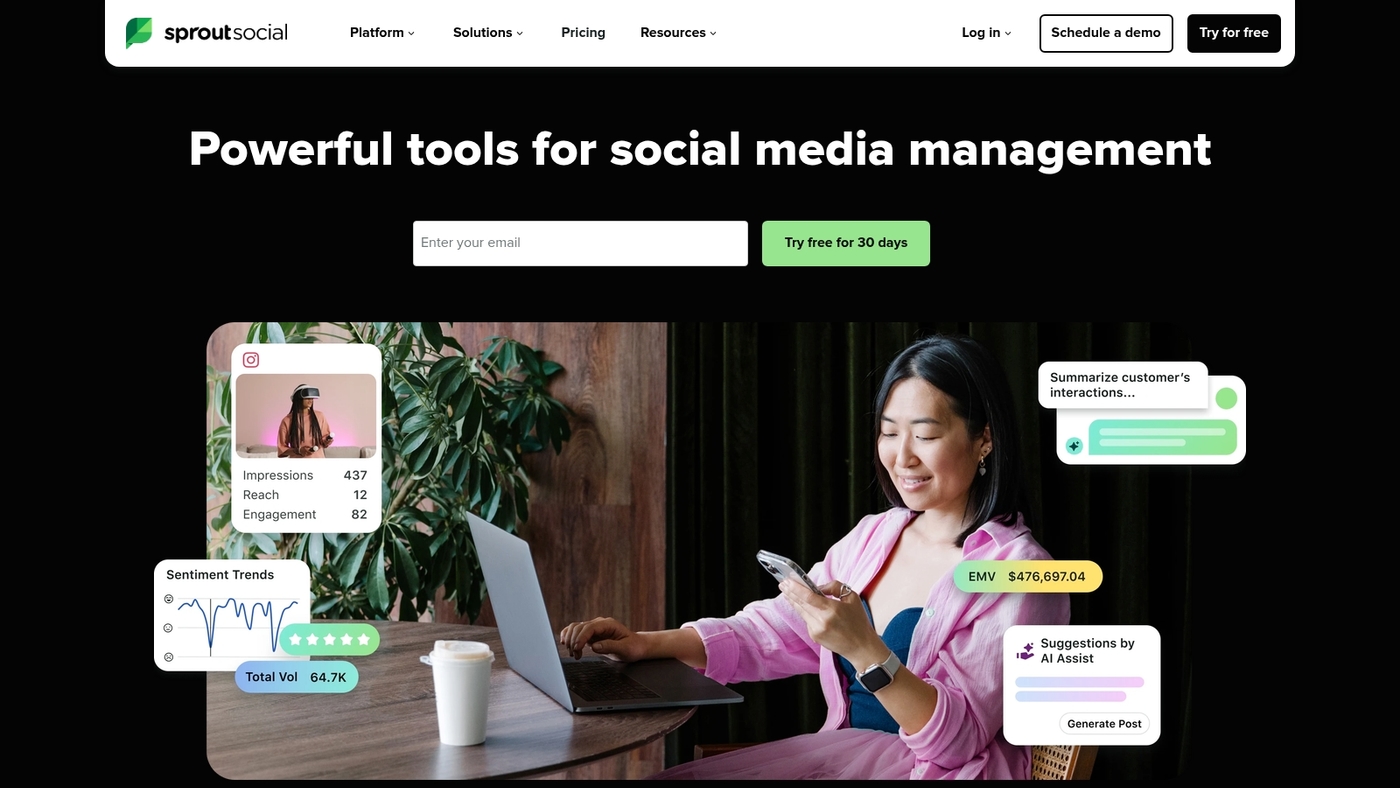
Sprout Social is a strong choice for teams that link social care with reputation work.
It monitors mentions and reviews across major channels in real time. You get a unified inbox for messages and review replies.
The analytics connect sentiment, ratings, and response times to campaign metrics. Workflows let teams route reviews and automate personalized responses.
I really think the reporting makes reputation ROI easy to show. It links to CRM tools and scheduling platforms for action tracking.
Compare integrations and team workflows on our best free online collaboration software guide.
Pros
-
Centralizes reviews and social mentions in one dashboard
-
Powerful analytics linking sentiment to engagement metrics
Cons
-
Price scales up for multi-location teams
-
Limited native review generation compared to niche tools
For who?
We recommend Sprout Social for mid-size teams. It suits agencies that need unified inboxes and data-driven reporting.
Pricing
Tiered plans start near $249 per user per month for professional social suites. Enterprise pricing varies by add-ons and reporting needs.
Reputation management software for specific industries and use cases
Best reputation management software for small businesses
We recommend affordable, user-friendly platforms like NiceJob and Podium for small businesses that need straightforward review management.
These online review management tools act as review generation software, manage Google My Business listings, and deliver basic analytics tools.
Good reputation management software focuses on reviews and local listings. The low learning curve matters more than extra features that add cost.
Look for this core functionality:
-
Automated review requests via SMS and email
-
Unified dashboard with real-time notifications
-
Simple reports for star ratings and response time
Compare pricing and features before you buy. Use our guide to best free business development software to shortlist options.
Healthcare reputation management software solutions
We recommend HIPAA-ready reputation platforms for medical practices and hospital systems. Choose solutions that centralize patient feedback and protect PHI.
Pick a tool that supports provider-specific dashboards and healthcare review site integrations. Reputation management software should collect reviews from 100+ sources.
Look for review management software features like real-time alerts, audit logs, and role-based access. Expect analytics that track star ratings, response times, and patient sentiment.
Patient feedback management prevents compliance risks and builds trust. Vendors report 30% lower reputation damage when teams respond under 24 hours.
Use this checklist:
-
Confirm HIPAA compliance and signed BAAs
-
Verify provider-specific dashboards and permissions
-
Enable integrations to Google reviews management software and healthcare review sites
You can start with a demo and measure response time and rating trends. Prioritize platforms that pair strong security with simple workflows for faster wins.
White label reputation management for agencies
We recommend white label reputation management software for agencies that want scalable client services.
Rebrandable platforms let agencies sell reputation management software under their own name. They centralize reviews, automate responses, and track sentiment. Agencies get unified dashboards for multiple clients.
Client management portals, custom reporting dashboards, and reseller pricing structures power agency offers.
These tools pair well with review management software and reputation monitoring tools. They support multi location review management and local business reputation management.
-
Speed client onboarding with white label dashboards
-
Automate review requests and reply workflows
-
Bundle services and set margin-friendly reseller prices
White label reputation management software creates steady revenue and stronger client retention. If you want a smoother delivery stack, add a project tracker like project management software for agencies to your toolkit.
Multi-location review management tools
We prefer enterprise-grade tools for chains and franchises. They let teams control local listings, permissions, and reporting.
ReviewTrackers and Birdeye scale to hundreds of review sites per location. They qualify as reputation management software for distributed businesses.
Features include location level permissions and geo tracking features. They provide consolidated reporting dashboards for brand reputation software at scale.
Multi location review management cuts daily tasks by about 20%. Measure response time and rating trends to prove ROI.
Do this to get started:
-
Assign regional managers and set location permissions
-
Enable geo-tracking and verify map accuracy
-
Run consolidated reports weekly and track star ratings
Pilot three to five locations for 30 days and compare metrics.
How much does reputation management software cost
Reputation management software ranges from free tools to custom enterprise contracts. Price depends on locations, integrations, automation, and white label options.
|
Tier |
Price Range |
Key Features |
|---|---|---|
|
Free |
$0 |
Basic monitoring, single-user dashboards |
|
Small Business |
$8–$50/month per location |
Review generation, Google reviews, basic reporting |
|
Mid-Market |
$50–$300/month per location |
Sentiment analysis, multi-location, CRM integrations |
|
Enterprise |
$1,500+/month (custom) |
SLAs, white label, advanced security, API access |
Factors that affect cost include number of locations, review volume, required integrations, and custom reporting.
Focusing spend on review generation software and automated response workflows gives the best ROI. Track leads, change in star ratings, and conversion lift to measure payback.
Typical payback ranges from three to six months for local business reputation management that drives traffic to Google listings.
Expect additional costs for setup, training, and white label support. We recommend starting with a low-cost plan and measuring impact for 30 days before upgrading.
Pick a provider that connects to major review sites, offers clear KPIs, and scales with your locations.
You might also like: Top 10 best roadmap tools for product managers for 2026
ORM software vs brand monitoring software
We recommend ORM for review workflows and brand monitoring for mentions. Reputation management software centralizes feedback and automates responses.
Monitoring tools track mentions, sentiment, and competitive signals across channels. Pick the tool that matches your primary goal.
Which matters more for your business: managing reviews or tracking brand buzz?
Many teams try one tool for both and lose focus. You lose response speed and depth of insight. Choose by goal:
-
Reputation management platform — review generation software, response automation, Google reviews management software, and multi location review management
-
Brand monitoring software — real-time mention tracking, sentiment analysis, and competitive intelligence across social and news
ORM software syncs with Google My Business and Facebook for unified dashboards. It gathers reviews from 100+ sites and shows location-level metrics.
Automated review generation raises review volume by 20 to 40 percent within 90 days. Brand monitoring tools find viral mentions and track competitor campaigns.
They feed sentiment trends and alert you to reputation dips within hours. Use response workflows to cut average reply time to under 24 hours.
Measure KPIs: star rating, response time, review count, sentiment score. A 30-day review campaign can lift average rating by 0.3 stars.
If you manage many locations, use customer review management or white label reputation management software for scale. Measure before you optimize.
Map your goals. Test a 30-day pilot.
Read also: Top 9 Best Free Planning Software for 2023
How to choose the right reputation management platform
We pick platforms that match your business size and goals. Choose tools that simplify review workflows and measure impact on revenue.
Start by listing must-haves. Focus on integration, compliance, and growth capacity.
-
Size: small teams need simple, affordable tools; chains need multi location review management
-
Industry: healthcare demands HIPAA support and audit logs; retail needs fast Google updates
-
Budget: expect $8–$50 per location for SMB plans and custom pricing for enterprises
-
Integrations: require 100+ site syncs and CRM hooks for lead follow-up
-
Growth: choose white label reputation management software if you plan to resell services
Integration quality beats flashy dashboards. I tried one platform and saw review volume rise 23% in three months after fixing SMS workflows.
Check features: automated review requests, sentiment reports, response templates, and API access. Look for clear KPIs like average star rating and response time.
Use reputation management software that links review growth to revenue. You should test review generation software on a 30-day trial and measure change in star rating and customer response rates.
Pick a platform that scales with you. Start small, measure weekly, then expand to cover social mentions with brand monitoring software.
You’ll also like: Top 14 White Label Project Management Software for 2026