Choosing agile project management tools is confusing—features overlap, pricing varies, and integrations can make or break delivery.
The right software simplifies sprint planning, backlog grooming, and cross-team collaboration so work actually moves forward.
In this guide you’ll discover the top 12 best agile project management tools, what each excels at, and how to pick the one that fits your team’s size and process.
What are agile project management tools
Agile project management tools are software platforms that support iterative development and team collaboration. They organize work into short cycles and visible tasks.
They help teams plan sprints, groom backlogs, and deliver incremental value. Ever wondered how teams ship features every two weeks without chaos?
Iterative development cycles use feedback loops and measurable milestones to reduce risk. Scrum tools add time-boxed sprints, roles, and ceremonies for alignment.
Kanban tools use continuous flow, WIP limits, and pull-based boards to speed throughput. Good agile task management tools include team collaboration features, burndown chart software, and velocity tracking.
Burndown charts show remaining work each day and reveal scope drift quickly. Teams often choose sprint lengths of one to four weeks for predictable cadence.
Velocity measures story points completed per sprint and guides capacity planning. Backlog management tools let you prioritize user stories and map dependencies visually.
User story mapping tools align features with customer outcomes and product roadmaps. Agile reporting tools produce cumulative flow diagrams, cycle time reports, and dashboards.
Enterprise agile tools and scaled agile framework tools coordinate multiple teams and portfolios. Many teams pick free agile project management tools for trials, then upgrade for integrations.
I really think that visible boards speed decisions and cut meeting time. Start a free trial to centralize workflows and test sprint planning features.
Key features to look for in agile project management software
Sprint planning and backlog management tools
Good agile project management tools include sprint planning features that help you organize work, split user stories, and set clear sprint goals.
Backlog management tools let you prioritize, tag, and groom items quickly. They keep the highest-value work ready for the next sprint.
Estimate effort with story points or hours. Track progress with burndown chart software and velocity reports to spot scope drift early.
Use capacity planning to balance load across team members. Velocity trends help you commit to realistic scope each sprint. (We’ve seen teams improve predictability by 40% with consistent velocity tracking.)
Explore reliable sprint planning software to match your process. Start a free trial to centralize sprint work and reduce planning time.
Scrum and Kanban board capabilities
Boards let you map flow with customizable visual boards. You place cards for tasks and move them across stages.
Swim lanes separate teams or priorities. You set work-in-progress limits to lower multitasking and speed delivery.
Card details hold acceptance criteria, estimates, attachments, and links to backlog management tools and sprint planning tools. How often does your team lose context switching between tools?
A mix of Scrum and Kanban features fits most teams. Scrum gives timeboxed focus while Kanban keeps flow steady.
Look at the best options before you commit. See curated free choices at best free Scrum tools for quick trials.
Agile reporting and burndown chart software
Look for burndown charts that plot remaining work per day. Choose solutions with velocity tracking across three sprints. Add a custom dashboard for stakeholders.
Cumulative flow diagrams reveal bottlenecks by state and age. Exportable reports help quantify cycle time and lead time.
Live visuals reduce meeting time and clarify priorities. Set alerts for scope creep and compare planned versus done each sprint.
Make CSV exports part of your sprint review routine. Start a free trial to view live burndown charts and velocity trends.
User story mapping and roadmap tools
Good user story mapping tools let you group stories by persona, goal, or release. They help you spot dependencies, surface missing assumptions, and slice work into testable increments.
Tying those maps to product roadmaps forces clearer priorities. Teams that link stories to measurable outcomes cut scope churn by about 20%.
Choose solutions that sync with backlog management tools and burndown chart software. Look for drag-and-drop maps, exportable roadmaps, and simple stakeholder views.
Align team efforts by assigning owners and setting release milestones by quarter. Track progress with sprint planning tools and agile reporting tools you already use.
Top 12 agile project management tools to consider
monday.com
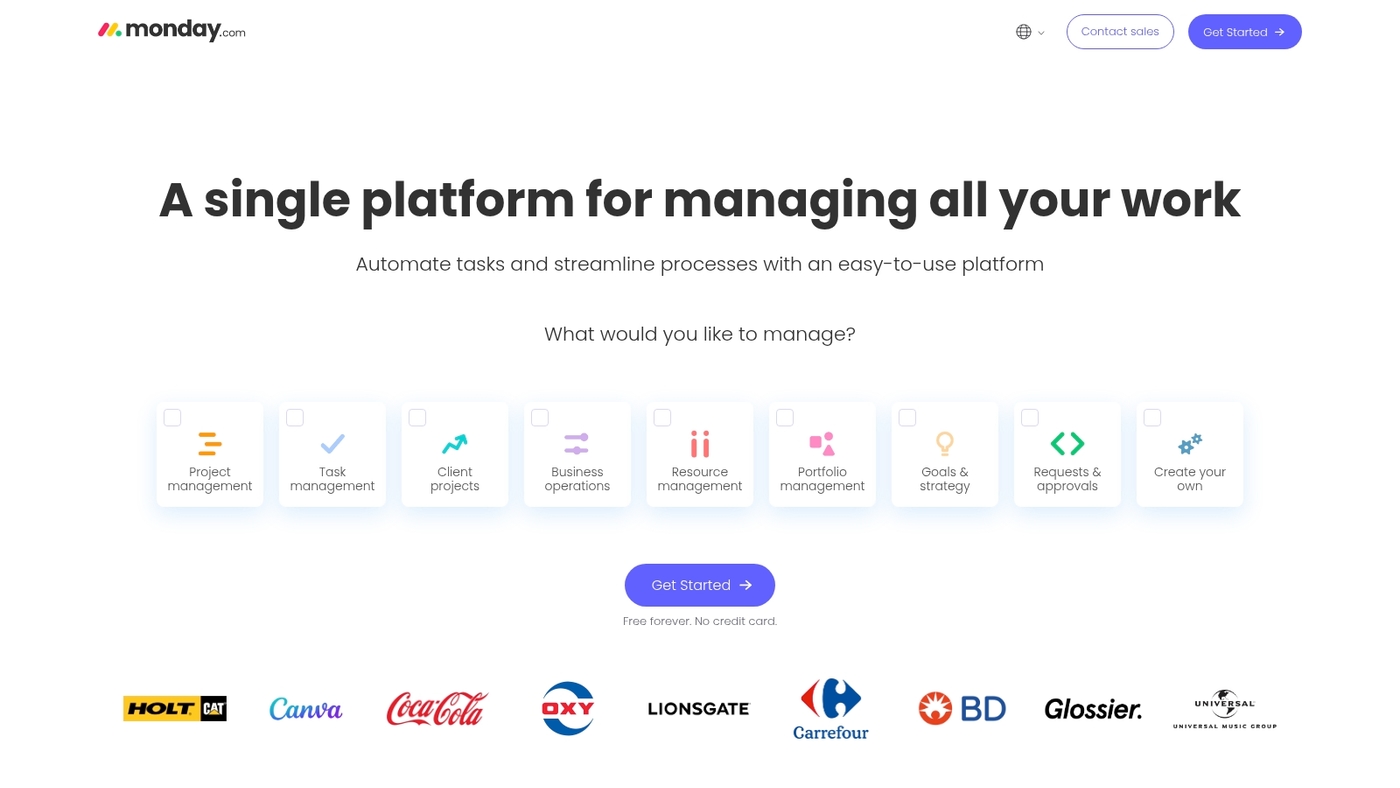
monday.com is a highly customizable platform built for agile teams. It serves as a work operating system with flexible dashboards and resource views.
Visual boards support Scrum and Kanban methods and help you run effective sprints. The tool offers backlog management tools, sprint planning tools, and agile reporting features.
You can set rules with workflow automations to reduce manual updates and speed delivery. Integrations with repos and communication apps keep work aligned across tools.
The flexible views and automations cut meeting time and clarify ownership. The interface scales from small teams to large departments. (Plus, the color-coded boards make standups way more visual.)
Start with templates, then tailor boards to your processes for faster onboarding and clearer work tracking.
Pros
-
Flexible templates and customizable boards for Scrum and Kanban
-
Strong automations and integrations that reduce manual work
-
Visual dashboards that speed decision-making
Cons
-
Advanced features require higher-tier plans
-
Complex setups need time and governance to master
For who?
Product teams, marketing squads, operations groups, and mid-size to enterprise teams seeking visual agile project management tools.
Pricing
Free tier available. Paid plans typically start around $8–$16 per user per month, billed annually. Enterprise plans offer custom pricing and advanced controls.
ClickUp
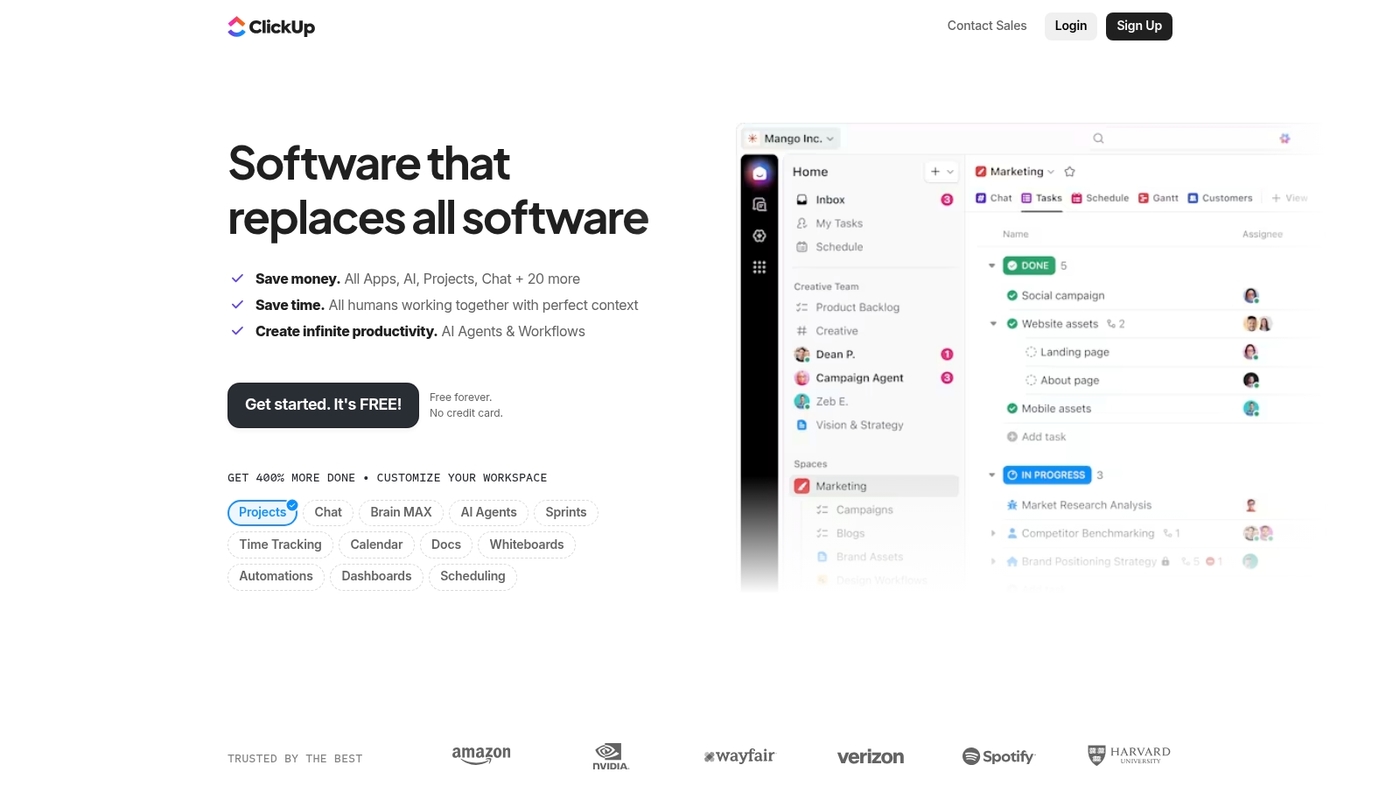
ClickUp centralizes projects, docs, goals, sprints, and automations in one place when teams need a single, configurable workspace for agile work management.
It offers multiple views for boards, lists, Gantt charts, and calendars. The platform includes backlog tools and burndown widgets for sprint visibility.
Rich task fields and templates enable sprint tracking and reporting. You can link docs to tasks and measure progress with goals.
Its flexibility helps teams scale processes without adding admin overhead. See our task management tools overview to compare options.
Pros
-
Rich customization for workflows and task fields
-
Integrated docs, goals, and time tracking
-
Competitive pricing for teams of all sizes
Cons
-
Steep learning curve for new users
-
Some advanced features require paid plans
For who?
Agile teams that need an all-in-one platform and power users who value customization.
Pricing
Free tier available. Paid plans start around $5 per user per month. Enterprise pricing is custom.
SmartSuite
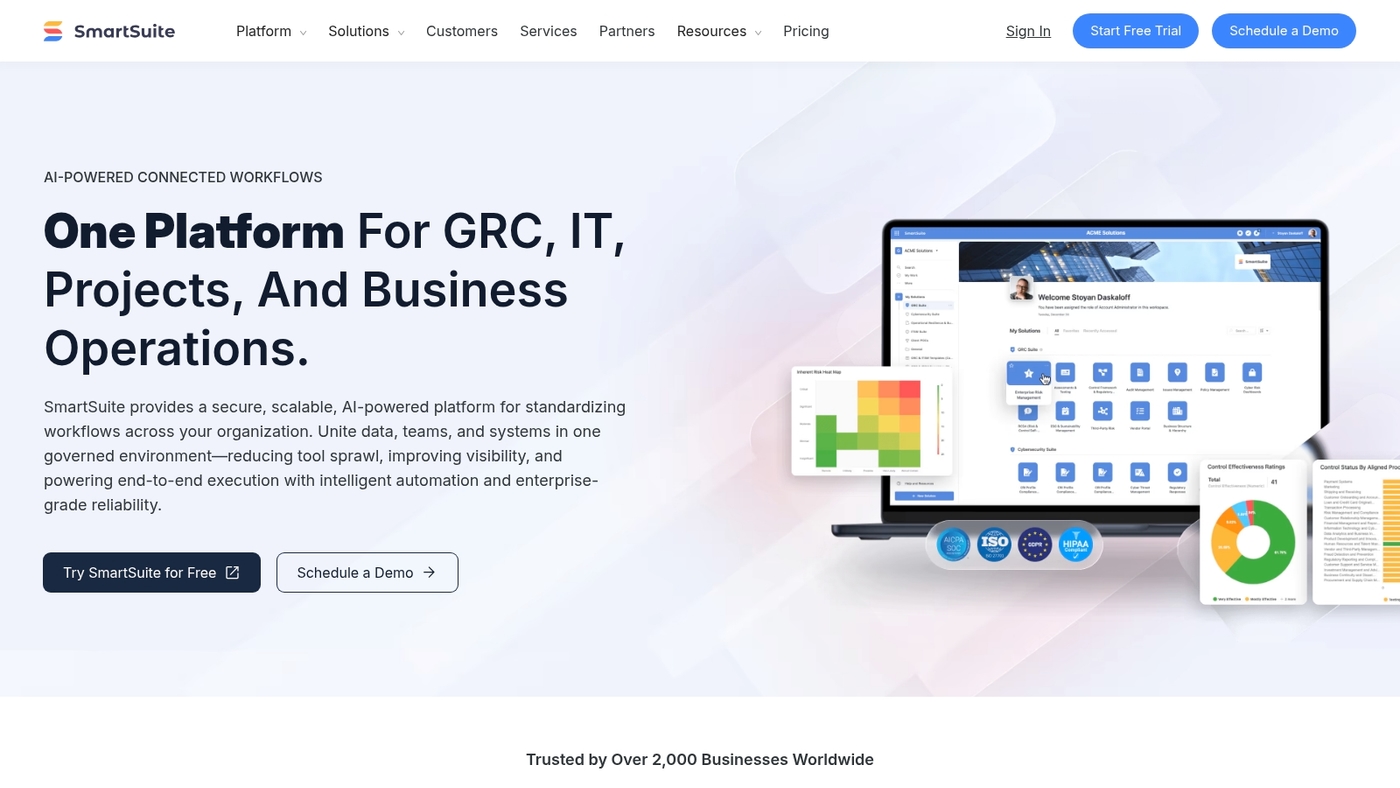
SmartSuite is an all-in-one flexible platform built for teams that run sprints, manage backlogs, and track delivery.
It combines boards, forms, automations, and dashboards so you keep work, plans, and metrics in one place. You can map user stories, plan releases, and run standups with the same workspace.
Teams pick from cross-industry templates and shape custom fields to match workflows. The system includes reporting for velocity and burndown charts plus integrations with code and CI/CD tools.
You get visual sprint boards and backlog management tools with portfolio views for multi-team work. SmartSuite balances structure and flexibility better than many agile project management software options.
Pros
-
Strong customization for workflows and fields
-
Built-in reporting and portfolio views for multi-team tracking
-
Fast template setup cuts configuration time
Cons
-
Advanced automations require a learning curve
-
Some enterprise features sit behind higher tiers
For who?
Product teams, PMOs, agencies, and scaling engineering groups that need robust sprint planning, backlog management tools, and agile reporting.
Pricing
Offers a free tier. Paid plans are available for advanced automations and enterprise needs; contact SmartSuite for exact per-user pricing and discounts.
Jira
Jira is an industry-leading agile project management software for software teams. It offers robust issue tracking, sprint management, and customizable Scrum and Kanban boards.
Teams log epics, stories, and subtasks with fine-grained permissions. Automations reduce manual updates and speed delivery.
Jira integrates with Confluence, Bitbucket, GitHub, and CI/CD tools to centralize developer work. You get burndown charts, velocity reports, and custom dashboards for agile reporting.
Portfolio planning and roadmaps support scaling to thousands of users. The Jira Query Language helps you find issues fast. A large marketplace adds hundreds of apps and integrations.
For developer-focused options, see our guide to project management software for developers. Does your team spend hours searching for the right ticket?
Pros
-
Powerful issue tracking and advanced search
-
Flexible Scrum and Kanban boards with automations
-
Deep Atlassian ecosystem and many marketplace apps
Cons
-
Steep learning curve for new users
-
Can feel heavy for very small teams
For who?
Software teams of all sizes and enterprises that need scalable agile project management, dev integrations, and portfolio planning.
Pricing
Free tier available for up to 10 users. Paid plans start around $7.75 per user/month for Standard and $15.25 per user/month for Premium. Enterprise pricing is available on request.
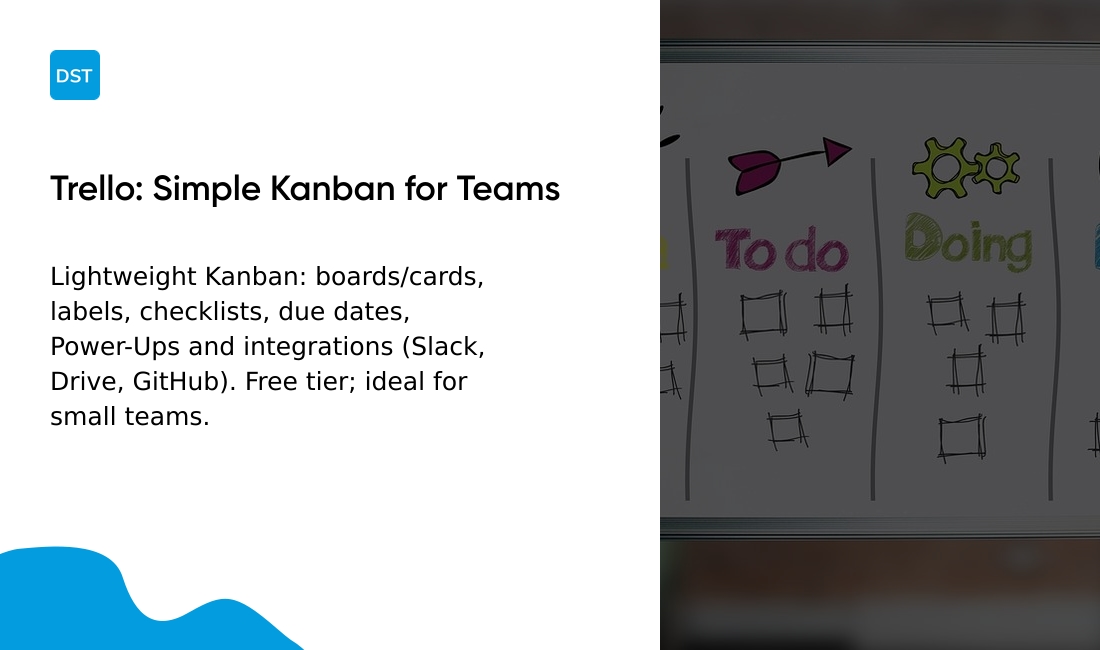
Trello
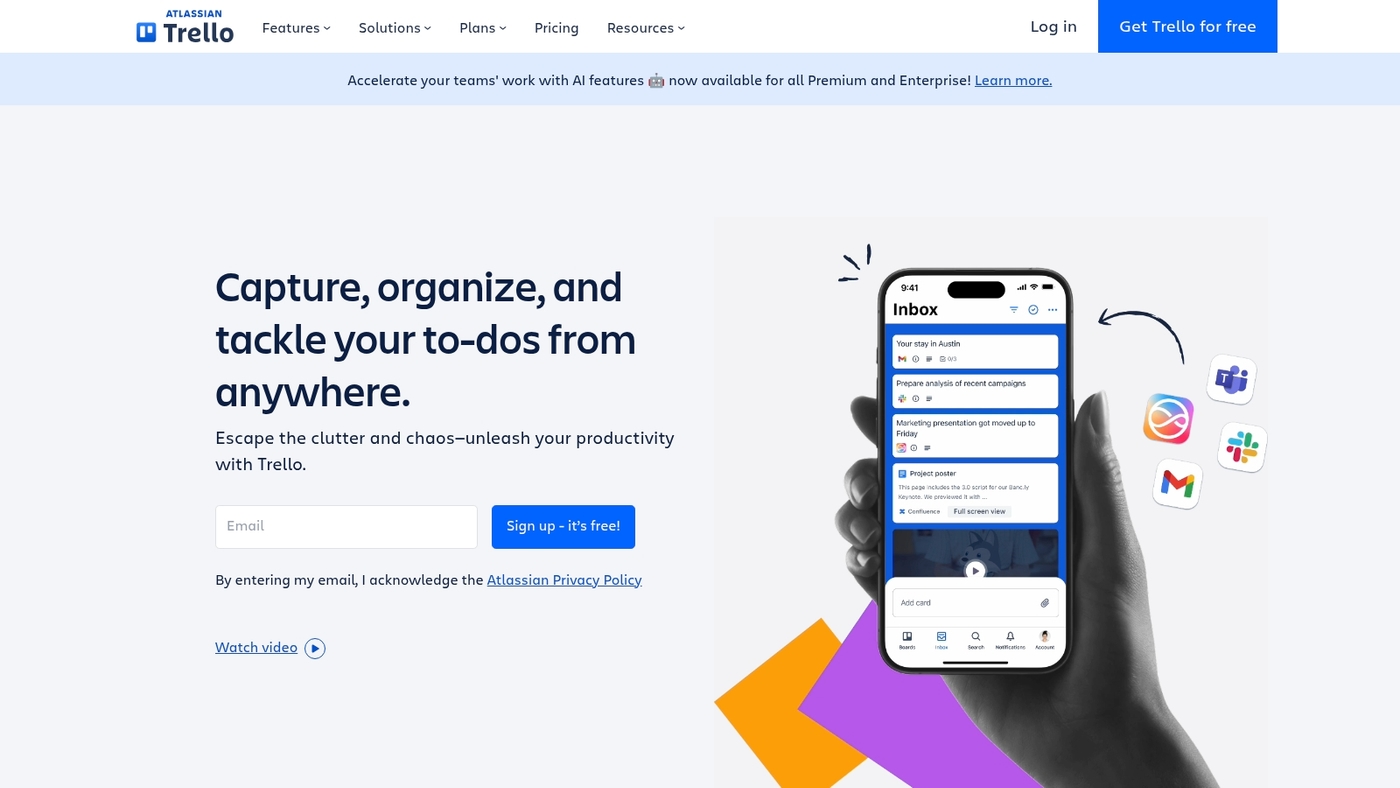
Trello is a lightweight Kanban board for teams that need drag-and-drop simplicity. It uses boards and cards to visualize work.
You can create lists for backlog, in progress, and done. Labels, checklists, due dates, and attachments keep work clear.
Power-Ups add calendars, reports, and simple automation. Trello links with Slack, Google Drive, and GitHub. It serves as one of the agile project management tools for quick sprint planning and lean workflows.
Trello lowers onboarding time for non-technical teams. Try a free board to test a Kanban flow. Learn more on the best free Kanban software list.
Pros
-
Very low learning curve for new users
-
Flexible Kanban boards with visual clarity
-
Free tier covers small teams
Cons
-
Limited native reporting for burndowns
-
Scaling complex workflows requires many Power-Ups
For who?
Small teams, startups, and marketing groups that need simple agile task management tools.
Pricing
Free plan available. Paid plans start around $5 per user per month for basic upgrades.
Asana
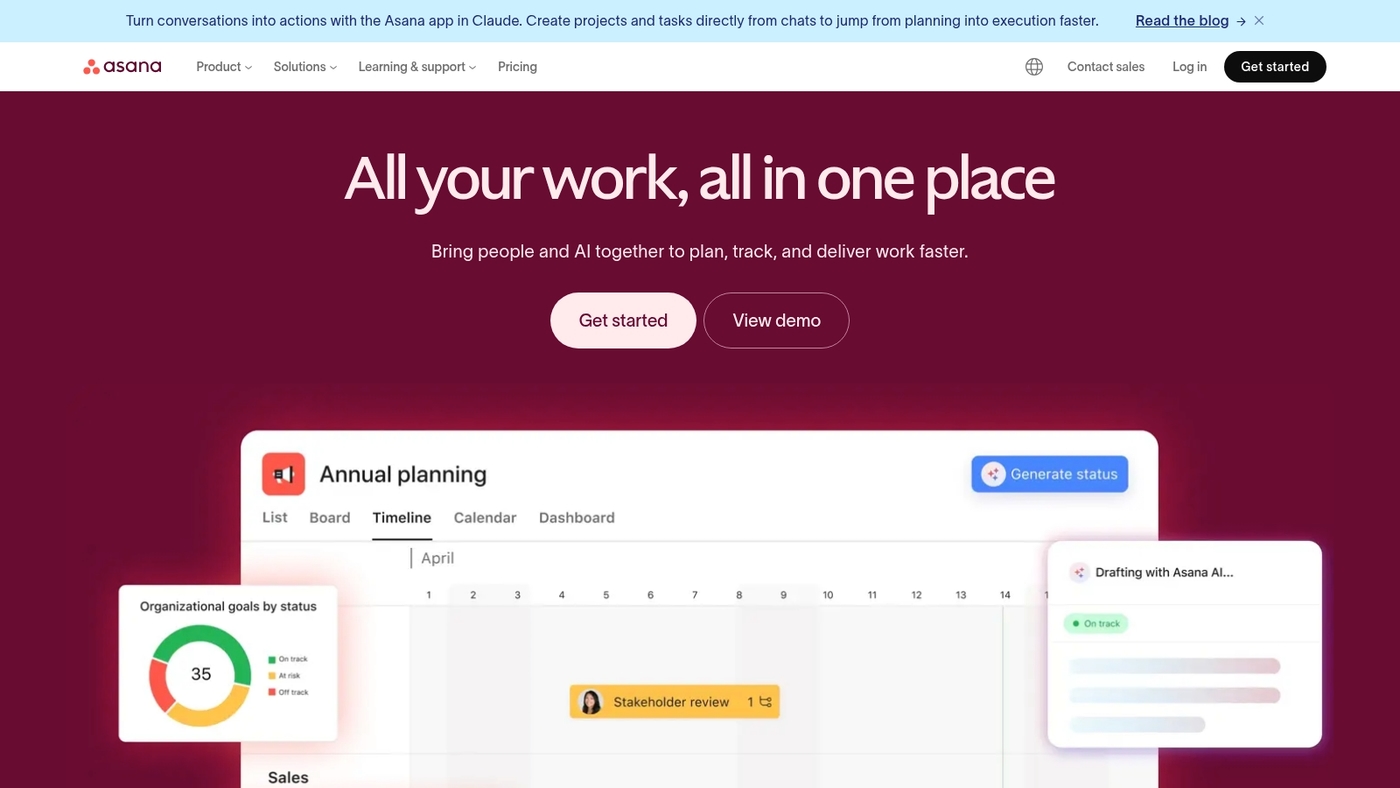
Asana is a versatile agile project management tool built for teams that need clarity and pace.
It offers timeline views, sprint tracking, and task dependencies. You can use it for sprint planning tools, backlog management tools, and agile task management tools.
Asana supports Scrum tools and kanban tools through customizable boards and swimlanes. It includes burndown chart software and basic agile reporting tools for sprint metrics.
Product teams lean on Asana for agile roadmap software and cross-team collaboration. Its balance of simplicity and depth helps teams ship predictable work without steep onboarding.
Pros
-
Clean interface with multiple views for planning and tracking
-
Strong integrations with development and communication stacks
-
Intuitive task dependencies and timeline visualization
Cons
-
Advanced reporting lags behind some enterprise agile tools
-
Cost climbs as you add users and advanced features
For who?
Small to mid-size product teams that need reliable agile project management software with easy adoption. Use it if you want structured sprints and visible backlogs without heavy admin.
Pricing
Free plan available for basic agile workflows. Paid tiers include Premium and Business. Paid plans start near $10.99 per user/month billed annually, with Enterprise pricing on request.
Zoho Sprints
Zoho Sprints is a focused agile project management tool inside the Zoho ecosystem. It helps teams plan sprints, manage backlogs, and run scrum boards with ease.
You get burndown charts, velocity reports, and story point support. The backlog lets you prioritize and tag user stories. You can estimate effort and assign capacity by developer.
Integrations connect work to Zoho CRM, Desk, and developer tools. Automation rules speed repetitive updates. The UI stays light and reduces setup time.
Small teams move from zero to running sprints in under a day. It ranks among agile project management tools for small teams. (Actually, the quick burndown views make sprint reviews way smoother.)
Pros
-
Strong sprint planning and backlog management
-
Built-in burndown charts and velocity tracking
-
Tight integration with Zoho ecosystem
Cons
-
Limited marketplace compared to Jira
-
Not ideal for large-scale portfolio management
For who?
Small to mid-size development teams using Zoho apps or needing simple sprint planning tools.
Pricing
Free plan available. Paid tiers start around $3–$5 per user per month.
Microsoft Azure DevOps
Microsoft Azure DevOps fits large development teams needing both agile planning and CI/CD.
The platform offers boards, repos, pipelines, and test plans. You can map backlog items to releases and track burndown and velocity.
Azure Repos handles Git hosting and branch policies. Azure Pipelines runs CI/CD across cloud and on-prem runners. Test Plans centralize cases and reporting as solid test management.
It scales to thousands of users and supports Azure Active Directory for security. It ranks among agile project management tools for development teams that need integrated DevOps and backlog management tools.
Pros
-
Integrated boards with backlog and sprint tracking
-
Enterprise security and scalable user management
-
Native CI/CD pipelines reduce tool sprawl
Cons
-
Steep learning curve for non-engineering users
-
Costs grow with parallel pipelines and artifacts usage
For who?
Large engineering teams and enterprises that need combined DevOps and agile project management tools. Product and release managers benefit most.
Pricing
Basic plan starts at $6 per user per month. Pipelines include one free Microsoft-hosted parallel job with 1,800 minutes monthly. Additional agents, minutes, and Artifacts incur extra fees.
Rally (Broadcom)
Rally (Broadcom) is an enterprise agile platform built for scaled transformations. Rally supports the Scaled Agile Framework and portfolio alignment.
It centralizes backlog and sprint planning tools for multi-team work. You get advanced agile reporting tools and burndown chart software.
It handles portfolio items, program increments, dependencies, and release trains. Admins get role-based access and traceability across artifacts.
Rally excels where teams need enterprise governance. Request a demo on Broadcom’s homepage to test fit.
Pros
-
Scales to hundreds of teams with SAFe support
-
Strong agile portfolio management and dependency tracking
-
Robust reporting: burndown, velocity, program dashboards
Cons
-
Steep learning curve for non-enterprise users
-
Higher cost and complex licensing
-
Less flexible UI than lightweight kanban tools
For who?
Large enterprises and portfolio teams running SAFe. Organizations that need cross-team governance and program-level tracking.
Pricing
Enterprise pricing. Contact Broadcom for quotes and demo access.
Taiga
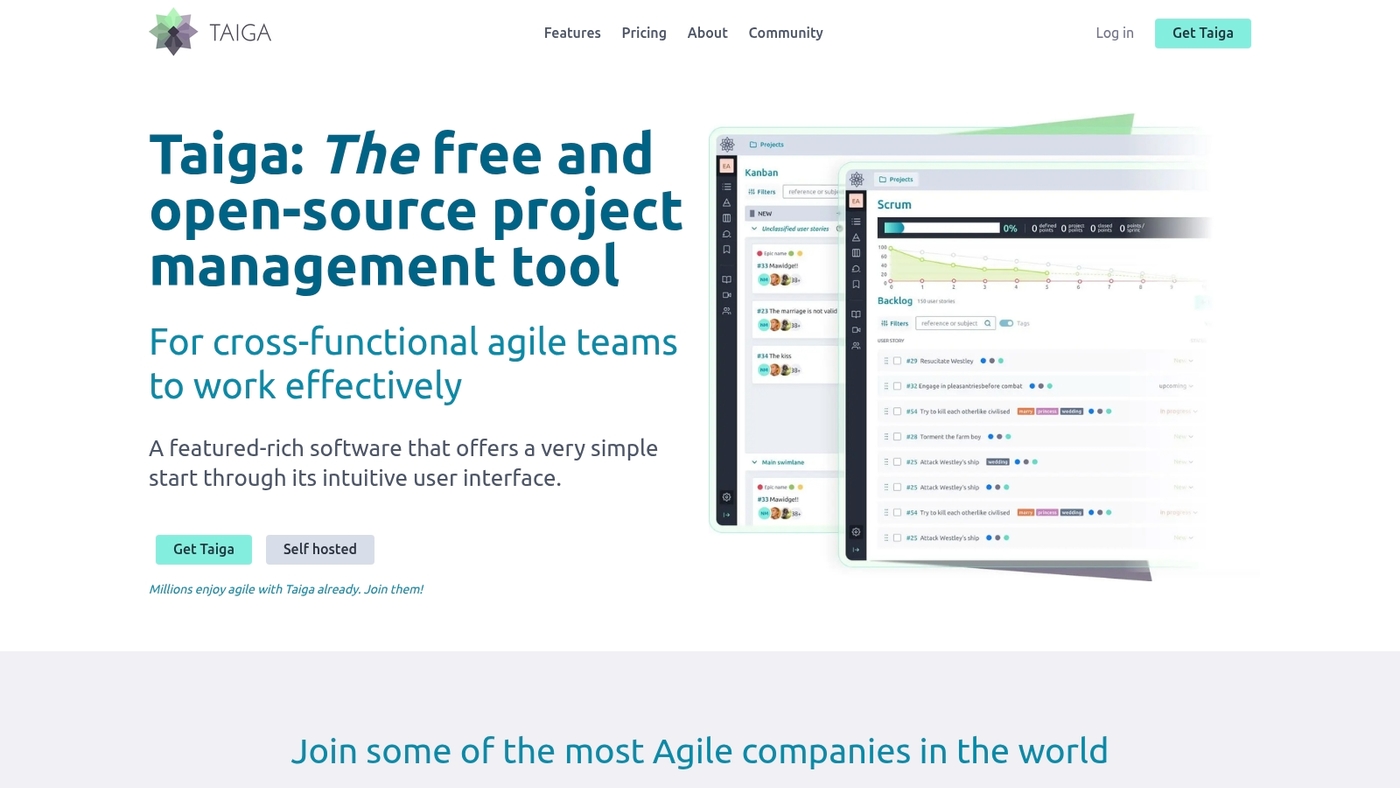
Taiga is an open-source agile project management platform. It supports Scrum boards, Kanban boards, and backlog management tools. You can self-host or use the hosted service.
The interface stays focused while letting you customize workflows and fields. Developers can connect Git repositories and CI pipelines.
Taiga offers sprint planning, simple burndown charts, and agile reporting. Taiga suits teams that want control and low vendor dependence. (Plus, self-hosting gives you complete data governance.)
Pros
-
Open-source with self-hosting options
-
Solid Scrum and Kanban support
-
Lower total cost for tech-savvy teams
Cons
-
Steeper learning curve for non-technical users
-
Fewer enterprise integrations than major vendors
For who?
Tech-savvy teams and developer-led groups that need customization and data control. Good fit for small to mid-sized engineering teams and open-source projects.
Pricing
Free if you self-host. Cloud plans include a free tier and paid upgrades for private projects and larger teams.
ProProfs Project
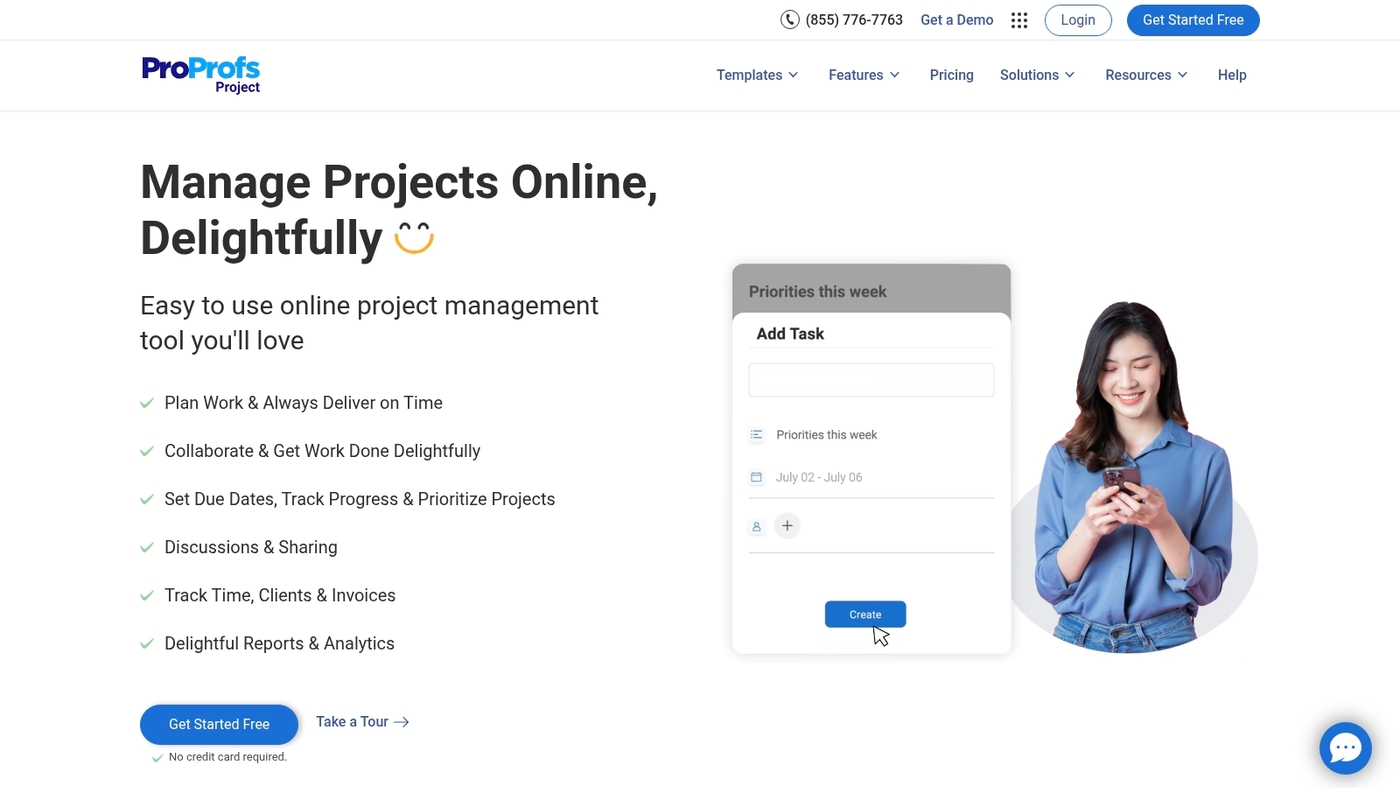
ProProfs Project is a user-friendly agile project management software designed for teams that need clear planning and smooth delivery.
The interface stays simple and predictable. You get Gantt charts, task management, time tracking, and basic reporting in one place.
Sprint boards and backlog views help you organize work. The generous free tier supports small teams and makes trial low-risk.
ProProfs reduces the onboarding time for teams new to agile. Ever onboarded a team in under an hour? I ran a short pilot and saw faster adoption of task ownership and clearer sprint handoffs.
Pros
-
Easy onboarding and intuitive interface
-
Includes Gantt charts and agile task views
-
Generous free tier for small teams
Cons
-
Limited advanced reporting for large portfolios
-
Fewer automation options than enterprise tools
For who?
Small teams and startups that need straightforward agile project management tools without heavy setup.
Pricing
Generous free tier available. Paid plans add more users and advanced features.
Wrike
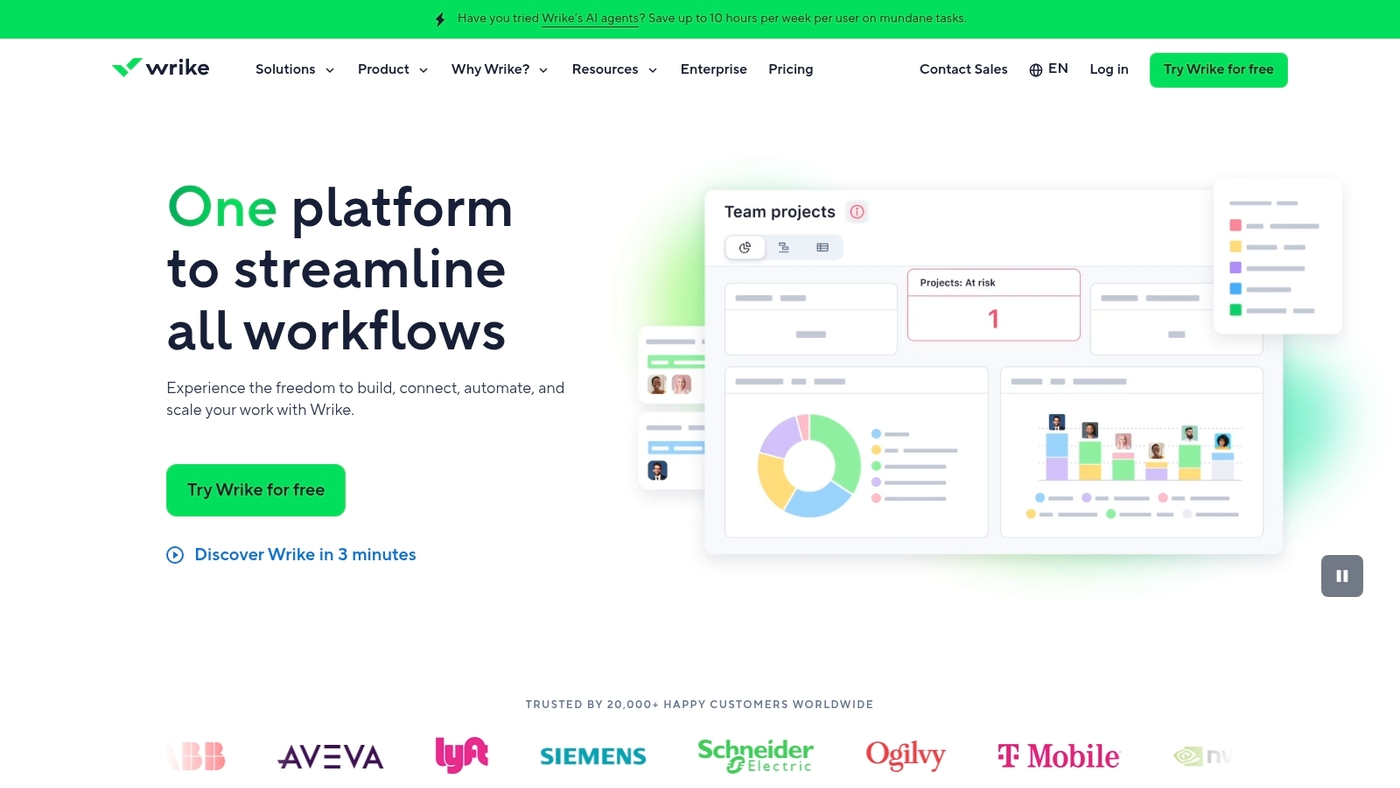
Wrike is a versatile work management solution for agile teams. It supports Gantt charts, workload views, and resource planning.
The platform offers advanced resource management, team workload balancing, and over 400 integrations. You can manage sprints, map backlogs, and visualize timelines with Gantt chart timelines.
Wrike fits creative and technical teams that need structure and flexibility. It has dashboards, custom workflows, and detailed reporting for sprint and portfolio tracking.
See our guide to project scheduling tools for comparisons. Wrike performs well when teams need cross-team planning.
Pros
-
Robust resource and workload management for multi-team planning
-
Multiple views: Gantt, board, table, and custom dashboards
-
Strong integration ecosystem with 400+ apps
Cons
-
Onboarding can take time for non-technical teams
-
Advanced features push costs higher for large teams
For who?
Teams that need both creative flexibility and technical control. Good fit for mid-size to enterprise teams running cross-functional sprints and portfolios.
Pricing
Free plan available. Paid tiers start around $9.80 per user per month. Enterprise and custom pricing for large organizations.
How do scrum tools differ from kanban tools
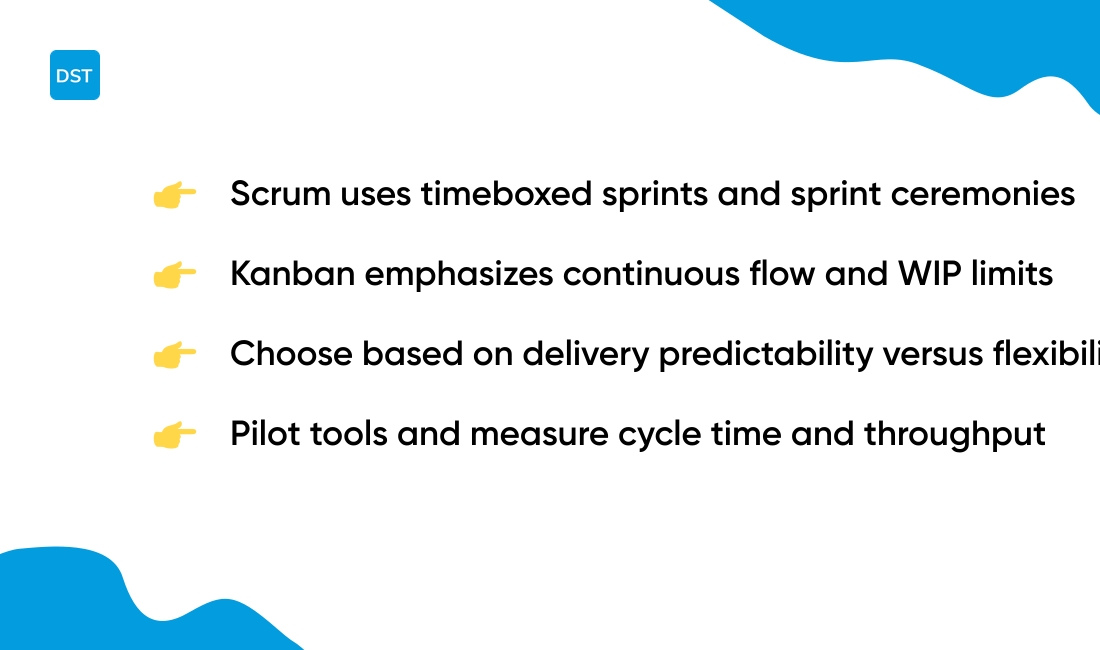
Scrum tools organize work around fixed-length iterations. They support time-boxed sprint cycles. Sprint planning tools, backlog management tools, and burndown chart software sit at the core.
Kanban tools focus on flow and continuous delivery. They use a continuous flow system and visual boards that highlight bottlenecks.
You set limits on work in progress to keep handoffs smooth. Scrum tools give you sprint backlogs, velocity reports, and ceremony support for planning, review, and retrospectives.
Teams often run 1- to 4-week sprints. Those tools fit product development where features ship in increments.
Kanban tools give you explicit WIP controls, cumulative flow diagrams, and cycle-time metrics. You track lead time for each card. Those tools suit support teams and steady delivery pipelines.
Choice depends on your workflow. Pick scrum tools if you need predictable releases and tight sprint goals. Pick kanban tools if you need flexible priorities and continuous throughput.
Match tool features to your process. Ask if the platform supports backlog management tools, agile reporting tools, and integrations with your CI/CD stack. Enforce one system and clear rules so work stays visible.
Try a pilot with representative work. Measure cycle time, throughput, and sprint predictability.
Free agile project management tools vs paid solutions
Free and open-source options lower start-up costs. Free agile tools often provide Kanban boards and basic backlog management. They cover sprint planning tools at a basic level.
Many free plans limit dashboards, automations, and attachment size. Some cap project history to 30 days or limit boards to five.
Paid platforms add advanced reporting, burndown chart software, and integrations for CI/CD. SSO, audit logs, and SLA support appear in paid tiers. These features speed decision-making and reduce manual work.
Self-hosted open-source reduces subscription spend. It needs ops time and security work. Expect extra maintenance hours as users grow.
Small teams can start on free plans to validate workflows. Larger teams or regulated work need paid tiers fast.
For a curated set of low-cost options, see our best free task management software roundup. Measure time saved and tool adoption before investing.
Pick one system and enforce rules. Start a free trial to centralize workflows.
Best Jira alternatives for agile teams
Choosing the right tool reduces friction. Teams can cut meeting time by 30% after switching to a better-fit platform.
Agile project management tools should support sprints, boards, reports, and integrations. Here’s the thing—not every team needs Jira’s complexity.
|
Tool |
Best For |
Key Strength |
|---|---|---|
|
monday.com |
Visual teams |
Automations, fast onboarding |
|
ClickUp |
Power users |
Deep customization, built-in docs |
|
Trello |
Small teams |
Lightweight Kanban, easy adoption |
|
Asana |
Hybrid workflows |
Timeline, dependencies, visibility |
|
Azure DevOps |
Dev-heavy teams |
Enterprise boards with CI/CD |
|
Taiga |
Tech-savvy groups |
Open-source, self-hosting |
Sprint planning tools and backlog management tools must surface velocity and burndown metrics. Pick a tool that matches your process, not the other way around.
Read our roundup of best project management software to compare features and pricing. Start a free trial to centralize workflows and decide by real data.
Enterprise agile tools and Scaled Agile Framework support
Large organizations need tools that map strategy to delivery. Choose platforms that support enterprise agile tools and provide clear governance.
Rally (Broadcom) maps well to SAFe. It supports program increments, portfolio Kanban, and dependency tracking for dozens of teams. Rally handles complex rollups and reporting without excessive setup.
Microsoft Azure DevOps links boards to CI/CD and test plans. Teams see work items, pipelines, and release metrics in one place. That reduces handoffs and speeds delivery.
Jira Align connects Jira work to strategy. It surfaces PI objectives, capacity heat maps, and cross-team dependencies. Use it if you need traceability from portfolio down to tasks.
Look for tools with agile portfolio management tools, program boards, and integrated reporting. Prioritize platforms that export PI plans and show progress across ARTs.
Measure fit by metrics. Track release predictability, sprint predictability, and cross-team blocker counts. Aim to reduce blocker counts by 30% in the first quarter.
Tool choice affects governance. Pick a solution that enforces templates, standardizes workflows, and centralizes roadmaps. That keeps audits simple and decisions fast.
Start with a pilot across two to four teams. Use that pilot to validate PI cadence and reporting before scaling.
You’ll also like: 7 best free Gantt software
How to choose the right agile project management tool
Start with team size and process. Small teams (under 10) need lightweight agile project management tools that support boards and backlog. Large teams need role-based permissions and portfolio views.
Decide your methodology. Scrum needs sprint planning tools and burndown charts. Kanban needs WIP limits and flexible boards. Hybrid teams want support for both.
Check integrations and APIs. Pick agile project management software that ties into your repo, CI/CD, chat, and calendar. If you run DevOps pipelines, confirm pipeline hooks and deployment links.
Evaluate deployment model. Cloud reduces ops work and scales fast. Self-hosting gives control and data residency. Factor hosting fees and maintenance into your budget.
Compare pricing by active users, storage, and automations. Evaluate free agile project management tools to validate workflows before you buy.
Assess reporting and roadmaps. Look for burndown chart software and customizable dashboards. Confirm export formats, audit logs, and SLA-ready reports that match audit needs.
Measure during a pilot. Run a four-week trial. Track velocity, cycle time, and lead time. Ask stakeholders for feedback and adoption signals.
Security matters for regulated teams. Check SSO, encryption at rest, retention controls, and backups. Can you afford a data breach during a sprint?
Matching tools to one clear use case and enforcing simple rules across teams works best. Consistent rules reduce friction and speed delivery.
Read our project management software guide for side-by-side comparisons. Pick a tool, run a short pilot, measure outcomes, then decide.
You’ll also like: Top 10 Best Resource Planning Tools