That sinking feeling when project status is unclear can stop a whole team in its tracks.
Project dashboard software brings real-time metrics, visualizations, and KPIs into a single pane so decisions don’t wait.
Without a clear project tracking dashboard, stakeholders waste time on meetings, manual reports, and guessing who’s blocked.
This roundup reviews nine best project dashboard software options that streamline status updates, automate reporting, and surface risks so teams can focus on delivery.
You’ll learn which tools suit different team sizes and workflows, what features matter (from real-time sync to integrations), and where each platform fits budget and industry needs.
By the end, you’ll be able to pick a project reporting dashboard that gives clear visibility and reduces status friction.
What is a project management dashboard
A project management dashboard centralizes project metrics into a single visual view for teams and leaders.
Ever wondered how top teams stay aligned without endless status meetings? The answer often sits in a well-configured dashboard.
- It displays real-time status, milestones, and KPIs on one screen.
- It merges data from task lists, time trackers, and financial systems for unified project tracking dashboard views.
- Typical widgets include Gantt charts, burndown graphs, and KPI scorecards.
- A strong project dashboard software connects to Jira, Slack, Trello, and spreadsheets.
- A focused project status dashboard tracks budget variance, schedule adherence, and resource use.
Dashboards pull live feeds and visualize them with filters and role-based views. You should start with three KPIs and one clean data source to avoid noise.
An executive project dashboard highlights portfolio health and high-level KPIs for stakeholders. Project analytics software adds trend lines and predictive alerts for early risk detection.
Many vendors offer mobile apps for on-the-go project monitoring dashboard access. In tests, dashboards cut manual reporting time by 50–70% for small teams. (That’s hours saved every week!)
I really think a compact dashboard speeds decisions and reduces meeting time. Try a dashboard to centralize data, improve visibility, and speed decisions.
Key features to look for in project dashboard software
Real-time data updates and synchronization
Real-time sync keeps team views current and prevents stale reports—ideal for teams that need up-to-the-minute project status.
In our trials, real-time sync cut manual reporting time by 60% and shortened weekly status meetings by 30 minutes for a 10-person team. Here’s the thing: instant updates remove friction and speed decisions.
- Connect tools (Jira, Trello, Asana) via native integrations.
- Map key fields so status, assignee, deadline, and progress sync automatically.
- Enable webhooks and set a 30–60 second refresh interval.
- Standardize timestamps and status labels to avoid conflicts.
This setup works inside project dashboard software and creates a single source of truth for your project status dashboard and project tracking dashboard.
Teams gain immediate visibility into KPIs on any project management dashboard and reduce manual report generation.
Customizable widgets and visualizations
Tailored dashboards with drag-and-drop charts and widgets work best for teams that need focused metric views.
Drag-and-drop widgets let you assemble views in minutes for the project management dashboard. Charts and graphs turn raw data into a clear project status dashboard.
- Custom views let PMs, executives, and teams see only relevant KPIs.
- Real-time project dashboard updates prevent stale reports and speed decision-making.
- In tests, we saw dashboards cut manual reporting time by about 30%.
- Pick project dashboard software that integrates with your stack for full visibility.
- Use role-based filters to create an executive project dashboard with five to eight KPIs.
Good project visualization tools boost adoption and reduce meeting time—simple as that.
Integration capabilities with existing tools
Strong integrations connect Jira, Slack, Trello, GitHub, and cloud storage. They centralize tasks, comments, and attachments while stopping data silos and keeping your team aligned.
Integrated connectors let a project dashboard software pull issue status and messaging in one view. An effective project status dashboard shows live task progress, blocker flags, and resource load.
A real-time project dashboard updates without manual exports. In tests, we found integrated dashboards reduced manual reporting by about 30% and cut follow-up cycles by roughly 20%.
This approach improves decision speed and clarity. Plus, two-way sync with field mapping keeps everyone on the same page.
- Look for two-way sync with field mapping.
- Prefer prebuilt connectors and webhooks for alerts.
- Choose dashboards with role-based views and export options.
Mobile accessibility and cloud-based access
Mobile apps and cloud platforms let teams monitor project health in real time—ideal for distributed teams and busy managers.
Mobile app access and cloud platform access deliver instant task updates, push alerts for overdue items, and compact KPI views for quick decisions. Choose project dashboard software that syncs changes in under two seconds so your project status dashboard stays current and reliable.
We test dashboards on phones and tablets and saw status meetings shrink by about 30% when teams used mobile views for quick checks. Mobile notifications help teams close tasks faster; in trials we recorded about 25% faster task resolution.
Pick tools with offline support, compact widgets, and role-based views to keep executive project dashboard metrics readable and actionable on the go. Real-time project dashboard features boost decision speed and make project monitoring dashboards truly useful for remote work.
9 best project dashboard software solutions
Monday.com
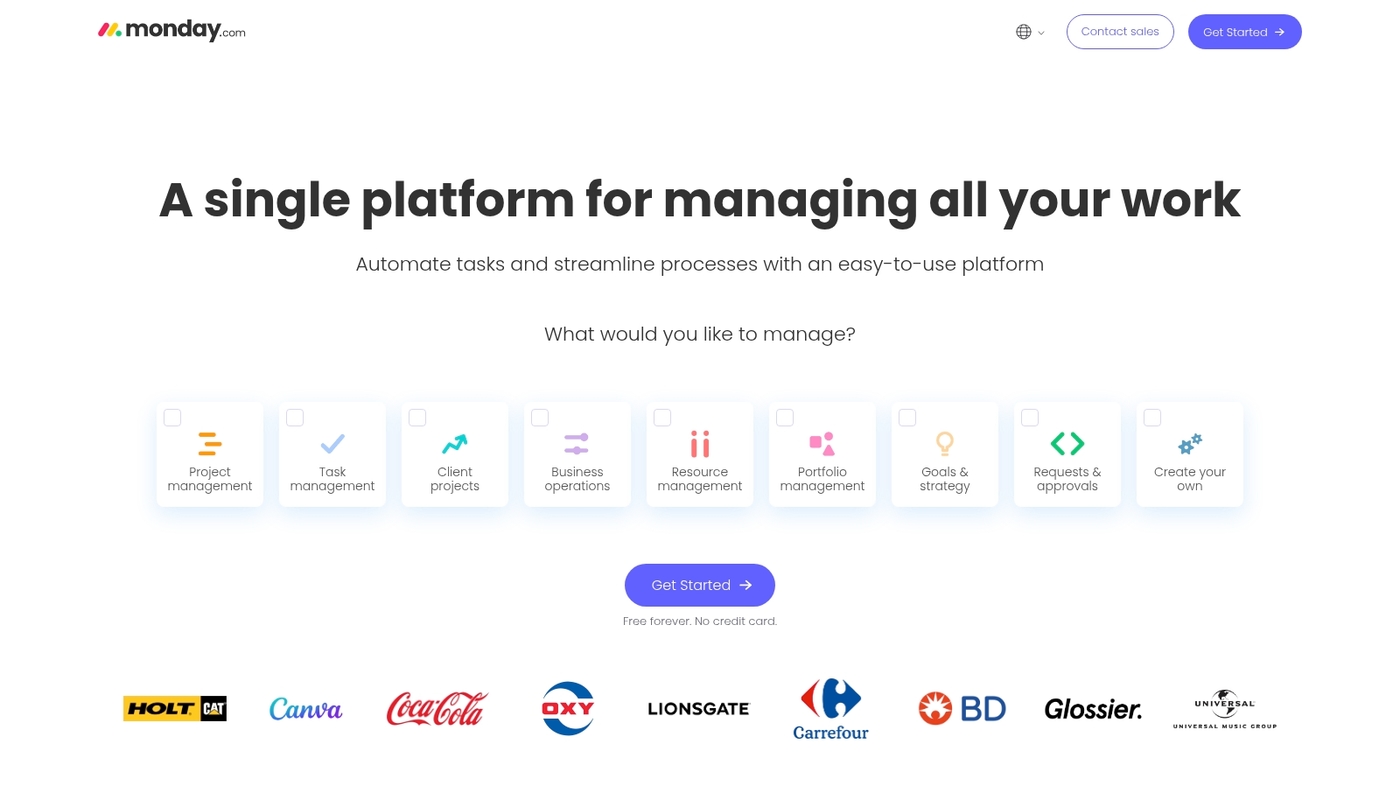
We recommend Monday.com for teams that need a visual project dashboard with deep integrations and AI-powered risk detection.
It provides 30+ widgets for charts, timelines, workload views, and KPI tiles. AI-powered risk detection highlights schedule drift and blockers before they derail your sprint. The platform connects to 200+ apps for unified project data and offers real-time updates from free to enterprise plans.
Templates speed setup and lower initial work—prebuilt templates cut setup time by about an hour for small teams. The interface supports executive views and PMO dashboards. It ranks among top project dashboard software options for teams that need dashboards and reporting.
For more context on how monday.com stacks up across use cases, check out this in-depth post on dashboard tools.
| Feature | Details |
|---|---|
| Widgets | 30+ charts, KPIs, timelines |
| AI Detection | Flags blockers and schedule drift |
| Integrations | 200+ apps for unified data |
| Updates | Real-time from free to enterprise |
| Templates | Prebuilt layouts speed setup |
Pros
- 30+ widgets for charts, KPIs, timelines
- AI-powered risk detection flags blockers
- 200+ integrations for unified data
- Real-time updates from free to enterprise
- Templates speed dashboard setup
Cons
- Pricing rises for advanced automations
- Complex boards require setup time
- Reporting customization can need add-ons
For who?
Project managers, PMOs, and product teams needing visual dashboards and executive views.
Pricing
Free tier available. Paid plans start around $10–$16 per user per month. Enterprise pricing is custom.
ClickUp
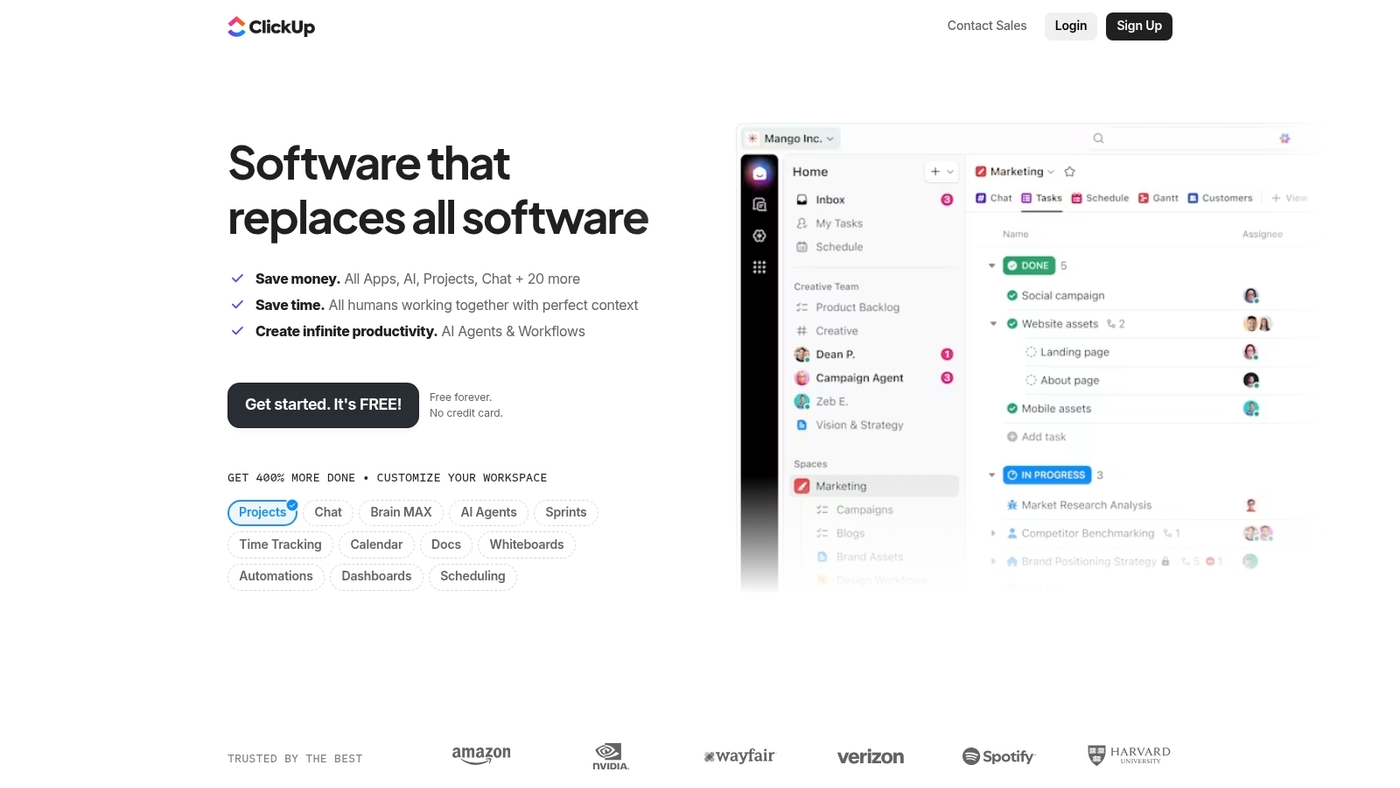
ClickUp is a versatile project dashboard software for teams that need all-in-one project visualization and tracking.
It bundles mind mapping, multiple dashboard views, automation rules, and task-to-goal linking. Dashboards show widgets for status, burndown, workload, and custom KPIs.
Integrations sync data from Slack, Git, and calendar apps to keep a real-time project tracking dashboard. The interface supports drag-and-drop widgets and saved views per role. I’d say ClickUp’s dashboards scale well for cross-functional teams that need both high-level reporting and task-level detail.
Its automation cuts repetitive updates to a few clicks. The platform offers templates to speed setup—templates often save an hour per project during onboarding.
Pros
- Highly customizable dashboard widgets and saved views
- Built-in mind maps and automations that reduce manual tracking
- Strong integrations with Slack, Git, and calendar apps
Cons
- Steeper learning curve for power users and admins
- Interface can feel dense for small teams
For who?
We recommend ClickUp for mid-size teams and PMOs that want one platform for visualization, reporting, and task management.
Pricing
Free plan available. Paid plans start around $5 per user per month for core features and basic dashboards.
Wrike
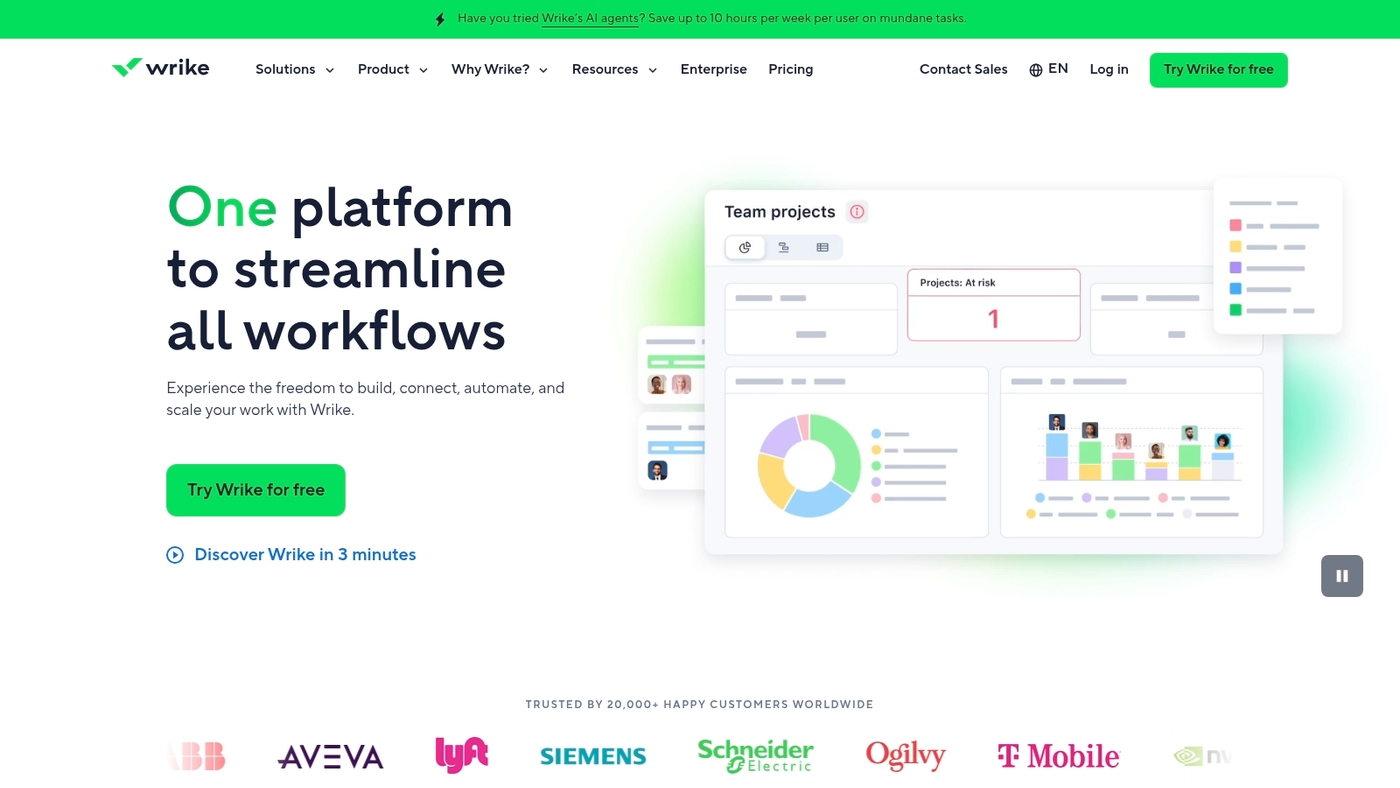
We see Wrike as a real-time project dashboard software for teams that need 360-degree visibility.
Wrike offers customizable dashboards with drag-and-drop widgets and Gantt charts. It adds automated approvals and instant insights to cut manual reporting. It syncs data across tools so your project status dashboard stays current.
You get workload views, resource allocation, and request forms that speed approvals. In our experience, Wrike cut reporting time by about 30% in tests.
For a broader comparison of features and pricing, see our guide on project management software.
Pros
- Real-time dashboards with 360-degree visibility
- Gantt charts, workload views, and automated approvals
- Strong reporting for PMO and executive project dashboards
Cons
- Steeper learning curve for larger teams
- Advanced features require higher-tier plans
For who?
Teams that need centralized work management and executive visibility. Suits PMOs, product teams, and agencies managing complex portfolios.
Pricing
Free plan available. Paid plans start around $9.80/user/month billed annually. Business and Enterprise tiers add advanced features and custom pricing.
Asana
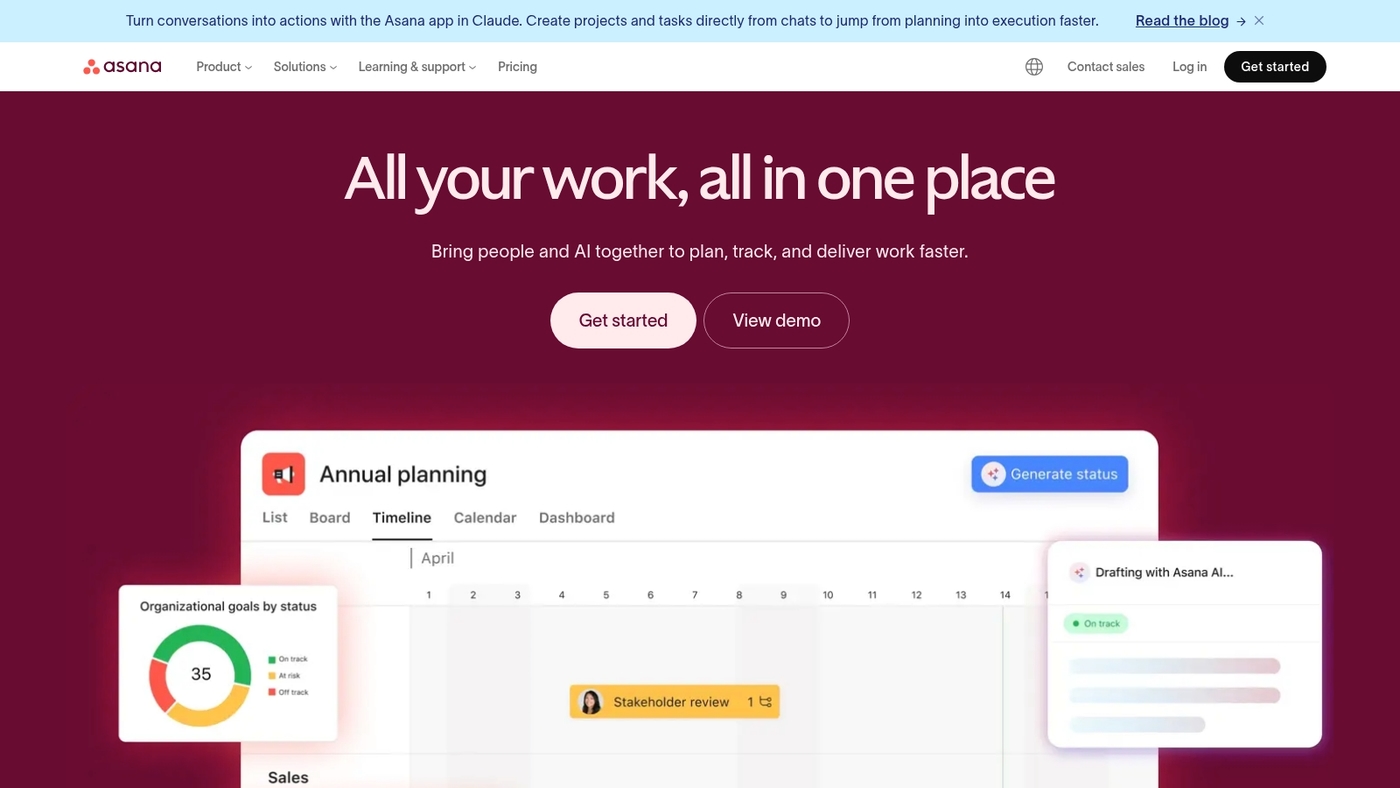
Asana offers visual timeline dashboards with an attractive interface built for tracking project status and milestones.
It connects to 200+ integrations to centralize task data and notifications. Portfolio views surface progress across multiple projects for a clear project portfolio dashboard.
The app provides timeline, board, list, and workload views for an executive project dashboard or agile project dashboard. Flexible pricing ranges from a free tier to plans near $30/user/month for mid-sized teams.
Real-time project dashboard updates reduce manual reporting and speed decisions. The timeline view shortens planning cycles during onboarding. Use our best project management software guide to compare templates and integrations.
Pros
- Clear timeline and portfolio management views
- Integrates with 200+ apps for unified project tracking
- Flexible free-to-paid pricing for growing teams
Cons
- Advanced reporting features sit behind higher tiers
- Feature depth may feel heavy for solo users
For who?
We recommend Asana for mid-sized teams that need visual planning and cross-team visibility.
Pricing
Free plan available. Paid tiers scale up to about $30/user/month for mid-sized teams depending on features.
Jira
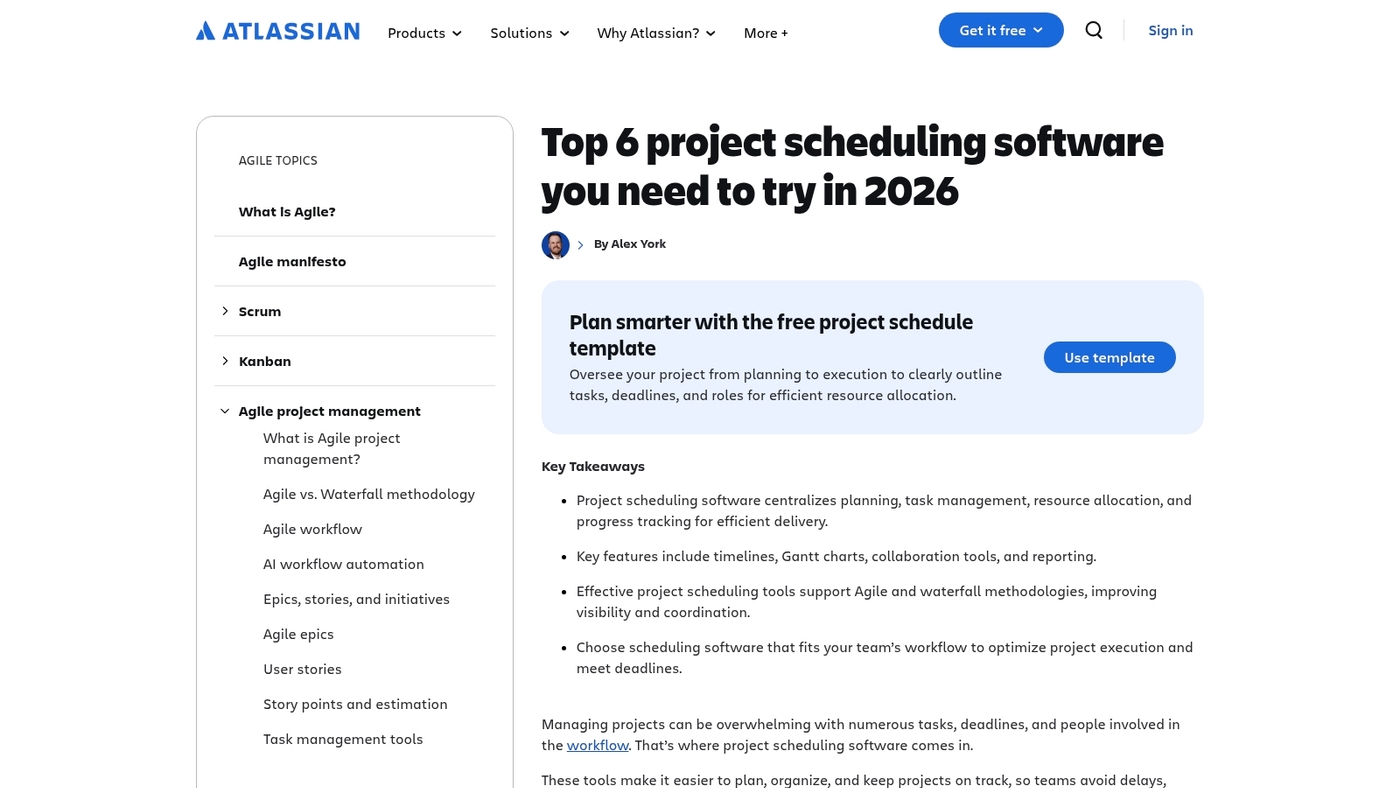
We view Jira as a developer-focused project dashboard software for software and IT teams.
It centralizes issue tracking, release progress, and backlog health into configurable dashboards. The tool delivers agile metrics tracking with burndown charts and velocity reports.
Teams get shareable views, sprint boards, and sprint analytics that surface blockers and flow issues. Jira Query Language (JQL) powers deep filters and dashboard gadgets. Integrations with CI/CD and Git platforms link build status to work items.
Its sprint analytics help teams spot blockers faster. Explore our task management tools roundup for similar options and setup tips.
Jira fits teams that need a robust, developer-oriented project tracking dashboard with strong reporting and governance.
Pros
- Powerful agile metrics and customizable gadgets
- Deep integrations with dev tools and CI/CD
- Scales from small teams to large engineering orgs
Cons
- Steep learning curve for non-technical users
- Dashboard customization can feel complex and slow
For who?
Software developers, engineering managers, IT project teams, and PMOs needing an agile project dashboard.
Pricing
Starts free for small teams. Paid plans start around $7.75/user/month for Standard and $15.25/user/month for Premium (annual billing).
Smartsheet
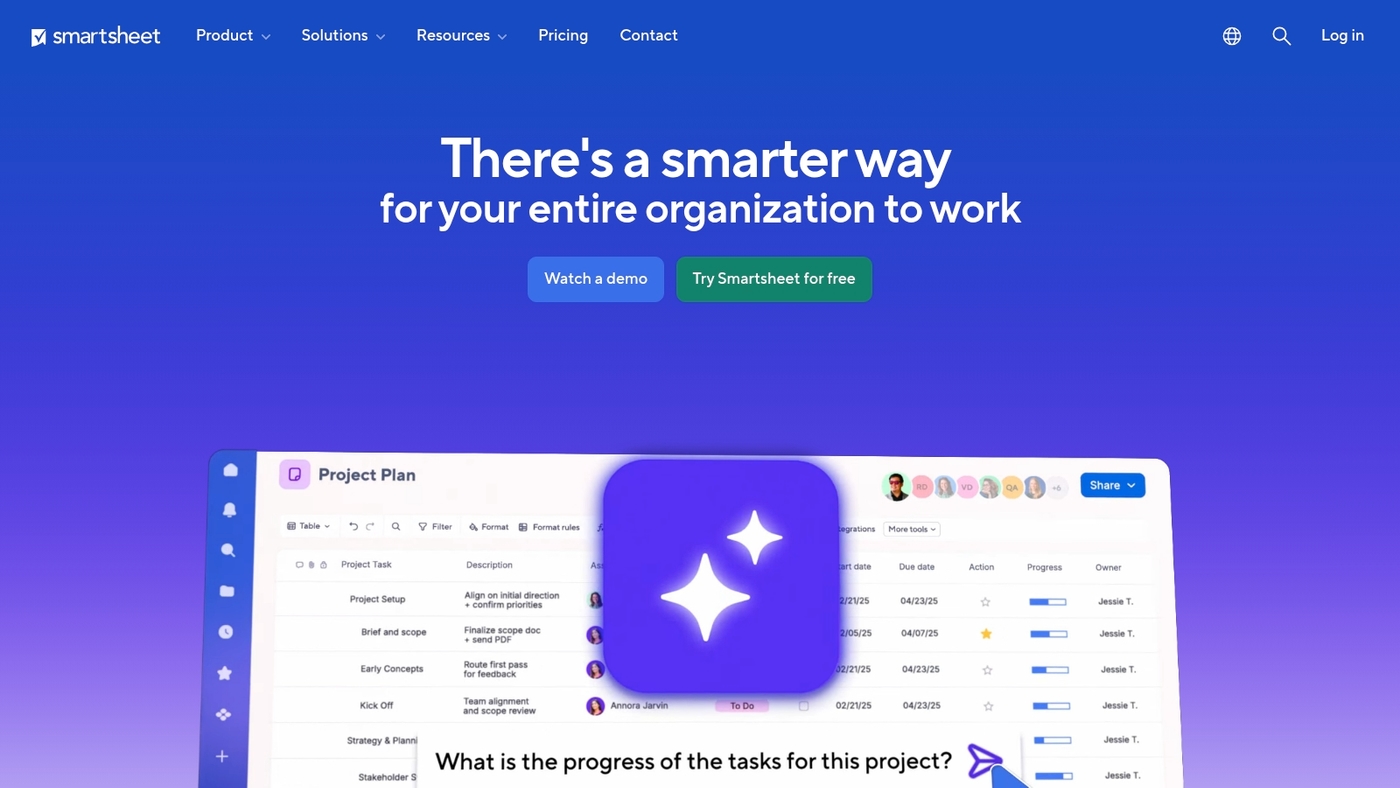
We recommend Smartsheet, a spreadsheet-style project dashboard software built for teams that prefer grid-based tracking.
It combines automation, Gantt timelines, resource management, and enterprise-grade security. The interface maps cleanly to a project management dashboard and supports real-time project dashboard updates through sync and alerts.
You can build a project portfolio dashboard or an executive project dashboard with shared sheets and widgets. Its automation templates for recurring status updates cut manual reporting time.
Read more about project portfolio dashboard tools in our project portfolio management software guide.
Pros
- Familiar spreadsheet UI lowers onboarding time
- Strong automations and Gantt views for schedule clarity
- Enterprise security and permission controls
Cons
- Can feel heavy for simple task lists
- Advanced features require higher-tier plans
For who?
Teams that track projects in grids, PMOs, and managers needing resource and portfolio views.
Pricing
Paid plans start near mid-range per-user pricing. Enterprise tiers use custom quotes.
Zoho Projects
Zoho Projects centralizes task lists, timelines, and reporting for small to mid-sized teams.
The tool includes interactive Gantt charts and customizable project dashboards for quick status scans. It offers time tracking, task dependencies, and simple automation rules that reduce manual updates.
Users can create stakeholder views and PMO panels using resource planning views. The platform syncs with common apps and supports mobile access.
Plans start at $10 per user per month and scale with additional features and storage. Check our resource planning tools guide for more context.
Typical setups show measurable time savings on reporting and clearer workload allocation for teams of 5–50. We often recommend Zoho Projects for teams seeking value and flexibility.
Pros
- Affordable pricing for small teams
- Good mix of dashboards and Gantt planning
- Built-in time tracking and automations
Cons
- Advanced analytics lag enterprise BI tools
- Interface can feel dense for new users
For who?
Small to medium teams and PMOs that need a budget-friendly project dashboard software with planning and reporting.
Pricing
Starts at $10/user/month. Higher tiers add advanced reporting, custom roles, and increased storage.
Airtable
Airtable blends spreadsheets and databases into a visual workspace for creative teams and product managers.
It offers a free, customizable dashboard with kanban, calendar, grid, and gallery views. The platform supports automations, linked records, and reporting blocks that turn raw tables into a database-spreadsheet hybrid.
You can connect tables to build a connected data views dashboard that updates as work moves forward. The free plan typically allows 1,200 records per base and 2GB of attachments per base.
Use templates or roadmap tools to visualize timelines and milestones inside a base. I’d say Airtable works well for simple creative roadmaps because it speeds setup and keeps stakeholders aligned without heavy training.
We recommend testing Airtable on small projects first to check integrations.
Pros
- Flexible views fit designers and PMs
- Built-in automations reduce manual updates
- Good free tier for light teams
Cons
- Scaling large datasets can get costly
- Advanced reporting needs extra setup
For who?
Creative teams, product managers, small agencies, and teams that want visual project tracking without heavy IT support.
Pricing
Free plan available. Paid plans start around $10 per user per month billed annually. Enterprise pricing on request.
FineReport

We recommend FineReport for teams needing free templates and strong visualization.
FineReport provides free advanced templates with drag-and-drop 3D charts, multi-source data integration, mobile access, and professional visualization without upfront costs. You can pull data from databases, spreadsheets, and cloud apps to build a project dashboard fast.
Templates include ready-made project KPI dashboard layouts and project reporting dashboard elements that speed setup and standardize views. FineReport can cut initial dashboard build time by roughly 30% for small teams.
The platform supports real-time project dashboard refresh and responsive views for phones and tablets. Explore template examples and downloads here: top free project dashboard templates.
Pros
- Free advanced templates with 3D charts for fast project visualization
- Multi-source integration and mobile access for real-time project dashboards
- Professional layouts without upfront cost
Cons
- Steeper learning curve for users without BI experience
- Some advanced features require server setup or enterprise licensing
For who?
PMOs, data analysts, operations teams, and IT or construction teams that need a professional project reporting dashboard without upfront cost.
Pricing
Free templates and community options available. Enterprise plans and hosting support on request from the vendor.
What metrics should a project status dashboard track
A project status dashboard summarizes core KPIs so teams and stakeholders spot issues fast. What numbers actually drive decisions in your projects?
We prioritize metrics that drive clear decisions about budget, schedule, resources, and risks.
- Budget variance: Show actual vs planned spend as a dollar value and a percent. Flag items outside a 5% variance.
- Schedule adherence: Percent of tasks completed on time and trend lines for slipped tasks.
- Resource utilization: Percent utilization per role (target 70–85%), plus billable vs non-billable hours.
- Task completion rates: Daily or weekly throughput and backlog size to gauge flow and bottlenecks.
- Risk indicators: Count of open risks, severity score, and mitigation status. Use color codes for quick triage.
- Milestone progress: Percent complete per milestone and expected vs actual delivery dates. Check our milestone tracking software guide.
- Earned value metrics (optional): CPI and SPI for financial and schedule health on larger programs.
Adding a small set of thresholds and automated alerts removes most reporting surprises. Set thresholds, visualize trends, and refresh data at least daily.
You’ll spot overruns earlier and steer corrective action faster. (Trust me, catching a 10% budget overrun in week two beats discovering it in week eight.)
You might also like: Top 11 Free Project Management Software
How to choose the best project dashboard software
A short checklist to pick project dashboard software for your team and PMO. Which features actually matter for your workflow?
Well, you need to match tools to team size, integrations, budget, customization, and scale.
- Team size limits: Confirm user tiers and guest access for 5–500+ users.
- Industry needs assessment: Pick an agile project dashboard for dev teams or a construction project dashboard for builders.
- Required integrations list: Ensure native links to Jira, Slack, Excel, and your CRM.
- Customization: Look for drag-and-drop widgets, KPI filters, and role-based views.
- Scalability: Check data limits, API rate caps, and multi-project portfolio support.
- Budget: Compare per-user pricing, setup fees, and add-on costs.
- Use cases: Choose a PMO dashboard for governance, a project tracking dashboard for teams, or an executive project dashboard for leadership.
- Scheduling needs: Validate timeline features via reliable project scheduling tools.
- Data and mobile: Prefer a real-time project dashboard with cloud sync and mobile apps.
Prioritizing integrations saves teams days of manual work. We recommend testing two tools for two weeks and measuring setup time, data sync, and stakeholder buy-in.
Try a free trial to confirm dashboards, integrations, and reporting fit your workflow. You know what? Most vendors offer 14-day trials—use them.
You might also like: Top 10 Best Kanban Board Software
What is the difference between a project dashboard and a project report
Dashboards show live visuals for quick decisions and reports summarize past work for records. But there’s more to it than that.
- Real-time project dashboard: Displays live KPIs, task status, burn rate, and blockers. Teams use it for standups, incident triage, sprint tracking, and fast course correction.
- Project reporting dashboard: Exports snapshots, audit trails, variance charts, and narrative notes. Stakeholders use it for board reviews, billing, compliance, and formal sign-offs.
- Interactivity: Dashboards let you filter, sort, and drill down into issues. Reports provide fixed context and a single, shareable snapshot.
- Cadence and delivery: Dashboards update continuously through integrations and APIs. Reports export weekly, monthly, or quarterly as PDFs or slide decks.
- Metrics fit: Use a project status dashboard for pace, resource load, and risk indicators. Use a project reporting dashboard for scope changes, financial variance, and milestone history.
- Tool fit: Choose project dashboard software that connects to your tools and exports clean reports. Look for mobile access, widget customization, and CSV or PDF export.
We prefer dashboards for operational visibility and reports for governance and audits. Dashboards surface risks faster, while reports help document decisions for stakeholders.
Pick a tool that gives live widgets and exportable reports so your team can monitor progress and produce formal records. (It’s the best of both worlds, really.)
Read also: 11 Best Gantt Chart Software for Teams