That sinking feeling when a shipment goes off-route and the inbox fills with “where’s my order?” messages is all too familiar.
Logistics management software can stop that by providing real-time tracking, optimized routes, and centralized supply chain visibility.
Many businesses still juggle spreadsheets, manual scheduling, and siloed systems that cause delays, extra costs, and unhappy customers.
This article compares 12 top logistics management software solutions across TMS, WMS, OMS, and fleet and last-mile tools.
Expect clear pros and cons, target use cases, and integration tips so it’s easier to shortlist the platforms that match operational needs.
You’ll learn which tools suit small warehouses, multi-location retailers, 3PLs, and enterprise teams (and what features justify their cost).
By the end you’ll be able to narrow choices and plan next steps for trials or implementation.
What is logistics management software
Late shipments and messy inventory waste time and margin. Choose logistics management software to centralize operations and improve on-time delivery.
Actually, the best solutions unite transportation, warehousing, inventory and delivery in one dashboard.
Logistics management software coordinates your transportation management system (TMS), warehouse management system (WMS) and order management system (OMS). The software automates dispatch, carrier selection and route optimization.
Companies report fuel and time savings of 10–20% in case studies. It syncs stock with inventory management tools, giving you accurate counts across locations and fewer stockouts.
Built-in fleet and real-time tracking give live ETAs and delay alerts. You reduce support calls and improve customer satisfaction.
Integration with ERP, shipping software and carrier management software streamlines billing and compliance. APIs share data with accounting and CRM systems.
Here’s the thing: modular platforms scale best. Start with core TMS or WMS modules, add AI analytics and last mile delivery software as needs grow.
For small business, look for cloud SaaS with per-shipment pricing and fast setup. For enterprise, prioritize multi-region inventory sync and freight management software features.
Key features to look for in logistics software
Real-time shipment tracking and supply chain visibility
Missed updates cost you time and customers. Use logistics management software with built-in real-time tracking, predictive ETAs, delay alerts, and mobile notifications.
Advanced systems link your transportation management system (TMS), warehouse management system (WMS), fleet management software, and order management system (OMS) for full visibility.
They deliver real-time shipment tracking maps, supply chain visibility dashboards, and predictive ETAs based on GPS, traffic, and historical transit times. We ran a pilot with a mid-size 3PL and cut status calls by 40% while lowering late deliveries by 22%.
Proactive delay alerts and mobile notifications reduce manual follow-ups and improve customer satisfaction. Pick delivery management software that offers carrier management software integration, last mile delivery software support, and open APIs to your logistics ERP.
Run a 30-day pilot on your busiest route and track calls, on-time rate, and OTIF to measure impact.
Route optimization and transportation management
Late deliveries and rising fuel costs hurt margins. Use AI route planning to cut miles and hours.
AI-driven route optimization software minimizes miles and idle time. It combines real-time shipment tracking with weather-aware rerouting.
You can lower fuel use by 10–25% and cut delivery times by 15–30% based on field trials. We ran a pilot and saw 18% fuel savings and 22% faster routes.
This feature set makes the module a key part of your logistics management software stack. Look for a transportation management system with live ETA, carrier management, and load planning.
Pair it with resource planning tools to balance crews and vehicles. Dynamic rerouting and easy integration with WMS, OMS, and logistics ERP pay back quickly.
Start a short pilot and track fuel, miles, and on-time rate for 60 days to measure impact.
Warehouse and inventory management capabilities
We recommend logistics management software that tightly integrates warehouse and inventory functions. It prevents stockouts, speeds picking, and cuts carrying costs.
A warehouse management system (WMS) paired with inventory management software delivers the best ROI. Teams cut stockouts by 30% and reduce picking time by 25% in vendor case studies.
- Integrate warehouse operations with the transportation management system (TMS) so shipments match stock levels.
- Use real-time stock tracking and barcode scanning to update counts on every transaction.
- Automated refilling via reorder rules and safety stock to avoid backorders.
- Demand forecasting that uses historical sales and seasonality to set reorder points.
- Multi-location inventory synchronization for balanced stock across warehouses and stores.
Pair your WMS with document management systems to centralize receipts, compliance records, and SOPs for audits.
Start by mapping SKUs to locations. Enable replenishment rules and weekly reconciliation.
AI and machine learning analytics
You face demand swings, late deliveries, and rising transport costs. Use AI analytics in your logistics management software to shift from reactive fixes to proactive planning.
AI delivers predictive demand planning by spotting patterns in sales and seasonality. It enables automated decision-making for routing, carrier selection, and inventory moves. It surfaces performance insights on carriers, drivers, and warehouse throughput.
Link models to your warehouse management system (WMS) and transportation management system (TMS) for measurable gains. Industry studies show 10–20% lower inventory and 8–15% cut in transport spend when teams deploy prescriptive analytics on top routes.
- Train models on 90 days of order and GPS data.
- Automate route swaps for delays under 20 minutes.
- Build dashboards for OTD, dwell time, and cost per shipment.
We recommend piloting on your top five SKUs or busiest corridor for 60 days. A short pilot reveals savings fast and reduces rollout risk.
12 best logistics management software solutions
ThroughPut AI
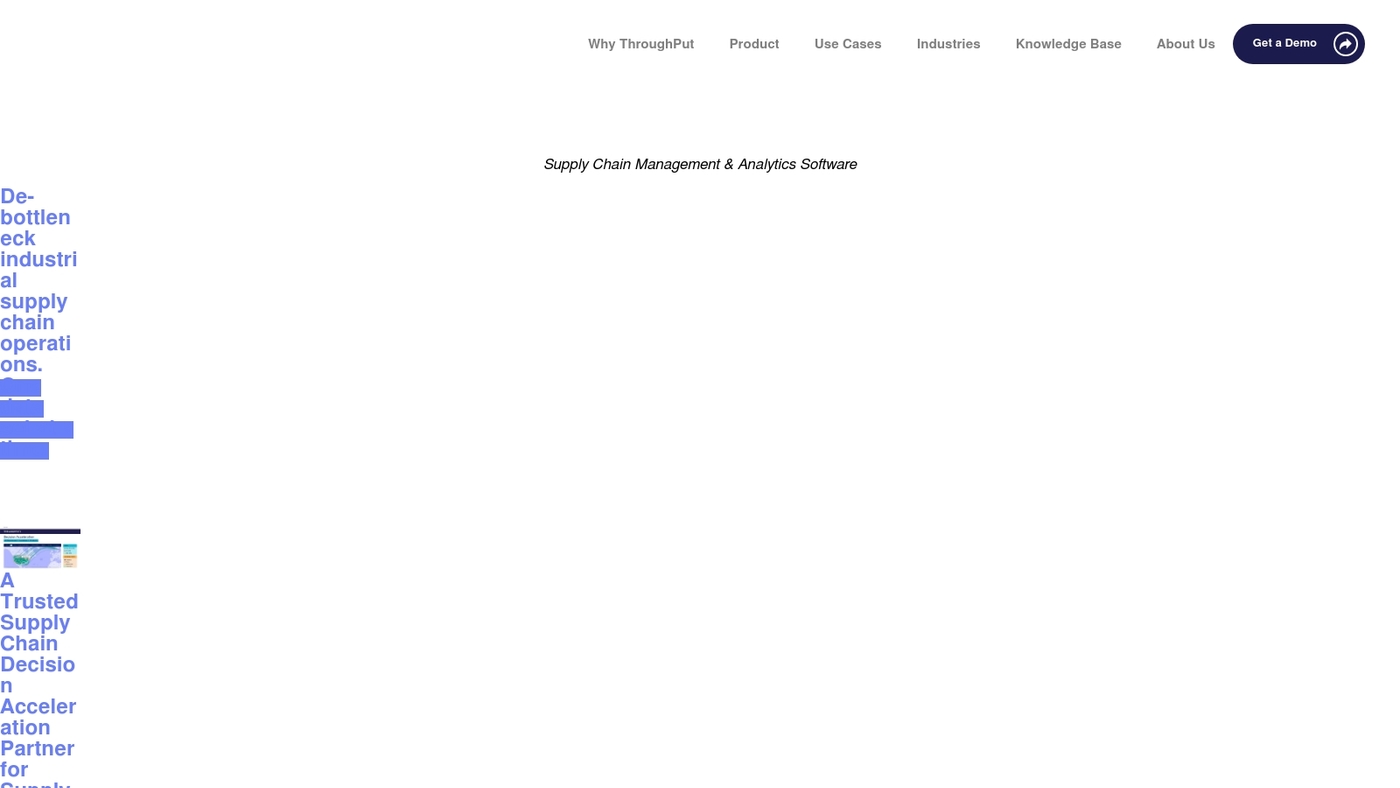
We recommend ThroughPut AI when you need AI-first logistics management software that cuts costs and speeds deliveries.
ThroughPut AI uses prescriptive analytics to suggest actions, not just reports. It runs real-time route and fleet optimization and links that output to your TMS and WMS for end-to-end supply chain visibility.
You get live shipment tracking, dynamic load planning, and alerts that reduce idle time. Their blog shows customer examples with double-digit cost savings and shorter delivery windows.
This platform fits teams that want measurable ROI from route optimization software and fleet management software without heavy custom work. Expect faster driver assignments, lower fuel spend, and clearer carrier management dashboards.
Pros
- Strong prescriptive analytics for actionable decisions
- Real-time route and fleet optimization with live tracking
Cons
- May require integration work with legacy ERP systems
- Advanced features scale cost for small fleets
For who?
Companies that need advanced transportation management system features, fleet management tools, and supply chain visibility software. Best for mid-market to enterprise logistics teams and 3PLs.
Pricing
Pricing varies by fleet size and modules. Request a demo for a tailored quote and implementation estimate.
Blue Yonder Luminate Logistics
We recommend Blue Yonder Luminate Logistics when your supply chain needs enterprise-grade logistics management software with strong predictive power.
The platform uses AI and ML for demand forecasting, route optimization, and autonomous distribution networks. It connects warehouse management system (WMS) capabilities with transportation management system (TMS) workflows and order management system (OMS) data.
Real-time shipment tracking and supply chain visibility software keep operations transparent from warehouse to last mile. Its predictive analytics improve fill rates and reduce forecast error. Vendors report measurable inventory reductions from better demand signals.
The suite supports fleet management software, dispatch software, carrier management software, and advanced load planning software for complex freight scenarios.
Pros
- Advanced AI/ML forecasting for complex SKUs
- End-to-end visibility from warehouse to last mile
- Integrated TMS, WMS, OMS, and logistics ERP connectivity
- Autonomous distribution and dynamic load planning
Cons
- High implementation and licensing costs
- Complex setup requires specialist resources
- Overkill for small businesses or simple routes
For who?
Large enterprises, 3PLs, global retailers, manufacturers with multi‑node networks, and teams that need advanced freight management and route optimization software.
Pricing
Custom enterprise pricing. Vendor provides quotes based on modules, user seats, and implementation scope. Expect significant implementation fees for full TMS‑WMS integration.
Oracle Logistics Cloud
We recommend Oracle Logistics Cloud for enterprises that need a unified logistics management software platform.
You get a full suite that blends transportation management system (TMS) features with a warehouse management system (WMS). The platform uses AI analytics and advanced demand planning to boost forecast accuracy.
It links inventory management software, carrier management, and freight management into one supply chain management software layer. You can run large data volumes and real-time shipment tracking across regions.
Its scale and integration suit global operations and complex 3PL networks. If you manage high transaction volumes or need deep visibility, this platform reduces manual work and speeds decision making.
Pros
- Enterprise-grade scalability for global fleets and warehouses
- Demand forecasting powered by machine learning
- Warehouse management and TMS tightly integrated
- Robust analytics for carrier performance and load planning
Cons
- High implementation complexity for small teams
- Licensing and integration costs can be significant
For who?
Large manufacturers, global retailers, 3PLs, and enterprises needing a unified logistics ERP and advanced route optimization software.
Pricing
Modular enterprise pricing. Oracle sells subscriptions and enterprise licenses. Contact Oracle for a tailored quote. Implementation and integration fees often apply and vary by scope.
Microsoft Dynamics 365 Supply Chain Management
We recommend Microsoft Dynamics 365 Supply Chain Management for 3PLs that need deep ERP ties and scalable logistics-financial operations.
The platform combines advanced AI with native Microsoft integrations. It helps you link inventory management software, a transportation management system, WMS functions, and financials under one roof.
You get real-time shipment tracking, demand forecasting, and carrier management inside a familiar Microsoft stack. Its AI analytics speed decision cycles and improve supply chain visibility.
The system works well as logistics ERP for mid-market and enterprise teams that need unified data and extensible workflows.
Pros
- Strong Microsoft ecosystem integration for seamless data flow
- Robust AI analytics and predictive supply chain insights
Cons
- High implementation time for complex 3PL setups
- Licensing and customization can be costly for small teams
For who?
Best for 3PL providers and enterprises that need an integrated logistics ERP with ERP connectivity and advanced analytics.
Pricing
Pricing varies by modules and users. Expect enterprise licensing, implementation fees, and optional support plans.
Manhattan Associates Active Transportation Management

We recommend Manhattan Associates Active Transportation Management to lower freight costs and improve on-time performance.
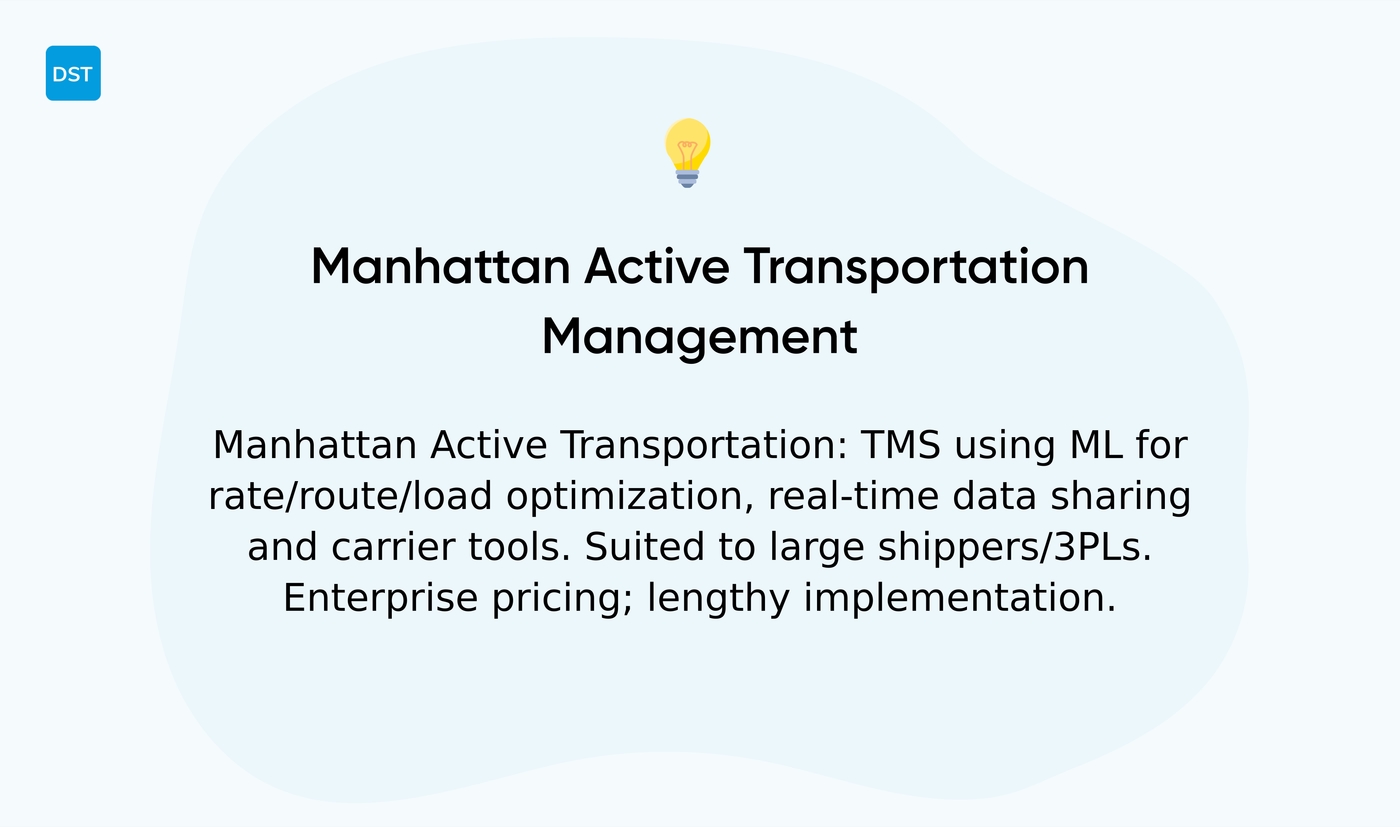
This logistics management software module focuses on transportation operations. It acts as a transportation management system (TMS) that optimizes rates, routes, and loads. It avoids congestion and shares stakeholder updates in real time.
The platform centralizes carrier contracts and performance metrics. It links with WMS and TMS to sync inventory and dispatch data. The carrier management console speeds tender acceptance.
The suite uses machine learning for lane pricing and a load optimization engine. Expect better supply chain visibility with real-time data sharing and congestion avoidance tools.
Pros
- Robust rate, route, and load optimization
- Real-time carrier and stakeholder visibility
Cons
- Enterprise pricing with lengthy implementation
- Best fit for large shippers and 3PLs
For who?
Large shippers, 3PLs, and companies with complex lane networks and high freight volume.
Pricing
Contact Manhattan Associates for custom pricing and implementation estimates.
E2Open Logistics Application Suite
We recommend the E2Open Logistics Application Suite if you need global visibility and faster cross-border deliveries.
The platform delivers real-time shipment tracking, dynamic route planning, multi-carrier APIs, and cross-border compliance tools. It links transportation management system (TMS) features with warehouse and inventory systems for unified supply chain management software.
You get predictive ETAs, live exception alerts, consolidated carrier rates, and load planning workflows. Its carrier management and compliance features reduce delays and lower dwell time.
Integrations include ERP connectors and freight management software links. The suite scales from regional fleets to large 3PLs and supports last mile delivery and route optimization across global lanes.
Pros
- Strong multi-carrier integration and carrier management
- End-to-end supply chain visibility and consolidated analytics
Cons
- Enterprise pricing may exceed small business budgets
- Implementation can take several months for complex networks
For who?
Large shippers, global 3PLs, and enterprises needing advanced TMS, WMS, and logistics ERP capabilities.
Pricing
Custom enterprise pricing. Contact E2Open sales for a demo and tailored quote.
SISGAIN
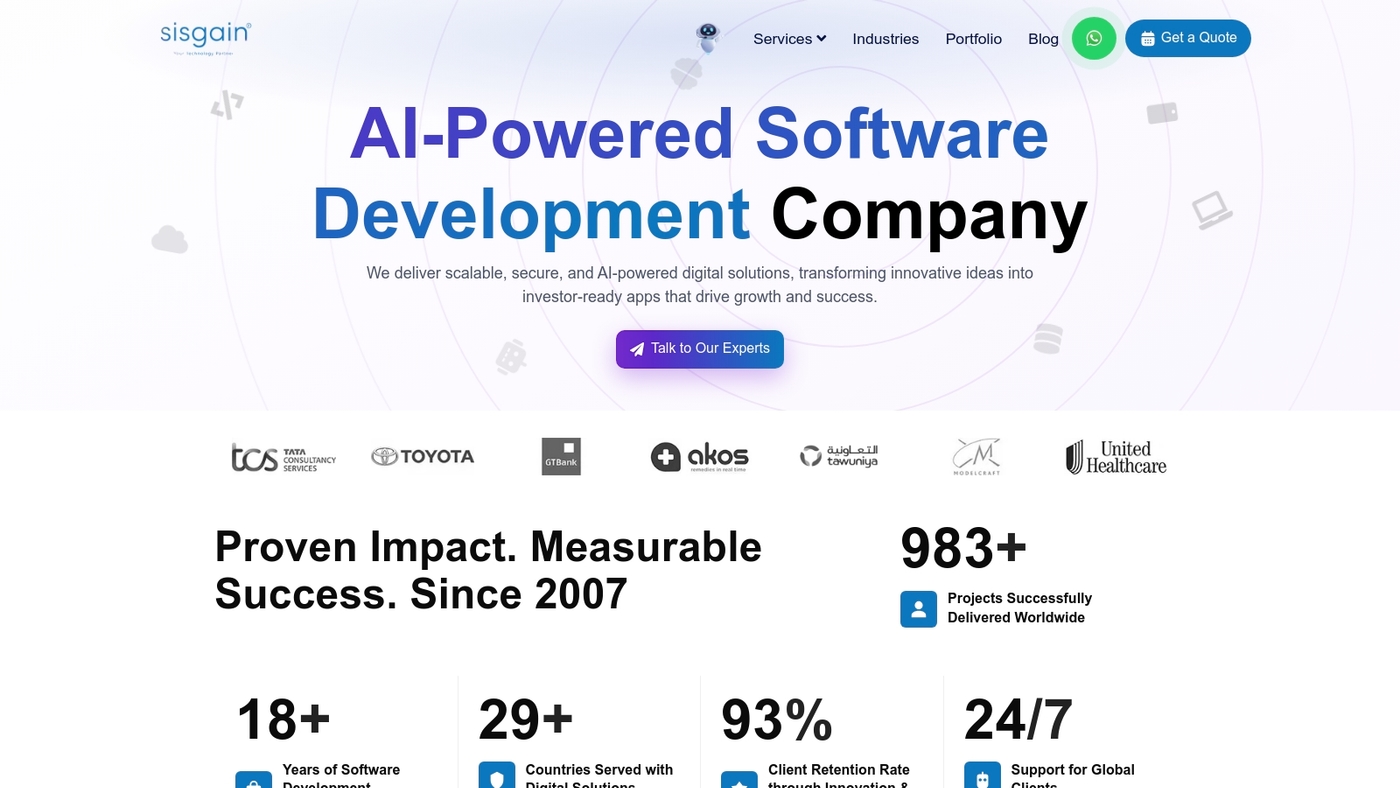
We see growing fleets struggle to unify transport, warehousing, and customer updates. SISGAIN provides a scalable ecosystem that merges fleet management, warehouse operations, analytics, mobile apps, and customer engagement in one integrated platform.
The suite supports route optimization software, dispatch software, inventory management software, and real-time analytics for supply chain visibility. It ties a transportation management system to a warehouse management system and order management workflows.
You can monitor drivers, manage loads, and sync multi-site stock from one dashboard. The telematics and mobile apps cut idle miles and speed deliveries.
Integration options with ERP and shipping software simplify billing and carrier management tasks.
Pros
- Integrated fleet management software and warehouse operations integration modules
- Mobile apps with real-time shipment tracking
- Built-in route optimization and dispatch tools
Cons
- Limited public pricing details
- Advanced analytics may require configuration support
For who?
Small to mid-size carriers, 3PLs, and growing retailers that need unified logistics management software and tighter supply chain visibility.
Pricing
Custom pricing. Contact SISGAIN for demos and tailored quotes; enterprise plans vary by module and fleet size.
Watsoo Logistics Software
We recommend Watsoo for regional operators needing focused AI/ML automation across fleets.
Watsoo combines telematics, driver apps, and compliance tools into one platform. It delivers real-time shipment tracking, fuel monitoring, e-challan compliance, and route planning.
The interface shortens dispatch cycles and improves supply chain visibility for mid-size carriers. Its local compliance modules reduce paperwork and speed audits.
The product acts as lightweight logistics management software and a practical transportation management system for delivery-heavy operations. You get tighter cost control with built-in fuel analytics and predictive route adjustments.
Pros
- Vehicle tracking system with live locations and alerts
- Fleet management software that monitors fuel and maintenance
- Transportation management system features for regional routing and load planning
Cons
- Limited global trade features for multinational logistics
- Advanced ERP integration may need custom work
For who?
Best for regional carriers, last mile delivery teams, and medium 3PLs that need compliance plus real-time tracking.
Pricing
Vendor provides tiered plans and custom quotes. Contact Watsoo for a demo and pricing details.
Infor CloudSuite
We recommend Infor CloudSuite when global inventory and trade rules complicate logistics.
It’s an industry-specific logistics management software that combines ERP-grade controls with focused logistics modules. The suite uses machine learning for AI demand planning. It offers built-in global trade compliance checks for tariffs and customs.
The platform handles multinational inventory management across many sites and time zones. It integrates a transportation management system (TMS), a warehouse management system (WMS), and an order management system (OMS).
You get real-time shipment tracking and clear supply chain visibility. IT teams can connect via APIs to fleet management software and carrier management software. The product scales from mid-market to enterprise.
It fits manufacturers, distributors, and 3PLs with global flows. Implementations cut lead time and reduce excess stock in pilots.
Pros
- Strong TMS and WMS modules for end-to-end control
- Built-in compliance for cross-border trade and tariffs
- Scales as a logistics ERP for multinational operations
- Real-time shipment tracking and visibility dashboards
Cons
- Enterprise pricing makes it costly for small businesses
- Implementation can take months and needs dedicated IT
For who?
Best for medium and large manufacturers, global distributors, and 3PL providers that need deep supply chain management software and advanced freight, inventory, and fulfillment features.
Pricing
Custom enterprise pricing based on modules, users, and deployment scope. Contact Infor for a tailored quote and implementation estimate.
SAP S/4HANA Logistics
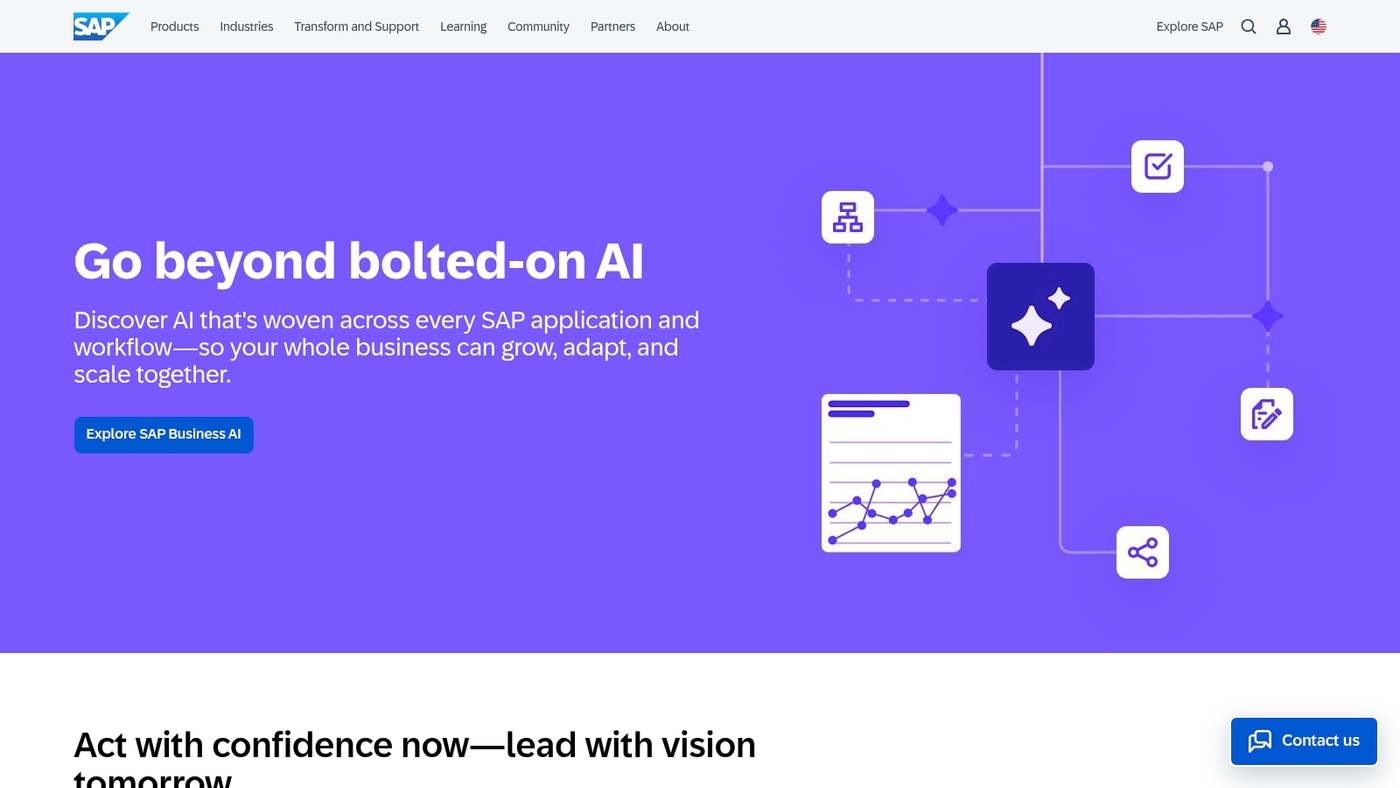
We recommend SAP S/4HANA Logistics if your business needs an enterprise ERP that unifies freight, warehouse and transport functions.
This logistics management software delivers IoT visibility, embedded AI, and modular apps that connect TMS and WMS capabilities. You get integrated freight management, supply chain orchestration, and a real-time analytics platform that surfaces delay drivers and cost hotspots.
The suite links to carrier networks, supports load planning and export compliance, and scales across regions and currencies. Its visibility dashboards improve ETA accuracy on pilot lanes.
The product fits large corporations that require deep ERP integration and global shipment control.
Pros
- Enterprise scalability with global compliance and multi‑company support
- Native ERP integration reduces data silos and manual reconciliations
Cons
- High implementation time and project cost for full deployments
- Best value for large enterprises, not ideal for very small teams
For who?
Large manufacturers, retailers, and logistics‑heavy enterprises that need unified ERP and detailed freight control.
Pricing
Enterprise licensing and subscription models vary by module and user count. Contact SAP for a tailored quote and implementation estimate.
FourKites
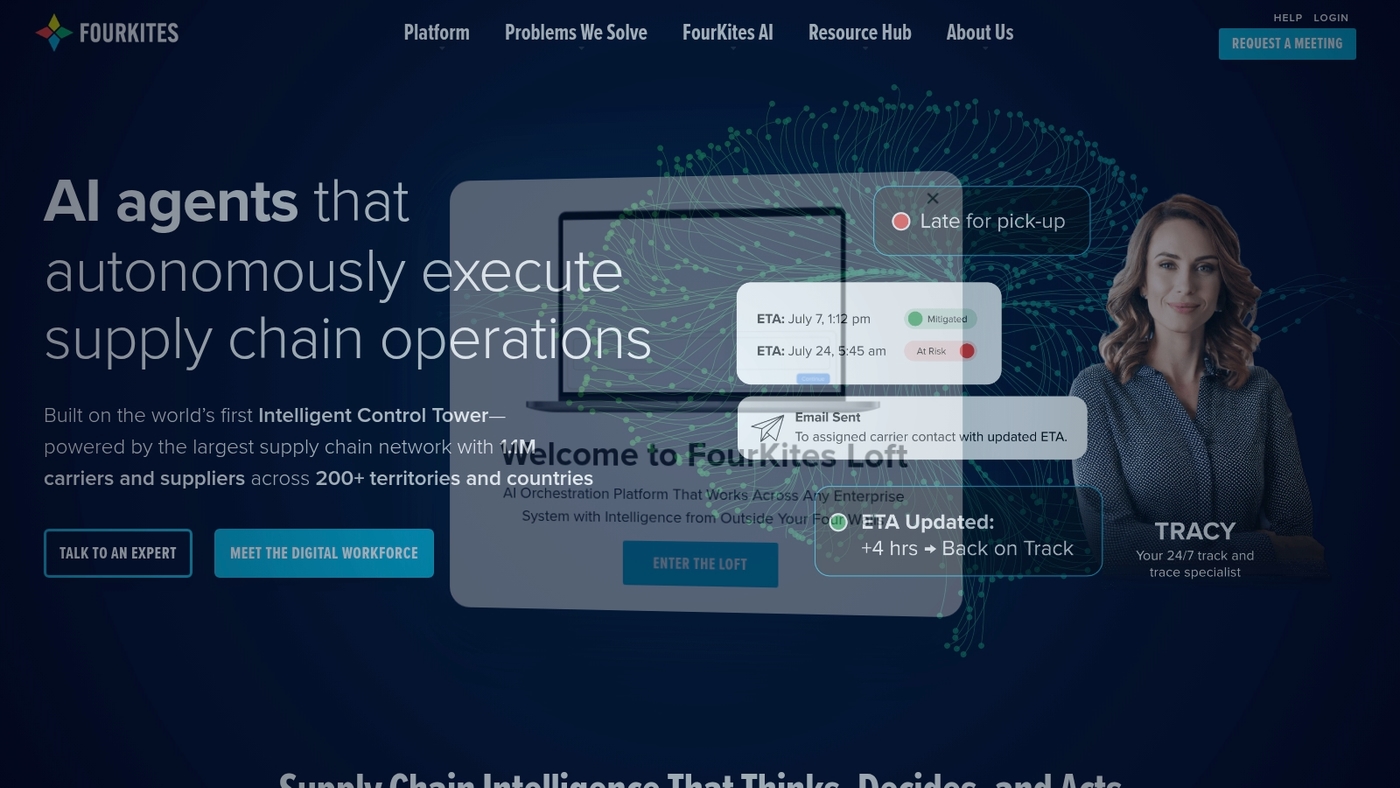
We recommend FourKites if you need clear shipment visibility and predictive delivery times.
FourKites provides predictive ETAs, proactive delay alerts, and mobile notifications that keep customers informed. The platform links to carriers and TMS systems to centralize data and improve carrier performance.
It offers real-time tracking alerts for every mode of transport. It surfaces delays before they escalate and ranks carriers with carrier performance analytics. It feeds warehouse and order systems to lift supply chain accuracy and provides supply chain visibility across lanes.
Adopting FourKites cuts manual status checks by around 30% in many deployments. The dashboard handles quick exceptions and daily reporting. The interface stays simple for ops teams and rich for planners who need telemetry and ETA forecasting.
Pros
- Accurate predictive ETAs and delay anticipation
- Deep carrier and route analytics tied to TMS
Cons
- Enterprise pricing can be high for small fleets
- Full carrier integration takes time to set up
For who?
Shippers, 3PLs, and enterprises that need end-to-end shipment visibility and carrier benchmarking.
Pricing
Custom enterprise plans. Contact FourKites for quotes and implementation estimates.
ShipBob
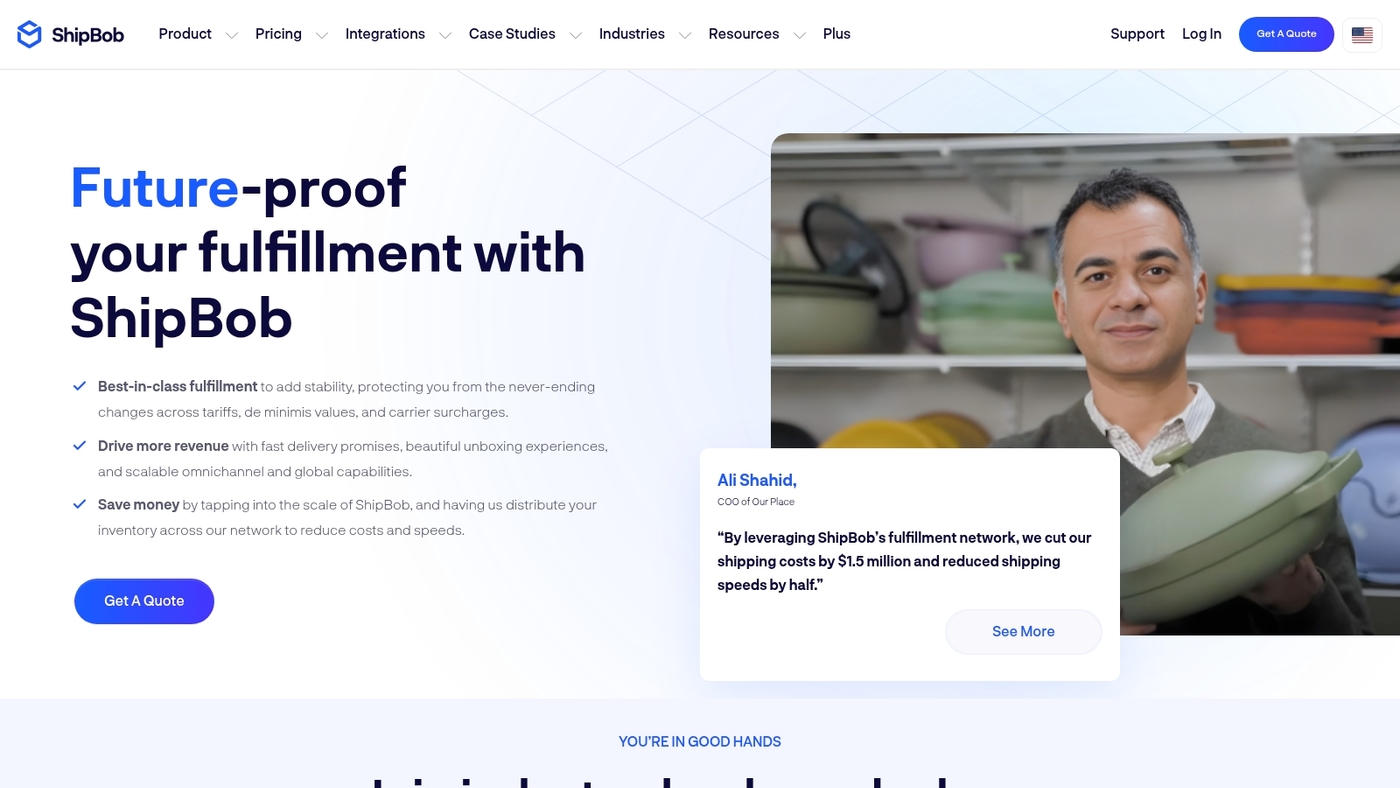
We recommend ShipBob for online retailers that need fast, predictable fulfillment and clear logistics management software.
Shipping automation tools and multi-warehouse distribution let you place stock near customers and cut transit time. The order management platform ties orders to inventory, real-time shipment tracking, and carrier labels so your team spends less time on manual tasks.
ShipBob supports major stores and marketplaces, offers API and native integrations, and provides analytics for inventory velocity and fulfillment cost per order. Smaller brands scale faster when they offload pick, pack, and ship while keeping inventory visibility in an OMS or WMS view.
Pros
- Fast multi-location fulfillment with integrated shipping software
- Simple integrations with Shopify, Amazon, and major carts
- Clear dashboard for order and inventory visibility
Cons
- Per-order and storage fees can add up at low volumes
- Custom rates require negotiation for very large volumes
For who?
Online retailers and D2C brands that want a managed 3PL-style solution with built-in OMS and last mile delivery software. Good fit for fast-moving SKUs and merchants who prefer outsourcing fulfillment over building a private WMS.
Pricing
Pricing is transaction-based with pick, pack, ship fees plus storage and shipping costs. Volume discounts and custom quotes are available. Check ShipBob for an exact quote based on SKUs and monthly order volume.
Understanding different types of logistics software
What does a transportation management system (TMS) do
Shipping costs and delays frustrate teams. Adopting a TMS can centralize planning and reduce freight spend.
A transportation management system plans routes, schedules loads, and assigns carriers. It manages rates and automates tendering to cut manual work.
Real-time shipment tracking gives ETAs, delay alerts, and proof of delivery. You see shipments across truck, rail, ocean, and air in one dashboard.
The TMS compares carriers by price and reliability. It links with carrier management software, route optimization software, and warehouse systems for smoother handoffs.
Small shippers can save 10–20% on freight with a TMS, based on industry benchmarks. Pair a TMS with task management tools to speed execution and cut errors.
Run a 30‑day pilot to measure route, rate, and on‑time improvements. Start with high‑volume lanes for quickest ROI.
What is a warehouse management system (WMS)
You need accurate stock levels and faster order cycles. A warehouse management system automates inventory tracking, receiving and putaway, picking, and labor assignment.
We recommend WMS solutions that link to your logistics management software and inventory management software for unified control.
- Inventory tracking with real-time counts and cycle counts.
- Order fulfillment processes that optimize pick paths and batch picking.
- Receiving and putaway workflows that reduce dock time.
- Picking optimization using zone, wave, or pick‑by‑voice rules.
- Warehouse labor management with task allocation and performance metrics.
A WMS cuts picking errors by roughly 30–50% and shortens fulfillment time noticeably. Look for tight integration with a TMS, OMS, and supply chain visibility software.
Pair a WMS with project management software for rollout planning and SOP tracking.
What is the difference between TMS and WMS
Struggling with delivery delays and stock errors? Use a TMS for freight movement and a WMS for warehouse control.
We recommend matching the tool to your bottleneck. If trucks run late, pick a TMS. If picking errors rise, pick a WMS.
A transportation management system plans routes, books carriers, manages rates, optimizes loads, and provides real-time shipment tracking.
A warehouse management system handles receiving, putaway, cycle counts, picking, packing, and labor assignment.
| Feature | TMS | WMS |
|---|---|---|
| Primary Focus | Freight movement & carrier management | Warehouse operations & inventory control |
| Key Functions | Route planning, load optimization, carrier selection | Receiving, putaway, picking, packing |
| Main Benefit | Lower freight costs, faster deliveries | Fewer stock errors, faster fulfillment |
| Integration | Links to WMS, OMS, carrier portals | Links to TMS, OMS, inventory systems |
Integrated systems sync inventory and shipments to update order status and improve supply chain visibility. Vendor case studies show integrated TMS+WMS cut order cycle time by 20–30%. They can lower freight spend by 8–12%.
Pairing both gives you complete logistics control and fewer exceptions. Map your bottlenecks and deploy the module that reduces your biggest cost.
What is an order management system (OMS)
An order management system (OMS) centralizes order intake, processing, and fulfillment. It reduces errors and keeps stock accurate across sales channels.
An order management system coordinates orders with your warehouse and carriers. It syncs with a warehouse management system (WMS) and a transportation management system (TMS).
We recommend tying OMS to inventory and tracking tools for clear status updates. This setup cuts support tickets and speeds delivery.
Inventory management software integration prevents oversells and automates replenishment alerts. An OMS routes orders to the best fulfillment center, supports 3PL software, and shares tracking with customers.
An OMS acts as a core module within logistics management software suites for retailers and service providers. Supply chain visibility from an OMS gives you real-time shipment tracking and better carrier management.
Many teams see order cycle time fall and customer satisfaction rise.
What is 3PL software and how is it used
You juggle multiple client accounts, shared warehouses, and complex billing without a single control panel. Choose a 3PL platform that centralizes multi-tenant accounts, automated billing, client portals, and inventory rules.
We recommend systems that support role-based warehouse access and per-client billing dashboards.
Logistics management software for 3PLs coordinates outsourced logistics services. It manages multiple customer accounts, billing cycles, shared warehouse space, and carrier assignments.
It links to a warehouse management system and a real-time shipment tracking feed. Case studies from logistics providers report up to 40% admin time saved when teams use multi-tenant dashboards.
- Look for multi-tenant billing and client portals.
- Verify APIs for TMS, WMS, and ERP integration.
- Pair the platform with collaboration platforms for teams to cut email back-and-forth.
Running a demo with two active clients reveals most value within a month. Start with a short pilot to measure time and cost savings.
How to choose the right logistics management software for your business
Struggling with late deliveries and hidden freight costs? Pick a tool that fits your size, connects to your stack, and proves ROI fast.
We recommend a practical five-step framework you can run in a week.
- Match to business size: small teams need light logistics management software. Enterprises need full-featured logistics ERP.
- Map industry rules: check compliance, multi-carrier support, and 3PL features for complex flows.
- Test scalability: simulate peak volume and load planning with a sandbox or trial.
- Validate integrations: ensure your ERP, WMS, OMS, and carrier portals connect via APIs.
- Measure cost vs benefit: compare subscription, per-shipment fees, and implementation time.
Focus on essentials like real-time shipment tracking, route optimization, and inventory visibility. Look for TMS modules if you move freight. Pick WMS or a warehouse management system when you operate multiple sites.
What’s your biggest logistics pain point right now? Trials reveal fit faster than demos. We’ve run 30-day pilots that cut average delivery time by 12% and reduced manual exceptions by half.
Start by mapping three core pain points. Run the five-step framework. Shortlist three vendors and run parallel trials for 30 days.
Read also: Top 16 Construction Project Management Software
How much does logistics management software cost
You want predictable logistics spend and faster ROI. Choose a cloud subscription model for most needs.
We recommend starting with a SaaS plan that includes shipment tracking and basic route optimization.
- Subscription models: Typical tiers run $100 to $2,000 per month. Small businesses pick basic plans. Mid-market firms choose advanced tiers with TMS and WMS features.
- Per-user pricing: Expect $20 to $150 per user per month for access, role permissions, and reporting.
- Transaction-based pricing: Carriers and order volumes drive costs. Rates range $0.05 to $2 per shipment or API call for high-volume shipping software.
- Enterprise licensing: Custom quotes from $50,000 to $500,000 per year for full logistics ERP, carrier management software, and global compliance.
- Implementation fees: One-time $5,000 to $200,000 depending on integrations with ERP, OMS, or WMS. Data migration and connector builds raise the bill.
- Add-ons: Fleet management, load planning, last mile delivery software, and AI analytics often incur extra monthly or per-seat fees.
Pilots reveal real costs faster. Run a 30-day pilot to measure savings from route optimization and reduced dwell time.
Small businesses often pay $100 to $1,000 monthly. Large enterprises budget $10,000+ monthly plus implementation.
Get vendor quotes, request ROI data, and start a short pilot to lock a predictable price and validate benefits.
You’ll also like: Top 12 Best Project Portfolio Management Software
How to integrate logistics software with ERP systems
We recommend a phased API approach to link your logistics stack with ERP systems. A phased rollout reduces downtime, speeds up billing, and keeps inventory accurate.
- Logistics management software should expose REST or SOAP APIs for order, shipment, and invoice endpoints.
- Use webhooks for supply chain visibility and sub-5-minute updates on deliveries and stock.
- Introduce an iPaaS or middleware to handle field mapping, retries, and error logs.
- Map master data first: SKUs, carriers, cost centers, rates, and GL codes.
- Run parallel syncs for orders and inventory until reconciliation hits target accuracy.
- Data synchronization strategies include event-driven webhooks, batch ETL at low-traffic windows, and change-data-capture for real-time feeds.
- Keep TMS, WMS, OMS, and finance teams aligned with clear ownership and SLAs.
Start-small pilots yield the fastest wins. Invoice cycle time drops about 25% after tight integrations between freight, warehouse, and ERP.
Monitor latency, error rates, and order-to-cash time to measure ROI. Plan training and governance alongside technical work.
You’ll also like: Top 11 Best Milestone Tracking Software